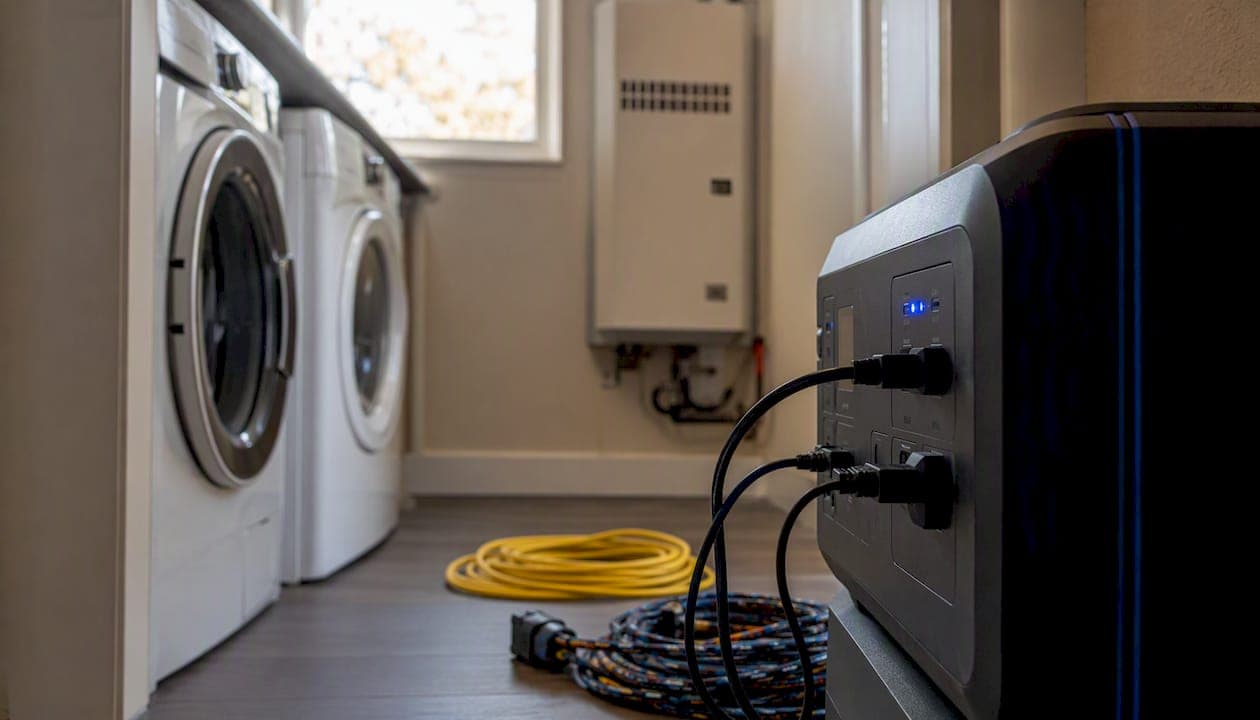
For most U.S. homeowners, the most reliable approach to backup power for heating and cooling combines a LiFePO4 portable power station for essential loads with a properly sized generator for heavy HVAC demands during multi-day outages. Two reasons stand out: battery systems deliver UPS-grade instant transfer with pure sine wave output that protects furnace controls and compressor electronics, while a generator handles the sustained wattage that batteries alone can't economically cover for days at a time.
NYSERDA confirms that furnaces, boilers, and most HVAC systems require electricity to start and circulate heat, which means even a gas furnace goes cold without backup power for its blower motor and controls. EIA residential consumption data gives you the baseline appliance wattages to size that backup correctly.
Your immediate next steps:
- List your critical loads (furnace blower, refrigerator, sump pump, one or two lights) and note the running watts and starting watts for each.
- Decide your autonomy target — hours or days — based on your region's typical outage length.
- Call a licensed electrician before buying a transfer switch or hardwiring any backup system.
- Consider Toddra's expandable LiFePO4 power stations as a quiet, safe starting point for essential-load coverage.
Key Takeaways
For most homeowners, a LiFePO4 portable power station covering essential loads, paired with a generator for extended outages, is the most practical and cost-effective approach to backup power for heating and cooling.
| Point | Details |
|---|---|
| Start with essential loads | Furnace blower, refrigerator, sump pump, and lights are the most cost-effective circuits to back up first. |
| Size for surge, not just running watts | Compressors and pumps can draw 2–3× their running wattage at startup; your inverter must handle that peak. |
| Battery beats generator for safety indoors | LiFePO4 systems switch over in under 10 ms, run silently, and require no fuel storage or outdoor placement. |
| Hybrid approach covers most scenarios | A portable power station for daily essential loads plus a generator for heavy or extended demands handles most U.S. outage situations. |
| Toddra expandable packs extend autonomy | Modular battery expansion, like the 5,040Wh pack, lets you scale capacity without replacing your core system. |
Table of Contents
- What are the main backup power options for heating and cooling at home?
- Which heating options actually work when the power goes out?
- How do you keep your home cool during a power outage?
- How do you size backup power for home heating and cooling?
- What permits, costs, and timelines should you expect for backup power installs?
- What safety checks and maintenance routines keep backup systems reliable?
- How do LiFePO4 portable power stations perform in real outage scenarios?
- Which backup approach is right for your home? A decision checklist
- What's the honest tradeoff between batteries and generators for home backup?
- Toddra portable power stations for home heating and cooling backup
- Sources
What are the main backup power options for heating and cooling at home?
Choosing the right home energy backup system starts with understanding what each option actually delivers, not just what it promises on a spec sheet.
Portable power stations (LiFePO4)
These are plug-and-play battery units with built-in inverters. LiFePO4 chemistry offers excellent thermal stability and long cycle life. They run silently indoors, switch over in under 10 milliseconds, and output clean pure sine wave power. The tradeoff: stored energy is finite, and recharging takes time via solar panels or a generator.
-
Best for: Essential loads (furnace blower, refrigerator, sump pump, lights) during short to medium outages
-
Best for renters: Yes, no installation required
-
Noise: Silent
-
Fuel logistics: None; recharge via solar or AC
Home battery plus solar-plus-storage
A fixed home battery system paired with solar panels is the gold standard for quiet, multi-day resiliency. NYSERDA highlights solar-plus-storage as a practical strategy that lets homeowners access stored solar energy for critical functions like heat and refrigeration when the grid goes down. Cost and installation complexity are the main barriers.
- Best for: Homeowners wanting multi-day autonomy without fuel logistics
- Noise: Silent
- Installation: Professional install required; permits typically needed
Portable gas or propane generators
High output at a lower upfront cost. A typical mid-size portable generator can run a window AC unit, a furnace blower, and a refrigerator simultaneously. The downsides are real: fuel storage, noise, and a strict outdoor-only rule due to carbon monoxide risk.
-
Best for: Multi-day outages where battery capacity would be prohibitively expensive
-
Noise: Loud (65–75 dB typical)
-
Safety: Must be used outdoors, at least 20 feet from windows and doors
Standby whole-house generators
Permanently installed, automatic-start units running on natural gas or propane. They can power an entire home, including central AC. Professional installation, permits, and a transfer switch are required. Lead times for installation can stretch to several weeks.
- Best for: Homeowners who want whole-home coverage with zero manual intervention
- Cost: $5,000–$15,000+ installed
Nonelectric fuel heating
Wood stoves, natural gas fireplace inserts, and some gravity-fed pellet stoves operate without grid power. These are genuinely grid-independent for heat, though they require fuel storage and proper ventilation.
- Best for: Heating-only backup in cold climates; excellent complement to any electrical backup
- CO risk: Combustion appliances require proper venting; never use kerosene or propane heaters indoors without adequate ventilation
Pro Tip: If you have a heat pump and want silent, low-maintenance backup for critical loads, size a LiFePO4 battery system for the blower motor and a few essential circuits first. Add a generator only if your outage history or climate demands multi-day heavy HVAC coverage.
Which heating options actually work when the power goes out?
Not every heating system survives an outage intact. The gap between "I have a gas furnace" and "I'll stay warm" is wider than most homeowners expect.
Heating systems that need electricity even when fuel is available
Gas and propane furnaces use electric ignition, blower motors, and control boards. Without power, they don't run, regardless of how much gas is in the line. The same applies to most boilers with circulator pumps. Columbia University's analysis of decarbonizing space heating notes that electrifying space heating shifts backup planning toward electrical energy storage or generators sized for motor loads, not just fuel supply.
A furnace blower motor typically draws 300–600W running and can surge to 1,000–1,200W at startup. That's manageable for a mid-size portable power station, but you need to account for the surge.
Truly nonelectric heating options
- Wood stoves and fireplace inserts: Fully grid-independent once lit. A well-sealed modern home can stay livable for many hours on a single load of wood.
- Natural gas fireplace inserts (standing pilot): Some older models with standing pilots operate without electricity. Electronic ignition models do not.
- Gravity-fed pellet stoves: A small subset of pellet stoves use gravity feed and require only a small battery for controls. Most pellet stoves need 120V AC for the auger and fans.
- Catalytic propane heaters: Designed for indoor use with adequate ventilation. Follow manufacturer guidance on room size and airflow.
Safety rules you cannot skip
Carbon monoxide kills without warning. Never run a portable gas generator, charcoal grill, or camp stove indoors or in an attached garage. Install CO detectors on every level of your home and test them before outage season. Keep combustion-based backup heaters at least 3 feet from flammable materials and follow local fuel storage limits.
A well-insulated, air-sealed home retains warmth for hours longer than a drafty one, which meaningfully reduces how much backup heating capacity you actually need. If your home has poor insulation, that's worth addressing before investing in a large backup system.
How do you keep your home cool during a power outage?
Cooling is harder to back up than heating, and the math is less forgiving. A central air conditioner's compressor is the single largest electrical load in most homes, with starting surges that can reach 2–3 times the running draw.
Why whole-home central AC is rarely practical on backup power
A 3-ton central AC unit typically draws 3,000–3,500W running and surges to 5,000–7,000W at startup. Running it for 8 hours would consume 24–28 kWh, which exceeds most portable power stations and many home battery systems. A standby generator can handle it, but fuel consumption climbs fast.
Zone cooling strategies that actually work
- Single ductless mini-split or window unit: A 6,000–8,000 BTU window unit draws roughly 500–700W running. A mid-size portable power station can run one for several hours, making zone cooling very practical.
- High-efficiency fans: A box fan or tower fan draws 50–100W. Paired with open windows during cooler nighttime hours, fans can drop indoor temperatures meaningfully.
- Evaporative cooling: Effective in low-humidity climates (the Southwest, parts of the Mountain West). A portable evaporative cooler draws 100–200W and can cool a room significantly.
- Passive measures: Close blinds and blackout curtains on sun-facing windows before noon. Hang wet sheets in doorways with a fan blowing through them. Open windows at night when outdoor temperatures drop.
Do: Prioritize heat-sensitive occupants, infants, elderly family members, and medications that require refrigeration. A small window unit in one room is far more achievable than cooling the whole house.
Don't: Attempt to run central AC on an undersized inverter or generator without confirming the unit's surge capacity. Undersized inverters can trip on startup and damage both the inverter and the compressor.
Pro Tip: Before an outage hits, pre-cool your home to 68–70°F if you know a storm is coming. A well-insulated home can hold that temperature for several hours without any active cooling.
How do you size backup power for home heating and cooling?
Sizing is where most homeowners make expensive mistakes. The goal is to match your backup system's capacity to your actual critical loads, not your entire home.
Step-by-step sizing checklist
- List every critical load you want to back up (furnace blower, refrigerator, sump pump, one window AC, lights, phone chargers).
- Record running watts and starting (surge) watts for each device. Check the nameplate or the manufacturer's spec sheet. If only amps are listed, multiply by 120V to get watts.
- Note duty cycle — how many hours per day each device actually runs. A refrigerator compressor cycles on roughly 8 hours out of 24.
- Choose your autonomy target — how many hours or days you want to run without recharging or refueling.
- Add running loads to find your simultaneous draw. Add the largest single surge load on top to find your required inverter surge rating.
- Calculate total watt-hours (Wh) needed per day: multiply each device's running watts by its hours of use, then sum them.
- Factor inverter efficiency (typically 85–92% for quality units). Divide your raw Wh total by 0.88 as a reasonable midpoint.
- Convert to battery capacity: your adjusted Wh figure is the minimum usable battery capacity. For LiFePO4, usable capacity is typically 80–90% of rated capacity.
Example sizing calculation
After applying an 88% inverter efficiency factor, you need roughly 7,230 Wh of usable battery capacity per day. For two days of autonomy without recharging, that's approximately 14,500 Wh (14.5 kWh) of usable storage.
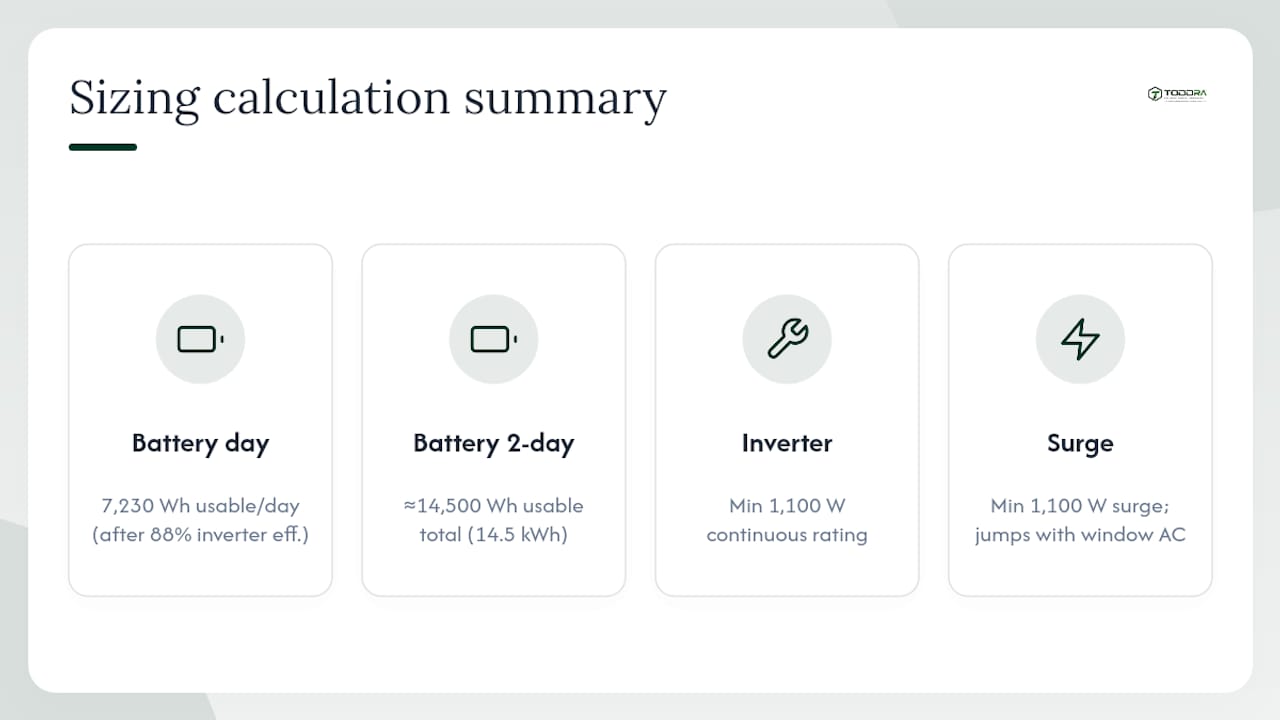
Your inverter must handle at least 1,100W continuous and 1,100W surge for this load set (the furnace blower is the largest surge here). For a setup that also includes a window AC unit, the surge requirement jumps considerably.
Pure sine wave output matters for furnace control boards and compressors. Modified sine wave inverters can cause furnace controls to malfunction or overheat motor windings over time. Always confirm pure sine wave output before purchasing.
EIA residential consumption microdata provides solid baseline appliance draw figures to cross-check your own nameplate readings.
What permits, costs, and timelines should you expect for backup power installs?
The gap between buying a backup system and having it reliably protect your home can be days or weeks, depending on what you choose.
Transfer switch options
- Manual transfer switch: A licensed electrician installs a subpanel with selected circuits. You manually flip the switch when the outage starts. Lower cost than automatic options; requires you to be home.
- Automatic transfer switch (ATS): Detects grid loss and switches to backup power within seconds. Required for standby generators and recommended for any system where you can't be home to respond.
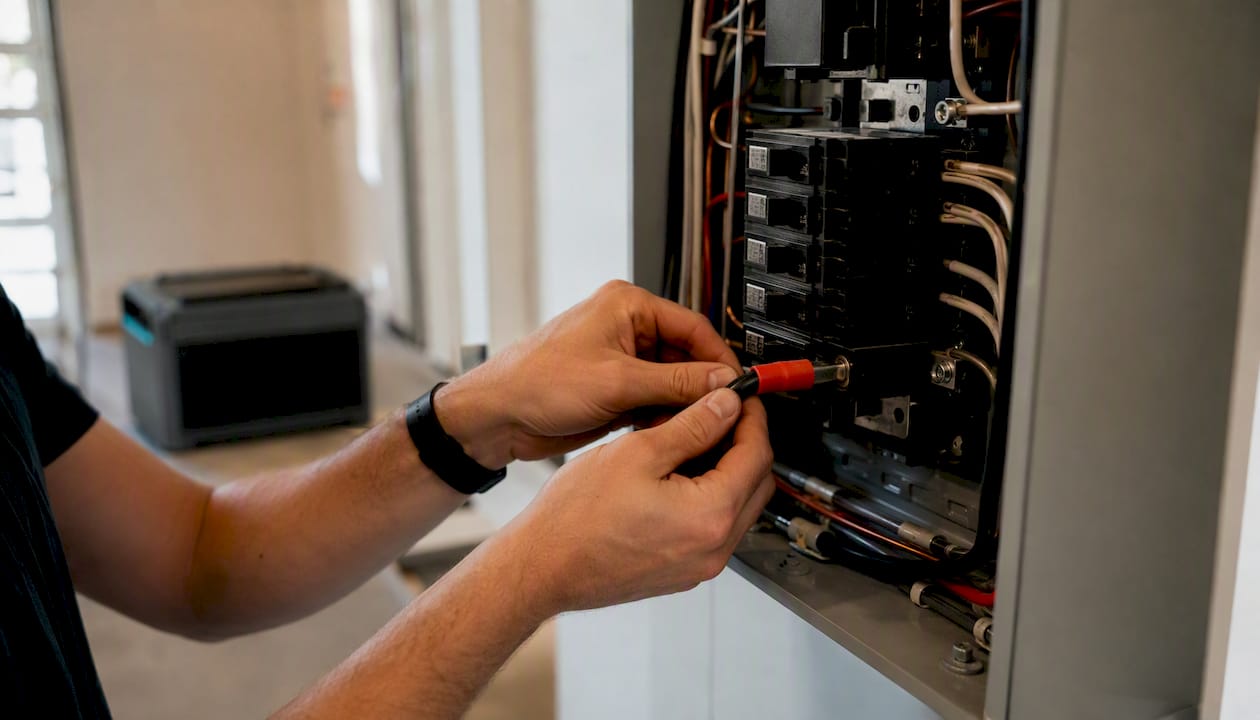
- Critical-load panel (EPS panel): A dedicated subpanel fed by your battery or generator, covering only the circuits you've pre-selected. This is the most practical approach for portable power station integration.
A licensed electrician is required for any hardwired transfer switch installation. This is not optional — improper connections can backfeed the grid and endanger utility workers.
Typical cost ranges
- Portable power station (1–3 kWh): $500–$2,000 for the unit; no install cost for plug-and-play use
- Critical-load panel with manual transfer switch: $500–$1,500 in labor and materials
- Home battery system (10–15 kWh) with inverter and install: $10,000–$20,000+
- Portable generator (5,000–7,500W): $600–$1,500 for the unit; add $500–$1,000 for a transfer switch
- Standby whole-home generator (installed): $5,000–$15,000+
Timeline reality
- Plug-and-play portable power station: Operational the same day it arrives
- Transfer switch with electrician: Schedule 1–3 days of work; permit approval can add 1–2 weeks in some municipalities
- Whole-home standby generator: Equipment lead times plus permitting can push total time to 4–8 weeks
Pro Tip: Ask your electrician specifically about an EPS (emergency power supply) critical-load panel. It lets you connect a portable power station or battery to a dedicated set of circuits without a full ATS, keeping costs down while giving you reliable, safe switching.
Questions to bring to your contractor: What ATS size do you recommend for my load list? Can the panel accommodate battery expandability later? What permits does my municipality require, and how long does approval typically take?
What safety checks and maintenance routines keep backup systems reliable?
A backup system that hasn't been tested is a backup system you can't count on. These routines take less time than you'd expect and matter enormously when an outage actually hits.
Safety checklist
- Install CO detectors on every level of your home, including the basement. Test them monthly.
- Run portable gas generators at least 20 feet from any window, door, or vent, with exhaust directed away from the home.
- Store gasoline in approved containers (typically 5-gallon maximum per local fire codes) in a detached garage or shed, away from heat sources.
- Keep battery systems in a dry, ventilated space away from flammable materials. LiFePO4 chemistry is significantly more thermally stable than older lithium-ion, but ventilation is still good practice.
- Never connect a generator directly to a home outlet (backfeed risk). Always use a proper transfer switch or interlock kit.
Maintenance schedule
- Gas generators: Run under load for 30 minutes every 30 days. Change oil per manufacturer schedule (typically every 50–100 hours of use). Drain fuel or add stabilizer if storing for more than 30 days.
- Battery systems: Check state of charge monthly. Update firmware when manufacturer releases updates. Inspect terminals and connections every 6 months.
- Solar panels: Clean panels seasonally (or after dust storms). Check mounting hardware and wiring connections annually.
- Transfer switch and inverter: Have a licensed electrician inspect connections and test automatic operation annually.
Pro Tip: Rotate stored gasoline every 30–60 days using a fuel stabilizer like Sta-Bil. In cold climates, keep your generator's oil warm before starting — cold-thickened oil is one of the most common reasons generators fail to start in winter emergencies.
Local emissions regulations vary by county and state. Some areas restrict generator use during air-quality alert days. Check your local air district rules before an outage season, not during one.
How do LiFePO4 portable power stations perform in real outage scenarios?
The chemistry and design of modern portable power stations have changed what's practical for home backup, and the gap between a quality LiFePO4 unit and a basic lead-acid or older lithium setup is significant.
Why LiFePO4 chemistry matters for home use
LiFePO4 (lithium iron phosphate) cells offer a much longer cycle life than standard lithium-ion, typically 2,000–3,500 charge cycles before capacity degrades to 80%. They're also far more thermally stable, which matters when a unit is running indoors near living spaces. The flat discharge curve means voltage stays consistent, which protects sensitive electronics like furnace control boards.
Battery backup systems with UPS-grade transfer switch over in under 10 milliseconds, fast enough that most electronics never notice the grid went down. That's a meaningful advantage over generators, which take 10–30 seconds to start and stabilize.
Real-world setup: essential-load portable power station
A practical essential-load setup connects a LiFePO4 portable power station to a critical-load panel covering the furnace blower, refrigerator, sump pump, and a few lights. Based on the sizing example above, a 5–7 kWh unit covers roughly 16–20 hours of essential loads. Add an expandable battery pack and you extend that to 30–40 hours without any recharging.
Princeton's Net Zero research maps electrification and storage scenarios that support multi-day battery strategies for resilient homes, reinforcing the case for expandable systems rather than fixed-capacity units.
Solar recharge during extended outages
A 400W solar array in full sun generates roughly 1,600–2,000 Wh per day (accounting for real-world efficiency losses). That offsets a meaningful portion of daily essential-load consumption and can extend battery autonomy significantly during a multi-day outage with reasonable sun. For cloudy conditions or winter months, a generator-assisted recharge strategy fills the gap: run the generator for 2–3 hours to top up the battery, then shut it down.
ACEEE research on heat pump controls and sizing notes that correct commissioning and sizing of heat pump systems directly affects how backup power should be planned, since an oversized or poorly commissioned heat pump draws more power than necessary.
Heat pump plus generator: a practical pairing
A Mitsubishi Electric case study describes a homeowner who successfully ran an all-climate heat pump and selected circuits through an 18-hour outage using a mid-sized portable generator. Modern all-climate heat pumps can often be staged to lower power demand, making them more compatible with mid-size generators than older fossil-fuel HVAC systems. The key insight: you don't always need a large standby generator if your heat pump is correctly sized and commissioned.
Which backup approach is right for your home? A decision checklist
Work through these questions before you buy anything or call a contractor.
Self-assessment checklist
-
Home tightness: Is your home well-insulated and air-sealed? A tight home needs less backup heating capacity.
-
Priority circuits: Which loads must stay on? Furnace blower, refrigerator, sump pump, and medical equipment are the most common.
-
Autonomy target: Do you need 8 hours, 24 hours, or 3+ days of backup?
-
Budget bracket: Under $2,000 (portable power station), $2,000–$5,000 (generator plus transfer switch), or $10,000+ (home battery system or standby generator)?
-
Fuel preference: Are you comfortable storing gasoline or propane, or do you prefer a fuel-free battery approach?
-
Noise tolerance: Battery systems are silent; generators are not. Neighbors and local ordinances matter.
-
Owner vs. renter: Renters need plug-and-play solutions; owners can invest in hardwired systems.
Quick scoring rubric
- Battery-first: Score this if you have a tight home, short-to-medium outage history, a heat pump or gas furnace with modest blower draw, and a preference for silent operation. A LiFePO4 portable power station with an expandable battery pack covers most essential loads.
- Generator-first: Score this if you have a large home, central AC you want to keep running, a history of multi-day outages, and tolerance for fuel logistics and noise.
- Hybrid (battery + generator): Score this if you want quiet essential-load coverage most of the time, with generator backup for heavy loads or extended outages. Princeton's electrification research supports this as the most resilient path for most homeowners.
Questions to ask your electrician or installer
- What transfer switch type and ATS size do you recommend for my load list?
- Can the panel accommodate battery expandability if I want to add capacity later?
- What permits does my municipality require, and what's the realistic approval timeline?
- What warranty and service coverage comes with the system?
- Is my current electrical panel adequate, or does it need an upgrade?
What's the honest tradeoff between batteries and generators for home backup?
Most backup-power guides push you toward one camp or the other. The honest answer is that both have genuine strengths, and the right choice depends on your specific home, climate, and outage history.
Battery systems, particularly LiFePO4 portable power stations, are the quieter, safer, and lower-maintenance choice for essential-load coverage. They protect sensitive electronics better than generators, require no fuel storage, and work for renters as well as owners. The limitation is capacity: a realistic portable system covers essential loads for 16–30 hours, not a week.
Generators fill the capacity gap, but they come with real obligations. Fuel resupply during a regional disaster is not guaranteed. Running a generator safely requires outdoor placement, proper transfer switching, and regular maintenance. The noise affects neighbors and can violate local ordinances during nighttime hours.
The hybrid approach, a LiFePO4 battery for daily essential-load coverage and a generator for extended or heavy-load scenarios, is what most homeowners with serious outage risk actually end up with. It's also the approach that NYSERDA's guidance on heat pumps and outage resiliency implicitly supports: nonelectric supplemental heat plus energy storage for critical loads.
One caveat worth stating plainly: the upfront cost of a well-sized battery system is real. A 10–15 kWh home battery installation can cost $10,000–$20,000. A portable power station with an expansion pack is far more accessible, but it won't run central AC for a week. Know what you're buying before you commit.
Toddra portable power stations for home heating and cooling backup
When you're ready to move from planning to purchasing, Toddra's LiFePO4 portable power stations and expandable battery packs are built for exactly the essential-load scenarios this guide covers.
For homeowners who want quiet, safe coverage of furnace blowers, refrigerators, sump pumps, and critical circuits, Toddra's portable power stations deliver pure sine wave output, UPS-grade transfer, and the expandable capacity that multi-day outages demand. The Jackery Battery Pack 5000 Plus Expansion Battery (5,040Wh) is a strong example of the kind of modular expansion that lets you start with a core unit and grow your capacity as your needs become clearer. Pair it with Toddra's compatible solar panels for a solar generator home backup setup that recharges without fuel. Browse Toddra's full range at Toddra or reach out to our US-based support team to find the right fit for your home.
Sources
These authoritative resources informed this guide and are worth bookmarking for your own planning:
- Heat Pumps for Cold Climates - What About Power Outages? : NYS Clean Heat
- Nyserda
- Eia
- Heat Pump & Generator Pairing | Mitsubishi Electric HVAC US
- Energypolicy