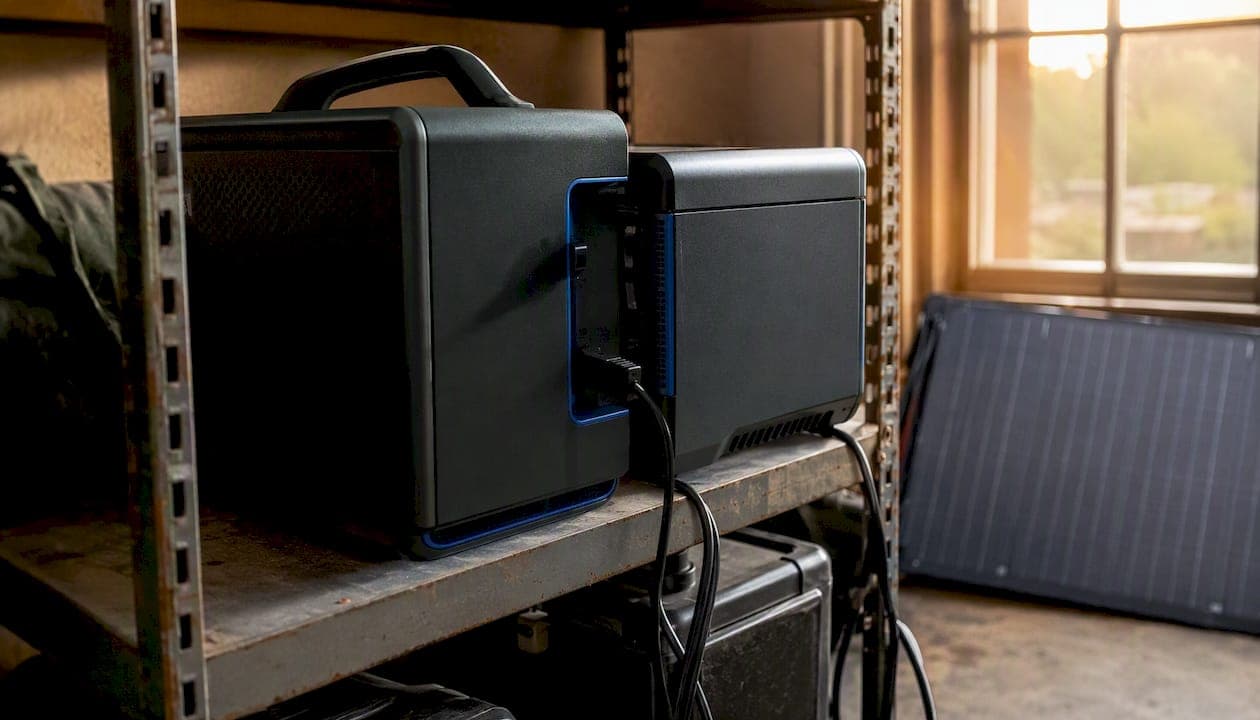
For most U.S. homeowners who want quiet, low-maintenance backup that grows with their needs, a LiFePO4-based expandable power station with modular expansion packs is the best choice. The U.S. Energy Information Administration documents a clear trend toward distributed battery storage as grid reliability concerns push more households toward energy independence. The right system keeps your refrigerator, lights, router, and medical devices running through multi-day outages without the noise, fumes, or fuel costs of a gas generator.
Here is the shortlist for homeowners ready to decide:
- Jackery Battery Pack 5000 Plus (Expansion Battery 5040Wh) via Toddra — Our top pick for most homeowners. A single slide-on module adds 5,040 Wh of LFP capacity to a compatible Jackery base unit, with US-based support and secure checkout through Toddra.
- EcoFlow DELTA Pro 3 — Best for partial-to-whole-house backup when paired with a transfer switch; high inverter output and a broad accessory ecosystem.
- Anker SOLIX F3800 Plus — Best for heavy-duty multi-appliance backup; strong surge capacity and expandable architecture for extended home use.
- Bluetti AC200Max with B300 expansion — Best for homeowners who want a feature-rich, stackable ecosystem with solid solar input.
- Pecron E3600LFP (240V Bundle) — Best for owners who prioritize LFP chemistry, high cycle life, and 240V capability at a competitive price.
Compare full specs below, size to your critical loads, or shop Toddra's expansion pack to get started today.
Table of Contents
- What are the best expandable power stations for homeowners?
- Detailed reviews: which expandable system fits your home?
- How do you choose and size an expandable power station for your home?
- How were these picks selected and tested?
- Why LFP battery chemistry and modular expansion matter for your home
- Key Takeaways
- The case for sizing up, not settling
- Toddra's expandable home backup systems, ready to ship
- Useful sources and further reading
What are the best expandable power stations for homeowners?
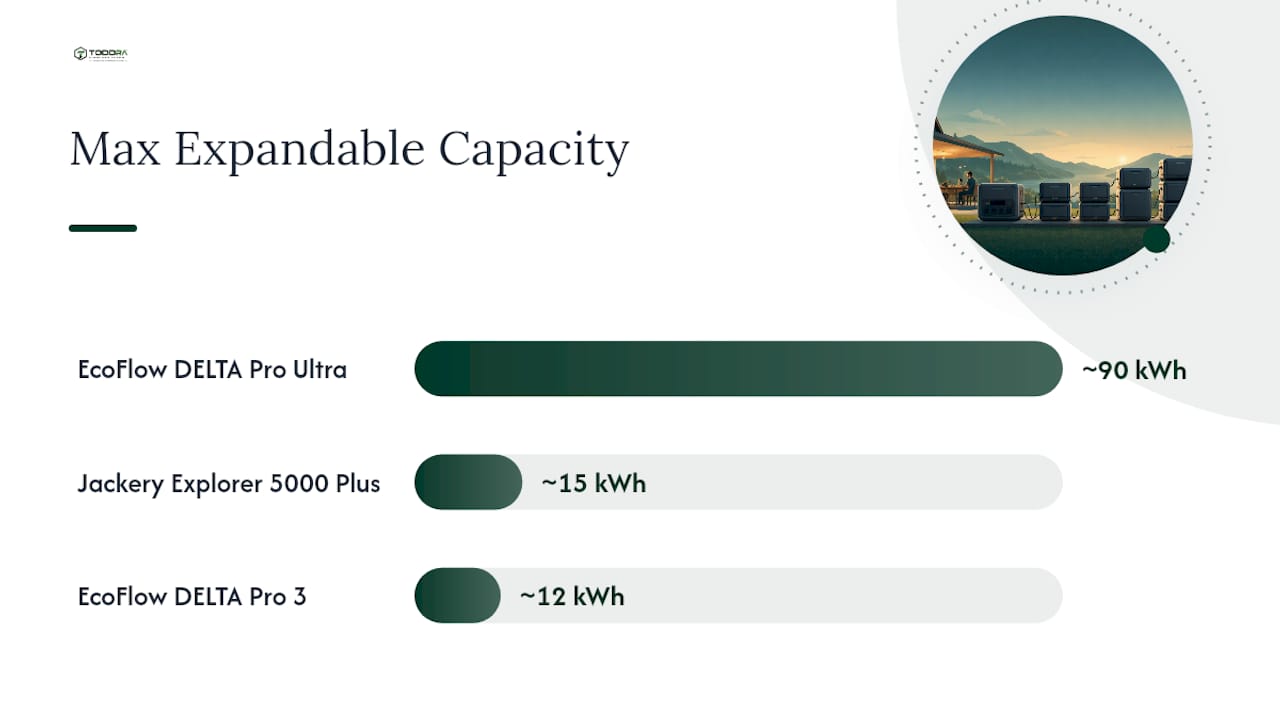
The table below covers the primary contenders across the dimensions that matter most for home backup. "Usable Wh" reflects real-world accessible capacity; "max expandable" shows the ceiling when you add all supported expansion packs. Inverter watts determine which appliances you can run simultaneously.
| Model | Usable Wh (base) | Max Expandable | Continuous / Surge (W) | 120V / 240V | Chemistry / Cycle Life | Expandability Method | Max Solar Input | Approx. Weight (base) | Price Example (base + expansion) | Warranty | Best For |
|---|---|---|---|---|---|---|---|---|---|---|---|
| Jackery Battery Pack 5000 Plus (via Toddra) | 5,040 Wh (expansion) | Pairs with Explorer 5000 Plus base | Depends on base unit | 120V / 240V capable with base | LFP / 4,000+ cycles | Slide-on module | Per base unit | ~83 lbs (expansion pack) | See Toddra | 5 yr (Toddra/Jackery) | Homeowners wanting scalable LFP backup with US support |
| Jackery Explorer 5000 Plus | ~5,000 Wh | ~15 kWh (with 2 expansion packs) | 4,000 W / 8,000 W surge | 120V / 240V | LFP / 4,000+ cycles | Slide-on expansion packs | 2,000 W MPPT | — | ~$5,000 base | 5 yr | Partial-to-whole-house backup |
| EcoFlow DELTA Pro 3 | 4,096 Wh | ~12 kWh (with extra batteries) | 4,000 W / 8,000 W surge | 120V / 240V | LFP / 3,500+ cycles | Bolt-on expansion batteries | 2,600 W MPPT | — | ~$3,500 + expansion | 5 yr | Whole-house-ready with transfer switch |
| EcoFlow DELTA Pro Ultra | — | ~90 kWh (stacked) | 7,200 W surge | 120V / 240V | LFP / 3,500+ cycles | Stackable hub-and-spoke | — | — | — | 5 yr | Near whole-house or multi-day backup |
| Anker SOLIX F3800 Plus | — | ~26.9 kWh | 6,000 W / 12,000 W surge | 120V / 240V | LFP / 3,000+ cycles | Expansion battery modules | — | — | ~$4,000 + expansion | 5 yr | Heavy-duty multi-appliance home backup |
| Anker SOLIX F3000 | — | ~9.6 kWh | 3,000 W / 6,000 W surge | 120V / 240V | LFP / 3,000+ cycles | Expansion battery modules | — | — | — | 5 yr | Mid-range expandable home backup |
| Anker Solix C1000 Gen 2 | — | ~2 kWh | 1,000 W / 2,000 W surge | 120V | LFP / 3,000+ cycles | Expansion battery | 600 W MPPT | ~26 lbs | ~$1,000 + expansion | 5 yr | Portable backup, light home loads |
| Bluetti AC200Max | — | ~8.1 kWh (with B300 packs) | 2,200 W surge | 120V | LFP / 3,500+ cycles | Stackable B300 bolt-on | — | — | ~$1,500 + B300 | 4 yr | Home and RV with expandable ecosystem |
| Bluetti Apex 300 | 3,072 Wh | — | 3,000 W / 6,000 W surge | 120V / 240V | LFP / 3,500+ cycles | Bolt-on expansion | — | — | ~$3,000 + expansion | 4 yr | Mid-to-large home backup |
| Bluetti Elite 400 | 4,096 Wh | — | 4,000 W / 8,000 W surge | 120V / 240V | LFP / 4,000+ cycles | Expansion battery modules | 3,000 W MPPT | — | — | 4 yr | High-capacity home backup |
| Bluetti Apex 300 | 3,072 Wh | — | 3,000 W / 6,000 W surge | 120V / 240V | LFP / 3,500+ cycles | Bolt-on expansion | — | — | ~$3,000 + expansion | 4 yr | Mid-to-large home backup |
| Goal Zero Yeti 6000X | 6,071 Wh | 6,071 Wh (no native expansion) | 2,000 W / 3,500 W surge | 120V | NMC / ~500 cycles | No native expansion module | 600 W MPPT | — | ~$5,000 | 2 yr | High-capacity portable backup, lighter loads |
| Pecron E3600LFP (240V Bundle x2) | 7,200 Wh (paired) | — | 3,600 W / 7,200 W surge | 120V / 240V | LFP / 3,500+ cycles | Dual-unit 240V pairing | 1,200 W MPPT | — each | ~$3,600 bundle | 3 yr | 240V home circuits, LFP longevity |
| Pecron F3000LFP | 3,072 Wh | — | 3,000 W / 6,000 W surge | 120V / 240V | LFP / 3,500+ cycles | Expansion battery | 1,200 W MPPT | — | ~$2,800 + expansion | 3 yr | LFP chemistry, strong expandability |
| Jackery Explorer 2000 Pro | 2,160 Wh | 2,160 Wh (no native expansion) | 2,200 W / 4,400 W surge | 120V | NMC / ~1,000 cycles | No native expansion | 1,400 W MPPT | ~43 lbs | ~$1,500 | 3 yr | Portable backup, mid-range loads |
| Jackery Explorer 2000 v2 | 2,042 Wh | 2,042 Wh | 2,200 W / 4,400 W surge | 120V | LFP / 4,000+ cycles | No native expansion | 1,200 W MPPT | ~38 lbs | ~$1,300 | 3 yr | Portable LFP backup |
| EcoFlow Delta Max | 2,016 Wh | ~6 kWh (with extra battery) | 2,400 W / 5,000 W surge | 120V | NMC / ~800 cycles | Expansion battery port | 800 W MPPT | ~48 lbs | ~$1,500 + expansion | 2 yr | Mid-range expandable, lighter home loads |
| EcoFlow RIVER 2 Max | 512 Wh | 512 Wh | 500 W / 1,000 W surge | 120V | LFP / 3,000+ cycles | No expansion | 220 W MPPT | ~13 lbs | ~$500 | 5 yr | Ultra-portable, essential devices only |
| Bluetti AC200L | — | ~8.1 kWh | 2,400 W / 4,800 W surge | 120V | LFP / 3,500+ cycles | B300 bolt-on | 1,200 W MPPT | — | ~$1,800 + B300 | 4 yr | Home and RV, LFP expandable |
| Bluetti EB70 | 716 Wh | 716 Wh | 700 W / 1,400 W surge | 120V | LFP / 2,500+ cycles | No expansion | 200 W MPPT | ~21 lbs | ~$500 | 2 yr | Light portable backup |
| Bluetti EB55 | 537 Wh | 537 Wh | 700 W / 1,400 W surge | 120V | LFP / 2,500+ cycles | No expansion | 200 W MPPT | ~16 lbs | ~$400 | 2 yr | Camping, essential devices |
| Bluetti EB3A | 268 Wh | 268 Wh | 600 W / 1,200 W surge | 120V | LFP / 2,500+ cycles | No expansion | 200 W MPPT | ~10 lbs | ~$200 | 2 yr | Ultra-portable, phone/laptop charging |
| Jackery Explorer 1000 | 1,002 Wh | 1,002 Wh | 1,000 W / 2,000 W surge | 120V | NMC / ~500 cycles | No expansion | 400 W MPPT | ~22 lbs | ~$700 | 2 yr | Portable backup, small appliances |
| Jackery Explorer 500 | 518 Wh | 518 Wh | 500 W / 1,000 W surge | 120V | NMC / ~500 cycles | No expansion | 100 W MPPT | ~13 lbs | ~$400 | 2 yr | Camping, phone/laptop charging |
| Jackery Explorer 300 | 293 Wh | 293 Wh | 300 W / 600 W surge | 120V | NMC / ~500 cycles | No expansion | 40 W MPPT | ~7.5 lbs | ~$200 | 2 yr | Ultra-portable, minimal loads |
| Jackery Explorer 240 | 240 Wh | 240 Wh | 200 W / 400 W surge | 120V | NMC / ~500 cycles | No expansion | 65 W MPPT | ~6.6 lbs | ~$150 | 2 yr | Entry-level portable |
| Jackery Explorer 2000/5000 family | See Explorer 2000 v2 / 5000 Plus rows | — | — | — | — | — | — | — | — | — | See individual rows |
| PowerOak Portable Power Station 1500Wh | 1,500 Wh | 1,500 Wh | 1,000 W / 2,000 W surge | 120V | NMC / ~500 cycles | No native expansion | 300 W MPPT | ~35 lbs | ~$800 | 2 yr | Light home backup, RV, portability |
| Poweroak Portable Power Station 500Wh | 500 Wh | 500 Wh | 500 W / 1,000 W surge | 120V | NMC / ~500 cycles | No expansion | 100 W MPPT | ~13 lbs | ~$350 | 2 yr | Camping, essential devices |
| Festool SYS-PST 1500 | ~1,500 Wh | ~1,500 Wh | 1,500 W continuous | 120V | NMC | No native expansion | No solar input | ~33 lbs | ~$1,200 | 3 yr | High continuous AC for tools/appliances |
| EcoFlow River PRO | 720 Wh | ~1,440 Wh (with extra battery) | 600 W / 1,200 W surge | 120V | NMC / ~800 cycles | One expansion battery | 200 W MPPT | ~17 lbs | ~$500 + expansion | 2 yr | Light expandable, camping/RV |
| Bluetti B300 expansion batteries | 3,072 Wh (each) | Stacks with AC200Max/AC200L | N/A (expansion only) | N/A | LFP / 3,500+ cycles | Bolt-on to compatible base | N/A | ~66 lbs each | ~$1,500 each | 4 yr | Expanding Bluetti base units |
Reading the table: "Usable Wh" is the real-world capacity you can draw on; nameplate figures from some manufacturers include buffer zones the BMS reserves. Inverter watts set the ceiling for simultaneous load. A 2,200 W continuous inverter can run a full-size refrigerator (150–400 W), several lights (50 W total), a router (10 W), and a phone charger simultaneously with room to spare, but it cannot start a central AC unit (typically 3,500–5,000 W surge) without a much larger inverter.
Detailed reviews: which expandable system fits your home?
Jackery Battery Pack 5000 Plus via Toddra — our top pick
The Jackery Battery Pack 5000 Plus is the expansion module Toddra recommends most confidently for homeowners who want a scalable LFP system with straightforward US support. Paired with the Jackery Explorer 5000 Plus base unit, the combined system reaches roughly 10,000 Wh, enough to run a refrigerator, lights, router, and a few device chargers for two or more days without solar recharging.
Pros: LFP chemistry with 4,000+ cycle rating, slide-on connection with no electrician required, 240V capable with the base unit, Toddra's US-based customer service and secure checkout.
Cons: The expansion pack itself is heavy at approximately 83 lbs; you need the compatible Explorer 5000 Plus base unit to use it.
Runtime example: A typical home setup of refrigerator (200 W average), LED lighting (50 W), router (10 W), and phone charging (30 W) draws roughly 290 W continuously. At that draw, the combined ~10,000 Wh system runs approximately 30 hours before needing a recharge.
EcoFlow DELTA Pro 3 and DELTA Pro Ultra
The DELTA Pro 3 is one of the most capable home-backup units available in 2026. Its 4,096 Wh base capacity, 4,000 W continuous inverter, and 8,000 W surge rating mean it can handle a sump pump, refrigerator, and several lights simultaneously. Paired with EcoFlow's expansion batteries, the system scales to roughly 12 kWh. The DELTA Pro Ultra steps that up dramatically, with a 7,200 W continuous inverter and a stackable architecture that can reach 90 kWh in a multi-unit configuration, making it the closest thing to a whole-house battery in a portable form factor. Both units support 240V output, which matters for homeowners with electric dryers, well pumps, or HVAC equipment. Lab-tested rankings from OutdoorGearLab consistently place EcoFlow's expandable models among the top choices for home backup.
Anker SOLIX F3800 Plus and F3000
The SOLIX F3800 Plus delivers 6,000 W continuous and 12,000 W surge, which is more inverter headroom than most homeowners will ever need. Its expandable architecture supports up to 26.9 kWh of total capacity, and the 240V output covers virtually any home circuit. The F3000 is the more approachable sibling at 3,000 W continuous, scaling to about 9.6 kWh. Both use LFP chemistry. The Anker Solix C1000 Gen 2 is the compact entry point in the family, with modest capacity suited to light loads or as a secondary unit for a specific room.
Bluetti AC200Max, Apex 300, Elite 400, and B300 expansion
Bluetti's ecosystem is one of the most mature in the category. The AC200Max pairs with up to two B300 expansion packs to reach significant total capacity. The Apex 300 and Elite 400 push inverter output and capacity higher, with the Elite 400 reaching 4,096 Wh base and 4,000 W continuous. The B300 expansion batteries are the backbone of Bluetti's bolt-on system; each adds 3,072 Wh and connects without tools. The AC200L is a close relative to the AC200Max with a slightly higher inverter rating and similar expansion support. For homeowners who want a proven, well-supported ecosystem with strong solar input, Bluetti's lineup is a reliable choice.
Runtime example (AC200Max + 2x B300): At 290 W continuous draw (fridge, lights, router), the combined ~8.1 kWh system runs approximately 24 hours.
Goal Zero Yeti 6000X
At 6,071 Wh, the Yeti 6000X holds a lot of energy in a single chassis. The limitation is its NMC chemistry, which carries a shorter cycle life than LFP alternatives, and its 2,000 W continuous inverter, which is modest for its price point. There is no native expansion module, so what you buy is what you get. For homeowners who want maximum capacity in a single portable unit without managing expansion packs, it is a reasonable option, though the 2-year warranty and NMC cycle life are worth weighing carefully against LFP alternatives at similar prices.
Pecron E3600LFP and F3000LFP
Pecron's LFP models are worth attention for homeowners who want 240V capability and long cycle life at a competitive price. The E3600LFP 240V Bundle pairs two units to deliver substantial capacity and true 240V output, supporting well pumps and other 240V loads beyond single-phase 120V units. The F3000LFP offers a single-unit expandable option at 3,072 Wh base. Both use LFP chemistry with a 3,500+ cycle rating. Warranty coverage at 3 years is shorter than EcoFlow or Jackery, and US service infrastructure is less established, so factor that into your decision.
Smaller and portable options: Jackery Explorer family, Bluetti EB series, PowerOak
For homeowners who need backup for essential devices only, or who want a unit they can move between rooms and take camping, the smaller models serve a real purpose. The Jackery Explorer 2000 v2 (2,042 Wh, LFP) is a strong portable option. The Explorer 1000, 500, 300, and 240 step down in capacity and are best for phone charging, laptops, and small appliances during short outages. The Bluetti EB70, EB55, and EB3A are compact LFP units suited to light loads. None of these models support native expansion, so they are fixed-capacity purchases.
The PowerJam 1,200 Wh system from Western Harmonics illustrates how smaller, modular units target portability and off-grid scenarios rather than whole-home backup. The PowerJam portable line similarly emphasizes lightweight, stackable design for RV and camping use. These are good reference points for homeowners comparing portability against capacity.
The PowerOak Portable Power Station 1500Wh and 500Wh models occupy a similar niche: solid portability, modest capacity, no native expansion. The Festool SYS-PST 1500 is a specialized unit built for continuous high AC output in tool-heavy applications; it is not a home-backup system in the traditional sense, but it covers homeowners who need sustained high-wattage AC for power tools during an outage.
The EcoFlow RIVER 2 Max and River PRO are compact options for essential-device backup. The River PRO supports one expansion battery, doubling its 720 Wh base to roughly 1,440 Wh, which is enough for a few hours of refrigerator runtime. The EcoFlow Delta Max bridges the gap between portable and home-backup territory at 2,016 Wh with expansion support to about 6 kWh.
How do you choose and size an expandable power station for your home?
Start with your critical circuits
Before comparing specs, list the appliances you absolutely need during an outage. A typical homeowner's priority list looks like this: refrigerator (150–400 W running, 600–800 W startup surge), lights (30–100 W LED), router and modem (10–20 W), phone and laptop chargers (30–60 W combined), and a medical device such as a CPAP machine (30–60 W). Add those running watts together to get your continuous draw. Then identify any high-surge appliances, because the inverter must handle the startup spike, not just the running load.
A worked sizing example
Say your critical load is 350 W continuous (fridge at 200 W, lights at 80 W, router at 15 W, phone chargers at 55 W). You want 48 hours of runtime before needing a recharge. Multiply: 350 W × 48 hours = 16,800 Wh needed. That is a large system, roughly the Explorer 5000 Plus base plus two expansion packs. For a more realistic 24-hour target: 350 W × 24 hours = 8,400 Wh, which the Explorer 5000 Plus base (5,000 Wh) plus the Jackery Battery Pack 5000 Plus expansion (5,040 Wh) covers with room to spare. For a 12-hour target, a single 5,000 Wh base unit is sufficient.
For a deeper walkthrough of circuit priorities and transfer-switch options, the Toddra backup power circuit guide covers the full process step by step.
Charge speed matters more than most buyers realize
Consumer Reports' lab testing found that top-rated models recharge about six times faster than the slowest units in their sample. In a multi-day outage, that gap is the difference between a system that recovers overnight on solar and one that takes all day to reach 50%. Look for AC recharge speeds of at least 1,500 W (ideally 3,000 W or higher for large units) and solar MPPT inputs of 1,000 W or more if you plan to use panels.
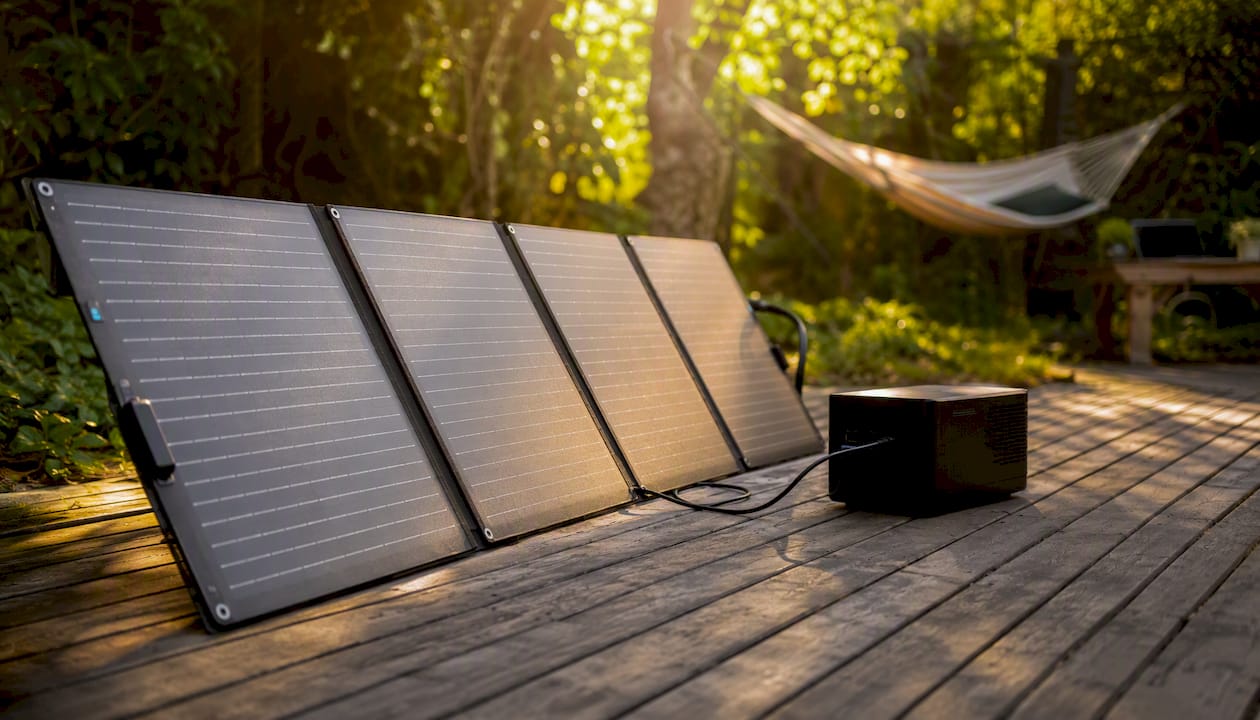
A practical example: the EcoFlow DELTA Pro 3 with a 2,600 W MPPT solar input can reach full charge from a bank of solar panels in roughly 2–3 hours of strong sun. A unit with a 400 W solar input on the same panel array takes 10–12 hours. For multi-day outages, faster solar recharge is the feature that keeps your system usable.
Price ranges for homeowners
At the entry level, a single 1,000–2,000 Wh unit (Jackery Explorer 1000, Bluetti AC200Max, EcoFlow Delta Max) runs roughly $700–$1,800 and covers essential devices for 12–24 hours. Mid-range expandable systems, such as the Bluetti AC200Max with one B300 expansion pack, land around $3,000–$4,000 and cover 24–36 hours of critical loads. High-end whole-house-ready systems, such as the EcoFlow DELTA Pro Ultra or Anker SOLIX F3800 Plus with expansion batteries, start around $5,000–$8,000 and can sustain multi-day outages for most of a home's critical circuits.
Questions to ask before you buy
- Does the unit use LFP chemistry, and what is the rated cycle count?
- How many expansion packs does it support, and what is the maximum total kWh?
- Is there a domestic (US-based) service center and a clear warranty process?
- Does the inverter support 240V output if you have well pumps, dryers, or HVAC?
- Is the transfer-switch compatibility documented, and does the vendor provide guidance?
Red flags to watch for: limited or single expansion ports with no upgrade path, missing cycle-life specs in product listings, no US-based support contact, unverified fast-charge claims without MPPT ratings listed, and NMC chemistry on units priced as long-term home backup solutions.
How were these picks selected and tested?
Transparency matters. Here is exactly how this shortlist was built.
Selection criteria applied to every model:
- Recharge speed (AC and solar), weighted heavily because slow recharge cripples a system during multi-day outages
- Inverter continuous and surge output, verified against manufacturer specs and cross-referenced with lab sources
- Usable Wh (not nameplate), with attention to BMS reserve margins
- Expandability method: slide-on, bolt-on, or stackable, and the maximum kWh ceiling
- Battery chemistry and rated cycle count (LFP preferred for long-term home use)
- Safety features: BMS protection, thermal management, and UL/ETL certifications where documented
- Warranty length and US-based service availability
- Real-world runtime estimates cross-referenced against independent lab guidance
How runtime examples were estimated: Runtime figures in this article are calculated from continuous watt draws applied to usable Wh figures, not from manufacturer marketing claims. Manufacturer runtime estimates were not used directly; they were cross-checked against OutdoorGearLab's lab-tested rankings and Consumer Reports' methodology.
Disclosure: Toddra is the publisher of this article and sells the Jackery Battery Pack 5000 Plus expansion product featured as the top pick. That commercial relationship is stated plainly here. The selection criteria above were applied consistently across all models; no product was excluded or downgraded because it competes with Toddra's inventory. Editorial practices follow the standards outlined by JICWEBS for brand-safe, independent publishing.
Update date: This article reflects model availability and specifications as of 2026. The portable power station category changes rapidly; check current pricing and availability before purchasing, as models and expansion options are updated frequently.
Why LFP battery chemistry and modular expansion matter for your home
LFP vs. NMC: what the chemistry difference means for you
LiFePO4 (LFP) and lithium nickel manganese cobalt oxide (NMC) are the two chemistries you will encounter in home-backup power stations. LFP wins on three dimensions that matter for long-term home use.
First, cycle life. LFP cells typically deliver 3,000–4,000+ charge cycles before dropping to 80% capacity. NMC cells in consumer power stations often rate 500–1,000 cycles. If you cycle your system once per week during outage season, an LFP unit lasts 10+ years; an NMC unit at the same rate may need replacement in 2–4 years. Second, thermal stability. LFP chemistry is significantly more resistant to thermal runaway than NMC, which matters when a unit is stored in a garage or utility room where temperatures fluctuate. Third, cost per cycle over the unit's life. A $1,500 NMC unit at 500 cycles costs $3.00 per cycle. A $2,000 LFP unit at 4,000 cycles costs $0.50 per cycle. The upfront premium on LFP pays for itself many times over for homeowners who plan to use the system regularly.
How modular expansion actually works
Three main architectures exist in the market. Slide-on modules attach physically to the base unit's expansion rail, like the Jackery Battery Pack 5000 Plus, creating a single integrated system with no separate cables. Bolt-on expansion packs connect via a dedicated port on the base unit, as with Bluetti's B300 batteries and EcoFlow's expansion batteries. Stackable hub-and-spoke systems, like the EcoFlow DELTA Pro Ultra's architecture, allow multiple base units and expansion batteries to link together for very large total capacity. Slide-on and bolt-on systems are the most practical for most homeowners because they require no installation beyond connecting the pack, as documented in expansion architectures like Firman's Zero-E slide-on system.
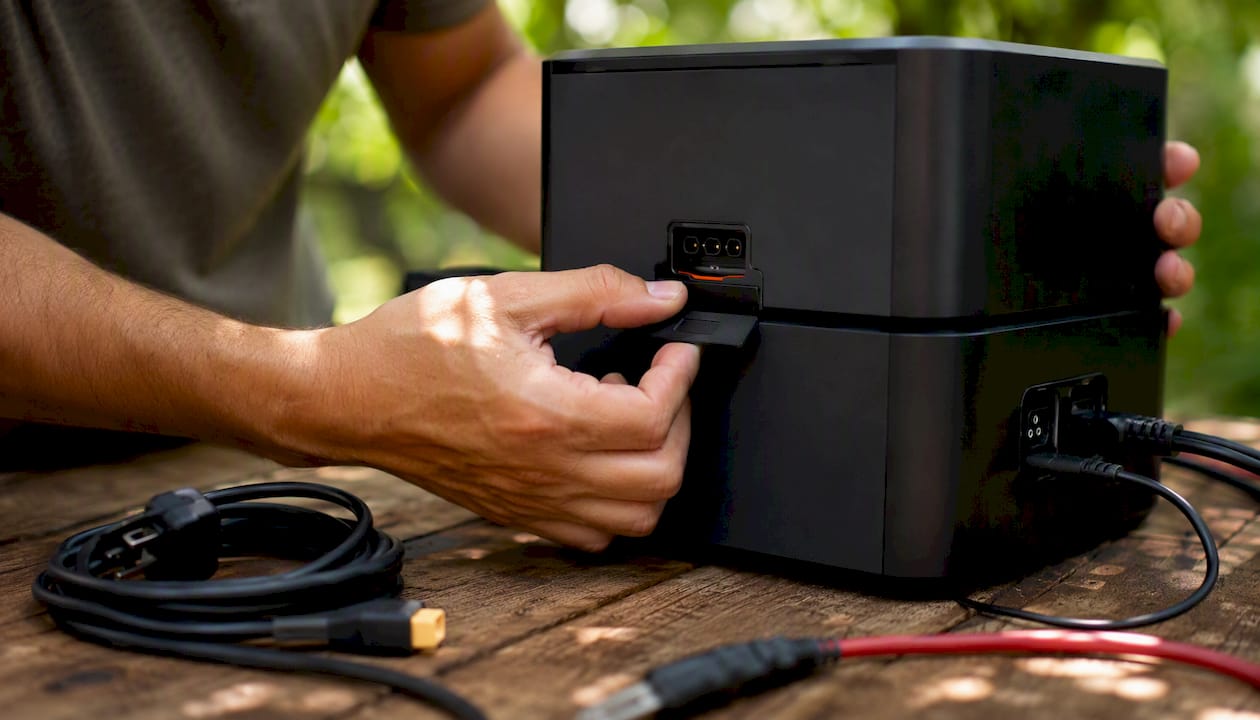
For home integration, expandable systems pair with a transfer switch or interlock kit to connect to your home's subpanel. This is not a DIY project for most homeowners; a licensed electrician should handle the transfer-switch connection. The Toddra emergency power guide covers the basics of what to expect from that process.
Maintenance and longevity tips
Keep your unit between 20% and 80% state of charge during long-term storage; most BMS systems allow you to set a storage charge limit in the companion app. Store units in a temperature-controlled space, ideally between 50°F and 77°F, because both extreme heat and cold reduce effective capacity and accelerate cell aging. Update firmware when the manufacturer releases it; BMS improvements often extend cycle life and improve charge efficiency. Check expansion pack connectors every six months for corrosion or debris, particularly in humid climates.
Pro Tip: Choose one high-capacity expansion pack over two smaller ones whenever your budget allows. Fewer connector points mean fewer potential failure locations, and a single large module is easier to manage and store than two separate packs.
Toddra's US-based customer support team is available to help with sizing questions, compatibility checks, and setup guidance. Reach out through Toddra's website before purchasing if you are unsure which base unit and expansion combination fits your home's load profile.
Key Takeaways
For most homeowners, an LFP-based expandable power station with at least one high-capacity expansion module is the most reliable, cost-effective home backup solution available in 2026.
| Point | Details |
|---|---|
| LFP chemistry is the long-term choice | LFP cells deliver 3,000–4,000+ cycles vs. 500–1,000 for NMC, making them far more cost-effective over time. |
| Size to 24 hours of critical load | Multiply your continuous watt draw by 24 to find your minimum usable Wh target, then add one expansion pack for margin. |
| Recharge speed is a key differentiator | Top models recharge up to six times faster than slower units; prioritize high MPPT solar input for multi-day outages. |
| Two red flags to stop a purchase | Missing cycle-life specs and no US-based service contact are the two clearest signs to walk away. |
| Toddra's top pick | The Jackery Battery Pack 5000 Plus via Toddra pairs with the Explorer 5000 Plus for ~10,000 Wh of LFP backup with US support. |
The case for sizing up, not settling
There is a version of this decision that most buyers get wrong: they size to today's needs and regret it within a year. A homeowner who buys a 2,000 Wh unit because it covers the refrigerator and lights discovers, during the first real multi-day outage, that they also wanted to run a fan, charge a laptop, and keep a medical device going overnight. The math does not work, and there is no expansion port to rescue them.
The expandable architecture exists precisely to solve that problem, but only if you buy into a system that actually supports expansion from day one. A unit with no expansion port is a fixed-capacity purchase, full stop. The Goal Zero Yeti 6000X is a good example: impressive capacity in a single chassis, but no upgrade path. If your needs grow, you buy a second unit.
The models that earn a genuine recommendation here, particularly the Jackery Explorer 5000 Plus with the Battery Pack 5000 Plus expansion, the EcoFlow DELTA Pro 3, and the Anker SOLIX F3800 Plus, share one quality that matters more than any single spec: they were designed to grow. You can start with the base unit, live with it through one or two outages, learn what you actually need, and then add capacity without replacing the whole system. That is the right way to buy home backup power, and it is the approach we stand behind.
Toddra's expandable home backup systems, ready to ship
The Jackery Battery Pack 5000 Plus, available through Toddra, is the expansion option we recommend most for homeowners who want scalable LFP backup with reliable US support. Paired with the Jackery Explorer 5000 Plus base unit, you get roughly 10,000 Wh of LFP capacity, 240V output capability, and a slide-on connection that requires no tools or electrician for the expansion itself.
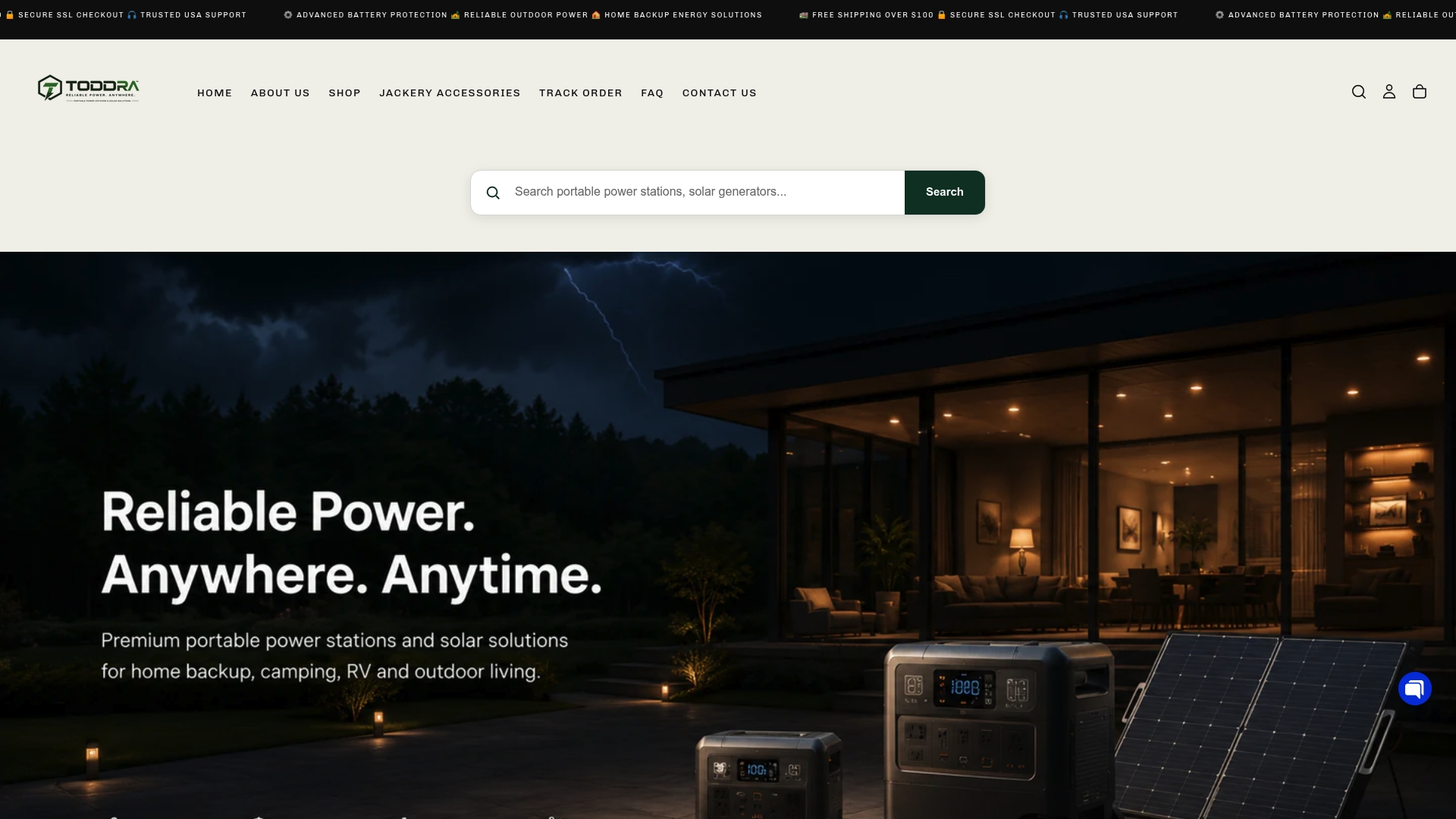
Toddra ships across the US with secure checkout, and the team is available to help you confirm compatibility, check current bundle pricing, and answer sizing questions before you order. The Jackery warranty covers five years, and Toddra's US-based support means you have a real contact if anything needs attention after delivery.
Shop the Jackery Battery Pack 5000 Plus expansion and configure your home backup system today.
Useful sources and further reading
The sources below are the primary references used in this article. Each one is worth bookmarking if you want to dig deeper into specs, lab methodology, or home-circuit integration.
- Best Portable Power Stations - Consumer Reports
- The Best Power Stations of 2026 | Lab Tested & Ranked
- U.S. Energy Information Administration — Today in Energy
- Zero-E System plus Expansion Battery – FIRMAN Power Equipment
- PowerJam Portable Power Station | Crowd Funding Offerings | Western Harmonics Off‑Grid Power Hardware
- PowerJam 1200wh | Solar and Battery Systems | Western Harmonics Off‑Grid Power Hardware
- Toddra
- JICWEBS - Brand Safety Standards
For home-circuit integration guidance, the Toddra backup power circuit guide and the emergency power station uses guide are practical starting points for homeowners planning their first installation.