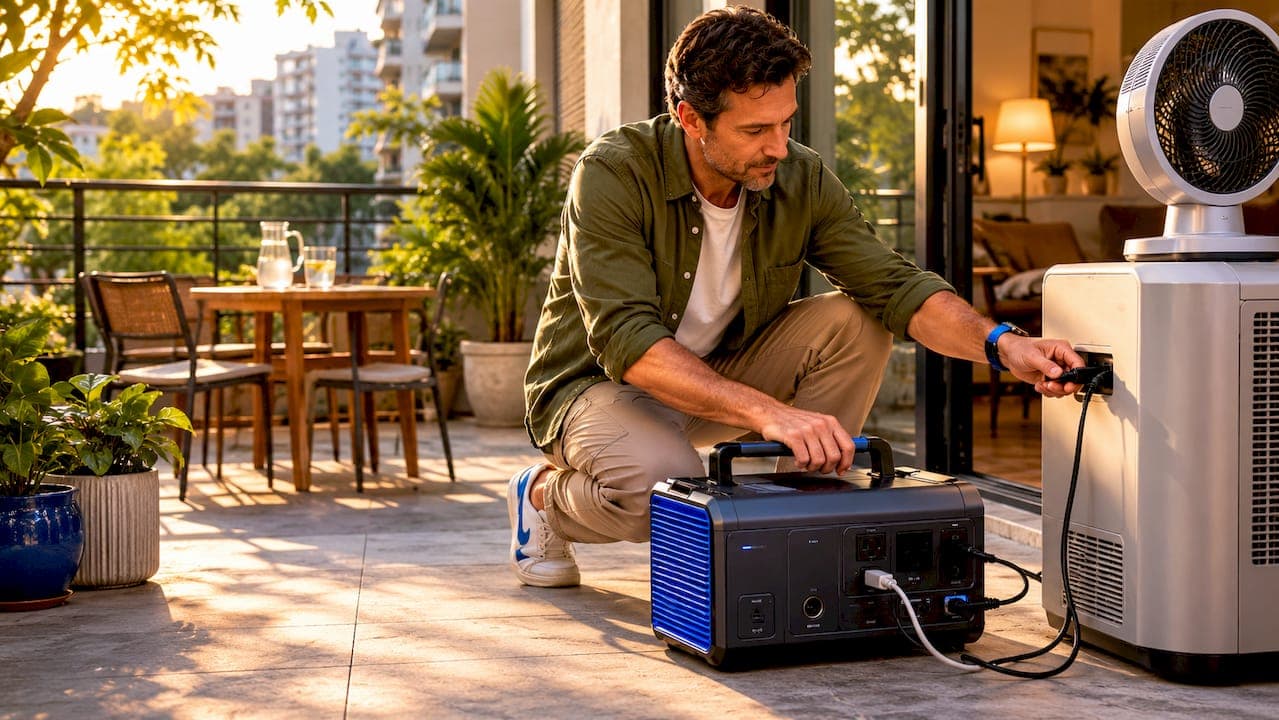
A portable power station replaces a generator by delivering stored electrical energy silently, without fuel, and safely indoors — but with a fixed capacity that must be recharged between uses. Understanding this distinction is the key to deciding whether a power station can replace a generator in your specific situation. The two devices solve the same core problem through completely different technology. This guide explains the fundamental differences, the real-world scenarios where a power station wins, and the cases where a gas generator remains the better call.
How a power station replaces a generator: core technology differences
Power stations store electricity chemically in a battery pack, typically using LiFePO4 or lithium-ion cells. You charge the unit from a wall outlet, solar panels, or a car port, then draw from that stored energy when you need it. Generators work the opposite way. They burn gasoline or propane to spin a mechanical alternator, producing electricity on demand for as long as fuel is available.
The practical differences between these two approaches show up immediately in daily use:
- Noise: Power stations operate virtually silently. Gas generators typically produce 65–75 decibels, roughly equivalent to a vacuum cleaner running continuously.
- Emissions: Power stations produce zero emissions, making them safe indoors. Gas generators emit carbon monoxide and must always run outside. CO poisoning causes 85–100 deaths yearly from portable generator misuse. That number represents a preventable risk that power stations eliminate entirely.
- Maintenance: Generators require regular oil changes and fuel stabilization to stay reliable. Power stations need almost no maintenance beyond keeping the battery charged.
- Surge capacity: Both devices have surge and continuous watt ratings. Without adequate surge watts, a power station's internal breaker trips when a refrigerator or air conditioner starts up. Always check the surge rating before connecting inductive appliances.
Pro Tip: Check the surge watt rating on any power station before connecting a refrigerator, sump pump, or window AC unit. The startup draw on those appliances is often 2–3 times their running wattage.
Gas generators typically output 3,500W–7,500W continuously and cost $500–$1,500. Power stations range from $239 to over $5,000 depending on capacity. The price overlap is real, so the decision comes down to use case, not budget alone.
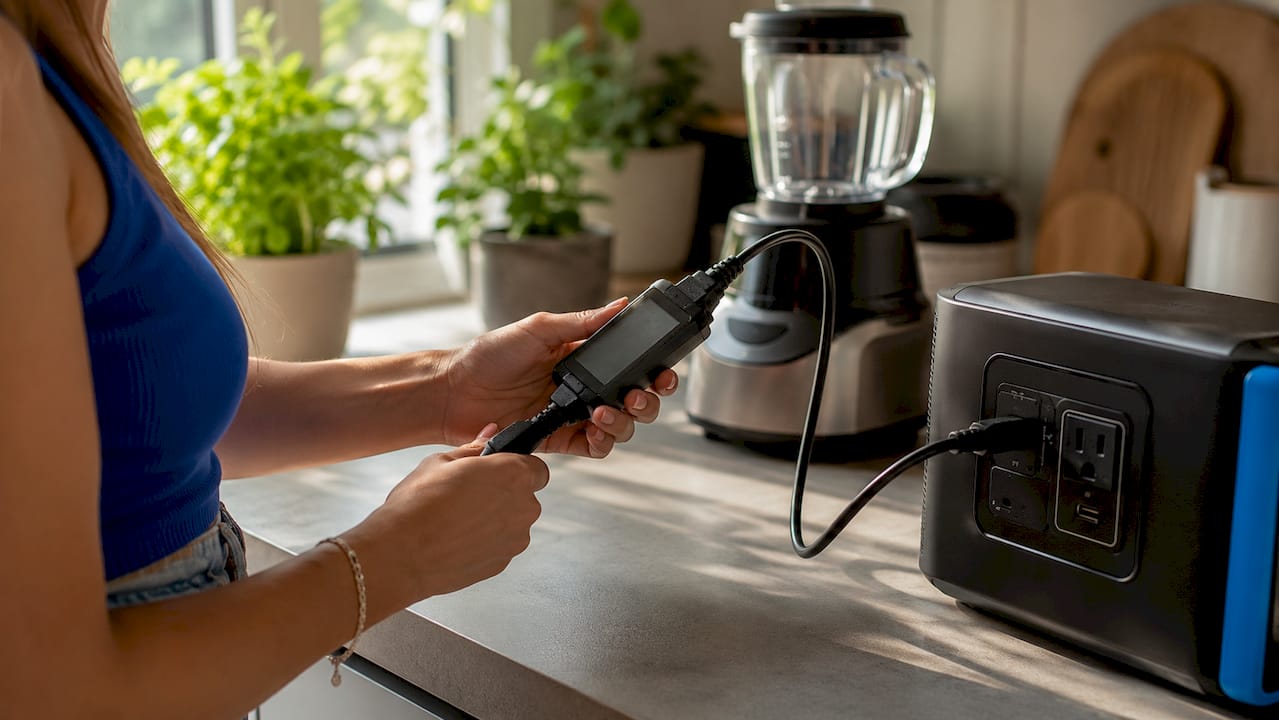
When can a power station replace a generator effectively?
A power station is the right replacement for a generator in specific, well-defined situations. Knowing those situations prevents both under-buying and over-buying.
- Short-duration power needs (4–12 hours). Power stations excel at short-duration use covering an overnight outage, a camping trip, or a workday at a remote site. A 2,000Wh unit running a 60W fan, a 50W phone charger, and a 150W laptop covers roughly 7–8 hours of combined use.
- Indoor or apartment settings. A power station is the only safe option indoors. Running a gas generator inside a garage or apartment is a documented cause of fatal CO poisoning. Power stations carry no such risk.
- Camping and outdoor recreation. Campers who want to run a CPAP machine, charge devices, or power a small cooler overnight get everything they need from a mid-capacity power station without disturbing neighboring campsites.
- Essential low-to-moderate power devices. Lights, fans, routers, medical devices, and small appliances all fall well within the output range of most portable power stations.
- Solar-paired off-grid setups. Power stations paired with solar panels can operate indefinitely during daylight hours, removing dependence on fuel supply entirely. This is the strongest argument for power stations as long-term generator replacements in sunny climates.
The Jackery Explorer 2000 Plus, for example, delivers 3,000W of continuous output from a 2,042Wh battery. That covers most household essentials during a short outage. Paired with solar panel accessories, it recharges during the day and runs through the night.
Pro Tip: For emergency preparedness, calculate your overnight essentials load first. Add up the wattage of your refrigerator, phone charger, and one light. That number tells you the minimum capacity you need.
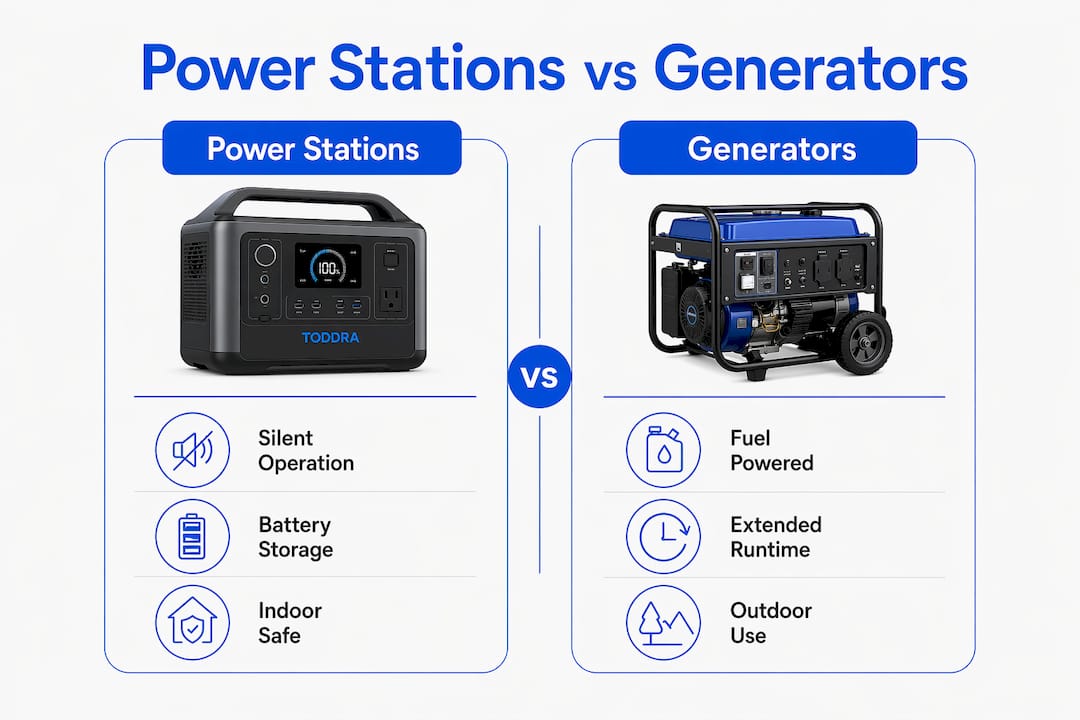
Power stations are increasingly favored for sustainable, quiet, indoor-safe power, especially when solar charging is part of the setup. The trend reflects a real shift in how consumers think about backup power.
Why generators still win for certain applications
Generators remain the better tool for extended, high-demand power situations. Understanding where they outperform power stations prevents a costly mistake.
| Scenario | Power Station | Gas Generator |
|---|---|---|
| Multi-day outage (3+ days) | Limited by battery capacity | Unlimited with fuel supply |
| Whole-home backup | Requires professional setup | Direct panel connection available |
| Heavy power tools (10,000W+) | Not suitable | Handles high continuous draw |
| Indoor overnight use | Safe, silent | Dangerous indoors, noisy |
| Fuel availability concerns | No fuel needed | Dependent on gas supply |
| Maintenance burden | Minimal | Oil, fuel stabilizer, tune-ups |
Generators provide unlimited runtime as long as fuel and engine health are maintained. That is their defining advantage. A 5,500W gas generator running a well pump, a refrigerator, and a window AC unit simultaneously is doing work no portable power station can match at a comparable price point.
The catch is that fuel degrades over months without stabilizers, which means a generator stored for emergency use may fail to start exactly when you need it most. This is the main failure point of generators during outages, and it is a problem power stations never face.
Pro Tip: If you own a generator for extended outages, run it for 20–30 minutes every 90 days and treat the fuel with a stabilizer like STA-BIL. This single habit prevents the majority of emergency startup failures.
The hybrid approach is the most practical solution for most households. Use the generator during the day to power high-draw appliances and simultaneously charge the power station. At night, switch to the power station for silent, emission-free operation. This combination covers both extended runtime and indoor safety without compromise.
How to determine if a power station meets your needs
Replacing a generator with a power station starts with one calculation: your total watt-hour load over the time period you need coverage.
Here is how to work through it:
- List every device you plan to run. Note the wattage of each. Most appliances print this on a label near the power cord.
- Estimate daily hours of use. Multiply each device's wattage by the hours you plan to run it. A 200W refrigerator running 8 hours draws 1,600Wh.
- Add a 20% buffer. Batteries lose efficiency over time, and real-world draw often exceeds estimates. Build in margin.
- Check surge ratings. Surge capacity ratings are critical for inductive appliances. A refrigerator rated at 200W continuous may need 600W or more to start. A power station without sufficient surge watts will trip its breaker on startup.
- Plan your recharge source. Wall charging is fastest, typically 1–3 hours for most mid-range units. Solar charging depends on panel wattage and sunlight. Car charging is the slowest option and best used as a supplement.
| Device | Typical Wattage | 8-Hour Draw |
|---|---|---|
| Refrigerator | 150–200W | 1,200–1,600Wh |
| Laptop | 45–65W | 360–520Wh |
| LED lights (4 bulbs) | 40W | 320Wh |
| Phone charger | 18–25W | 144–200Wh |
| CPAP machine | 30–60W | 240–480Wh |
Consumers often misunderstand the difference between a generator's on-demand power and a power station's stored capacity. A generator does not run out of power mid-task as long as it has fuel. A power station has a hard ceiling. Knowing that ceiling and planning around it is the entire skill set required to use a power station confidently.
Power stations generally lack built-in transfer switches for whole-home automatic backup. If you want seamless integration with your home's electrical panel, a professional electrician and a generator with a transfer switch is still the standard solution. Power stations work best as direct-plug devices for specific appliances, not as whole-home replacements.
Key takeaways
A power station replaces a generator reliably for short-duration, indoor, and low-to-moderate load scenarios, but generators remain necessary for multi-day outages, high-draw appliances, and whole-home backup.
| Point | Details |
|---|---|
| Core technology difference | Power stations store energy in batteries; generators produce it mechanically from fuel on demand. |
| Best replacement scenarios | Power stations work well for 4–12 hour needs, indoor use, camping, and solar-paired off-grid setups. |
| Generator advantages | Unlimited runtime with fuel and high continuous output make generators irreplaceable for extended outages. |
| Hybrid approach | Combine both devices: generator for daytime high loads, power station for silent overnight use. |
| Sizing your decision | Calculate total watt-hour load, add a 20% buffer, and verify surge ratings before choosing a power station. |
The honest case for knowing your load before you buy
I have talked with a lot of people who bought a power station expecting it to do everything a generator does. Most of them were not wrong to buy it. They were wrong about what they needed it for.
The single most common mistake I see is buying based on marketing wattage numbers without ever calculating actual load. Someone buys a 2,000Wh unit, plugs in a window AC on day one, and wonders why it trips. The unit is not defective. The load profile was never checked.
My honest recommendation for most households is the hybrid setup. A mid-capacity power station handles 90% of your daily backup needs quietly and without any fuel logistics. A generator sits in the garage for the 10% of situations that require sustained, high-draw power. You do not have to choose one or the other.
The off-grid and emergency power community has understood this for years. The people who are most prepared are not the ones with the biggest generator. They are the ones who understand their load profile and have matched their equipment to it. That knowledge is worth more than any single piece of hardware.
If you are still deciding, start with your overnight essentials. Calculate that load, find a power station that covers it with margin, and add solar charging if you want true independence. That is a reliable, quiet, and genuinely useful setup for most homes.
— Jackson
Find the right power station for your setup at Toddra
If this guide has helped you see where a power station fits your life, Toddra makes it easy to find the right unit. The Jackery Explorer 2000 Plus delivers 3,000W of continuous output from a 2,042Wh LiFePO4 battery, covering most household essentials through a full overnight outage. It charges from solar, wall, or car inputs and runs silently indoors with zero emissions.
Toddra carries a carefully selected range of portable power stations and solar generators built for home backup, camping, and off-grid use. Every product ships with US-based customer support and secure checkout. Whether you are replacing a noisy generator for overnight use or building a solar-paired system for true energy independence, Toddra has a solution sized for your needs.
FAQ
Can a power station fully replace a gas generator?
A power station fully replaces a gas generator for short-duration, low-to-moderate load needs such as camping, overnight outages, and indoor use. For multi-day outages or high-draw appliances, a generator or hybrid setup is more reliable.
How long will a power station run before needing a recharge?
Runtime depends on battery capacity and load. A 2,000Wh power station running a 200W refrigerator and basic lighting will last roughly 7–9 hours before requiring a recharge from a wall outlet or solar panels.
Are power stations safe to use indoors?
Power stations are completely safe indoors because they produce zero emissions. Gas generators emit carbon monoxide and must always be operated outside, at least 20 feet from any door or window.
What is the biggest limitation of using a power station instead of a generator?
The primary limitation is finite stored capacity. Unlike a generator that runs as long as fuel is supplied, a power station has a fixed energy ceiling and requires recharging time between uses.
Do power stations work with solar panels for extended off-grid use?
Yes. Solar-compatible power stations paired with solar panels can recharge continuously during daylight hours, enabling indefinite off-grid operation without any fuel dependence during periods of adequate sunlight.