
A portable power station is a self-contained rechargeable energy storage system that delivers AC and DC electricity on demand without fuel, noise, or emissions. These devices pack a battery, inverter, charge controller, and battery management system into one enclosure, with capacities typically ranging from 200Wh to over 5,000Wh. Whether you are heading into the backcountry, preparing for a power outage, or building an off-grid setup, understanding how these units work and what separates a good one from a great one will save you money and frustration.
How does a portable power station work?
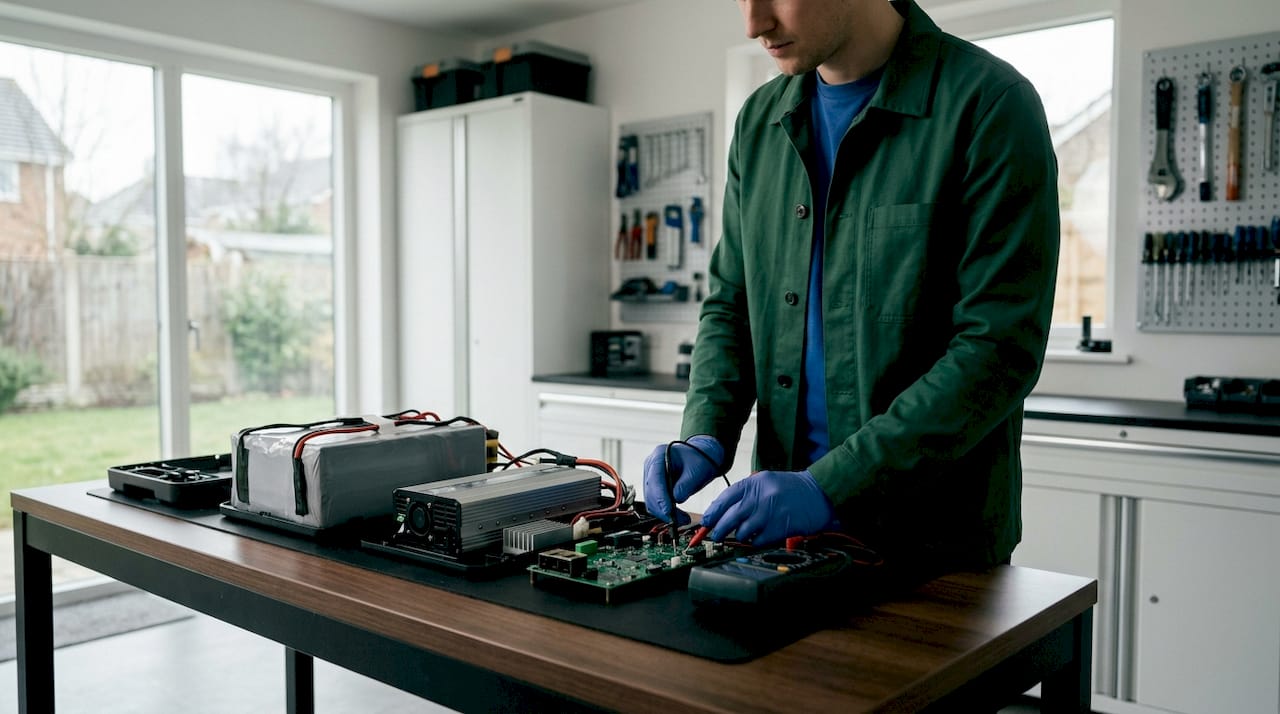
A portable power station stores electricity as DC power in its battery, then converts it to AC power through a built-in inverter when you plug in a device. Four core components make this possible, and each one plays a distinct role in keeping your gear running safely.
The four core components
- Battery: The heart of the unit. It stores energy measured in watt-hours (Wh). A 1,000Wh battery can theoretically power a 100-watt device for 10 hours, though real-world efficiency losses reduce that slightly.
- Inverter: Converts stored DC power into the AC electricity your household appliances need. The inverter's continuous watt rating tells you the maximum load it can sustain.
- Charge controller: Manages incoming power from wall outlets, solar panels, or vehicle ports. It optimizes charging speed and protects the battery from receiving too much current at once.
- Battery Management System (BMS): The safety layer. The BMS monitors temperature and balance, prevents overcharging and overdischarging, and shuts the unit down before damage occurs.
Together, these four components form what the industry calls a solar generator when the unit is optimized for solar input. Not every portable power station qualifies as a solar generator, though. Solar generators are a subset of the broader portable power station category.
Continuous watts vs. surge watts
Continuous watts describe the steady load an inverter can handle. Surge watts describe the brief spike of power an appliance needs to start. Appliances with motors require 2 to 5 times their running watts to start up. A refrigerator that draws 150 watts continuously may demand 600 watts or more at startup. If your power station's surge rating falls short of that spike, the unit shuts down immediately. Always check both numbers before connecting motor-driven appliances.
Pro Tip: Write down the running watts and startup surge watts for every appliance you plan to power. Compare both numbers against the station's specs before you buy.
How do you choose the right portable power station?
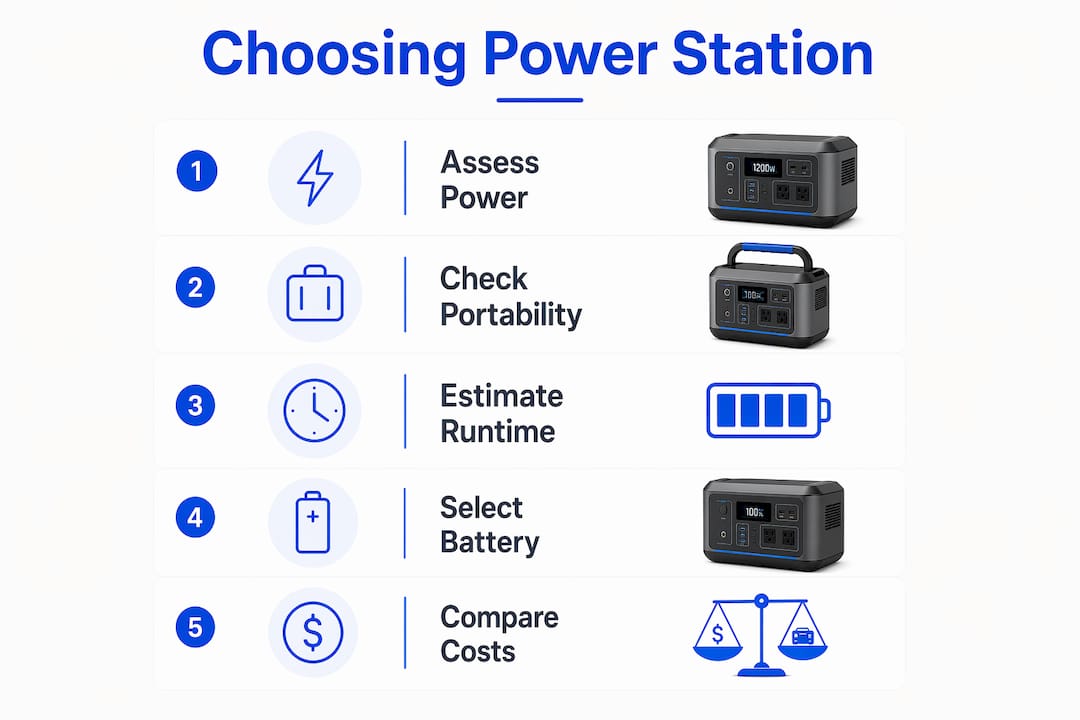
Choosing the right unit comes down to three variables: how much power you need, how far you need to carry it, and how long you expect it to last.
Capacity and runtime
Watt-hours tell you how much total energy the battery holds. Divide the Wh rating by your device's wattage to estimate runtime. A 500Wh station running a 50-watt fan gives you roughly 10 hours of use. Larger capacity means longer runtime, but it also means more weight.
Battery chemistry: LiFePO4 vs. NMC
Battery chemistry is the single most overlooked spec in most portable power station buying guides. The two dominant chemistries are lithium iron phosphate (LiFePO4) and lithium nickel manganese cobalt oxide (NMC).
| Feature | LiFePO4 | NMC |
|---|---|---|
| Cycle life | 3,000–4,000+ cycles | 500–1,000 cycles |
| Safety | Highly stable, low thermal runaway risk | Higher energy density, more heat-sensitive |
| Weight | Slightly heavier per Wh | Lighter per Wh |
| Best for | Daily use, emergency backup, off-grid | Occasional use, weight-sensitive applications |
| Long-term value | Strong total cost of ownership | Lower upfront cost, shorter lifespan |
LiFePO4 chemistry has become the preferred choice for daily use and harsh conditions. The cycle count advantage means a LiFePO4 unit can last a decade of regular use before capacity drops to 80%, while an NMC unit may need replacement in two to three years.
Weight and portability trade-offs
Capacity and weight are directly linked. Units around 1,000Wh weigh roughly 25–30 lbs, which one person can carry comfortably. Units over 2,000Wh often require two people or a wheeled cart for safe transport. If you are backpacking or moving the unit frequently, a lightweight portable power station in the 200Wh to 500Wh range is the practical choice. For base camp setups or home backup, a larger unit with integrated wheels makes more sense.
Pro Tip: If you are buying a unit over 30 lbs, check whether it includes a built-in handle and wheel kit before purchasing. A folding trolley cart added later solves the problem, but planning ahead saves the extra cost.
What are the best uses for portable power stations?
Portable power stations serve three primary scenarios, and the right unit for each looks different.
Outdoor activities and camping
For camping and overlanding, a portable power station replaces a noisy gas generator with a quiet, clean alternative. You can run a CPAP machine, charge camera batteries, power LED lighting, and keep a small cooler running overnight. A 500Wh to 1,000Wh unit covers most weekend camping needs. Pair it with a solar panel connector kit to recharge during the day without needing a wall outlet.
Emergency backup power
Portable power stations produce zero carbon monoxide, which makes them safe to run indoors during a power outage. Gas generators cannot be used inside a home or garage without serious CO poisoning risk. A power station can keep a refrigerator running, charge phones and laptops, and power medical devices like oxygen concentrators. For whole-home integration, a manual transfer switch connects the unit safely to your home's circuit panel.
Off-grid and van life applications
Off-grid users and van lifers rely on portable power stations as their primary electricity source. The ability to recharge via solar panels, wall outlets, or vehicle ports gives these users flexibility that no single-source system can match. Remote job sites use them to power drills, saws, and laptops without running a generator. For off-grid and emergency scenarios, a unit with expandable battery capacity and high solar input limits is the most reliable long-term solution.
The portability trade-off matters here. A van lifer who never moves the unit can choose a high-capacity model with wheels. A remote worker who carries the unit to different sites needs something under 30 lbs.
How do you read portable power station specs?
Spec sheets can look intimidating, but each number answers a specific question. Here is how to decode the most important ones:
- Watt-hours (Wh): Total energy storage. Divide by your device's wattage to estimate runtime. A 1,000Wh station running a 200-watt appliance lasts roughly 5 hours.
- Continuous watts: The maximum steady load the inverter can handle. Never run appliances that exceed this number.
- Surge watts: The peak power the inverter can deliver for a few seconds during startup. This number must exceed your appliance's startup demand. Insufficient surge capacity causes immediate shutdown.
- Input limits (watts): The maximum charging rate from each source. A unit with a 400W solar input limit charges faster than one capped at 100W. Higher input limits mean shorter recharge times.
- Output ports: AC outlets power standard appliances; DC barrel ports and 12V car sockets serve specialized equipment; USB-A and USB-C Power Delivery ports charge phones, laptops, and cameras. USB-C PD ports support fast charging at multiple voltages, which matters when you need a laptop charged quickly.
One spec that often gets overlooked is the inverter's pure sine wave vs. modified sine wave output. Pure sine wave inverters are safe for sensitive electronics like laptops, medical devices, and audio equipment. Modified sine wave inverters cost less but can damage or reduce the efficiency of sensitive gear. Always confirm which type a unit uses before connecting expensive devices.
Key takeaways
A portable power station is the safest, most versatile power source for outdoor, emergency, and off-grid use when matched correctly to your wattage needs and portability requirements.
| Point | Details |
|---|---|
| Core components matter | Battery, inverter, BMS, and charge controller each affect safety, speed, and reliability. |
| Surge watts are critical | Always match the station's surge rating to your appliance's startup demand to prevent shutdowns. |
| LiFePO4 outlasts NMC | LiFePO4 delivers 3,000–4,000+ cycles versus 500–1,000 for NMC, making it the better long-term value. |
| Weight limits real portability | Units over 30 lbs require wheels or two-person handling; plan for transport before you buy. |
| Specs tell the full story | Read Wh, continuous watts, surge watts, input limits, and port types together, not in isolation. |
What i have learned after years with portable power stations
Most buyers focus entirely on watt-hours and ignore surge watts. That is the single most common mistake I see. Someone buys a 1,000Wh unit, plugs in a small refrigerator, and the station shuts off immediately. The battery had plenty of energy. The inverter simply could not handle the startup spike. Checking surge ratings takes 30 seconds and prevents that frustration entirely.
The second thing people get wrong is treating "portable" as a guarantee. A 2,500Wh unit is technically portable. Moving it solo across a campsite is a different story. I have watched people strain their backs trying to carry units that clearly needed a cart. The portability-capacity tradeoff is real, and no spec sheet will warn you about it the way experience does.
Battery chemistry is where I feel the strongest. LiFePO4 costs more upfront, and that price difference is real. But when you do the math over five or ten years of use, the cost per cycle on a LiFePO4 unit is dramatically lower. For emergency backup or daily off-grid use, buying NMC to save money today usually means buying again in two years.
My honest recommendation: buy one size larger than you think you need, choose LiFePO4 if your budget allows, and always verify surge watts before connecting anything with a motor.
— Jackson
Find the right power station at Toddra
Choosing the right portable power station is easier when you have quality options in one place.
Toddra carries a carefully selected range of portable power stations and solar generators built for outdoor adventures, emergency preparedness, and off-grid living. From compact lightweight units ideal for weekend camping to high-capacity models designed for home backup, every product is chosen for reliability and safety. You will also find compatible Jackery solar accessories and transport solutions to complete your setup. Toddra's US-based customer support team is ready to help you find the right fit. Explore the full collection and buy with confidence.
FAQ
What is a portable power station?
A portable power station is a rechargeable battery system that stores electricity and delivers it through AC outlets, USB ports, and DC connections without fuel or emissions. Capacities typically range from 200Wh to over 5,000Wh.
How is a portable power station different from a power bank?
Power banks charge phones and tablets via USB. Portable power stations power heavy-duty appliances like refrigerators and medical devices through full AC outlets, making them a fundamentally different class of device.
Can i use a portable power station indoors during a power outage?
Yes. Portable power stations produce zero emissions and are completely safe for indoor use, unlike gas generators, which produce carbon monoxide and must never be used inside a home or garage.
What does watt-hour (wh) mean on a power station?
Watt-hours measure total energy storage. Divide the Wh rating by your device's wattage to estimate how long the station will power it. A 500Wh station can run a 50-watt device for approximately 10 hours.
Is LiFePO4 better than NMC for a portable power station?
LiFePO4 batteries last 3,000–4,000+ cycles before significant capacity loss, compared to 500–1,000 cycles for NMC. For regular or emergency use, LiFePO4 offers better durability, safety, and long-term value.