TL;DR:
- A solar generator system suitable for a remote cabin varies from compact units for weekend use to large, expandable kits for full-time living. Proper sizing depends on a load audit, battery capacity, inverter ratings, and solar input, ensuring reliable power and efficient recharge times. Toddra offers pre-built, U.S.-supported kits like the Jackery Solar Generator 2000 Plus and Battery Pack 5000 Plus, trusted for quality and expandability.
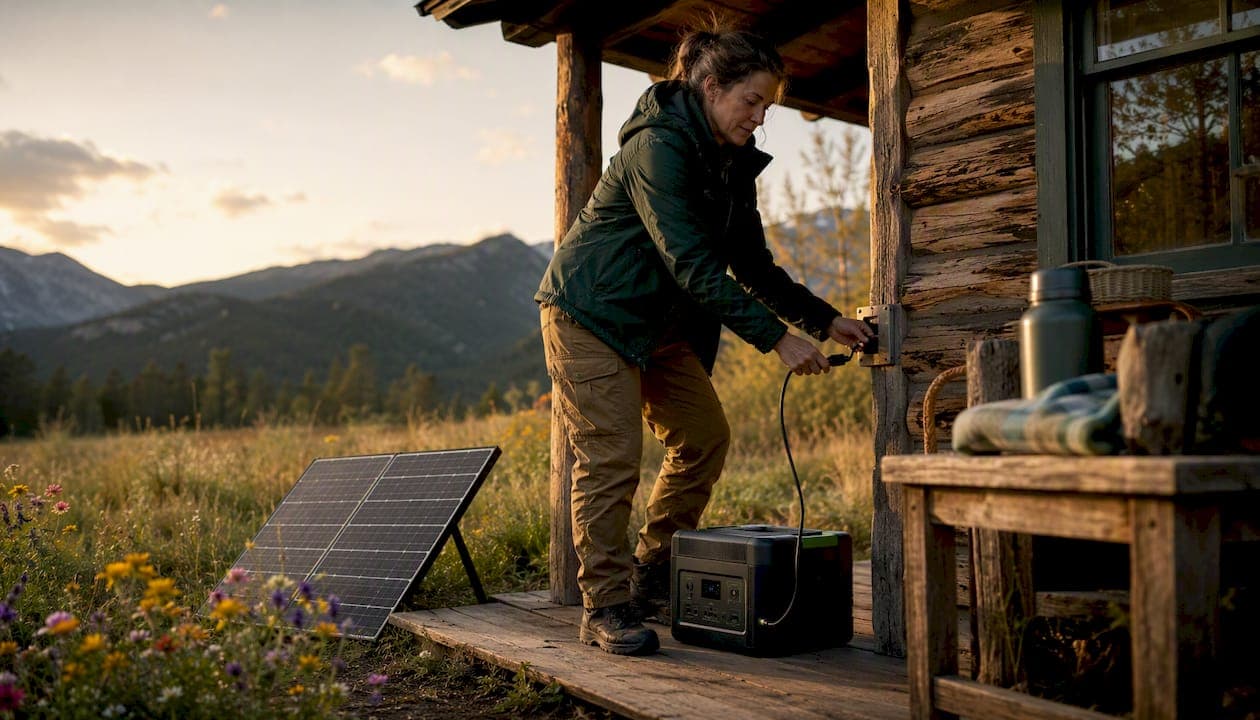
For a weekend tiny cabin, a compact portable solar generator handles lights, phone charging, and a small fan with ease. A seasonal or part-time cabin needs a mid-size system to run a refrigerator, water pump, and basic appliances. Full-time off-grid living calls for a large kit with expandable battery capacity and high solar input. Popular Mechanics reports that solar power stations carry lower lifetime operating costs than gas generators and run silently with far less maintenance. Toddra carries pre-built LiFePO4 kits across all three tiers, including the Jackery Solar Generator 2000 Plus (2,042 Wh, 3,000 W continuous) for mid-to-large cabin use.
Quick picks at a glance:
- Compact (weekend tiny cabin): 500–1,000 Wh, 1,000–2,000 W continuous. Powers LED lighting, phone/laptop charging, a small fan, and a mini cooler. Lightweight and portable.
- Mid-size (seasonal/part-time cabin): 1,500–2,500 Wh, 2,000–3,000 W continuous. Runs a full-size refrigerator, water pump, and basic cooking appliances. The Jackery Solar Generator 2000 Plus at Toddra fits squarely here.
- Large (full-time off-grid): 3,000+ Wh, expandable. Handles a refrigerator, well pump, lighting, HVAC fan, and power tools simultaneously. Pair with the Jackery Battery Pack 5000 Plus (5,040 Wh) for multi-day autonomy.
Table of Contents
- Which pre-built kit tier is right for your cabin?
- How do you size a solar generator kit for your cabin?
- What does a pre-built solar generator kit include?
- How long will your cabin appliances actually run?
- Fixed install or portable station: which setup fits your cabin?
- Why LiFePO4 chemistry and solar generators make sense for remote cabins
- What does a cabin solar generator system actually cost?
- Key Takeaways
- Why these kits earn our confidence for remote cabin use
- Toddra has the right kit for your cabin, ready to ship
- Useful sources for further reading
Which pre-built kit tier is right for your cabin?
Matching the right tier to your cabin starts with being honest about how you actually use the space. A Friday-to-Sunday retreat with two people has very different energy demands than a year-round home 40 miles from the nearest utility pole.
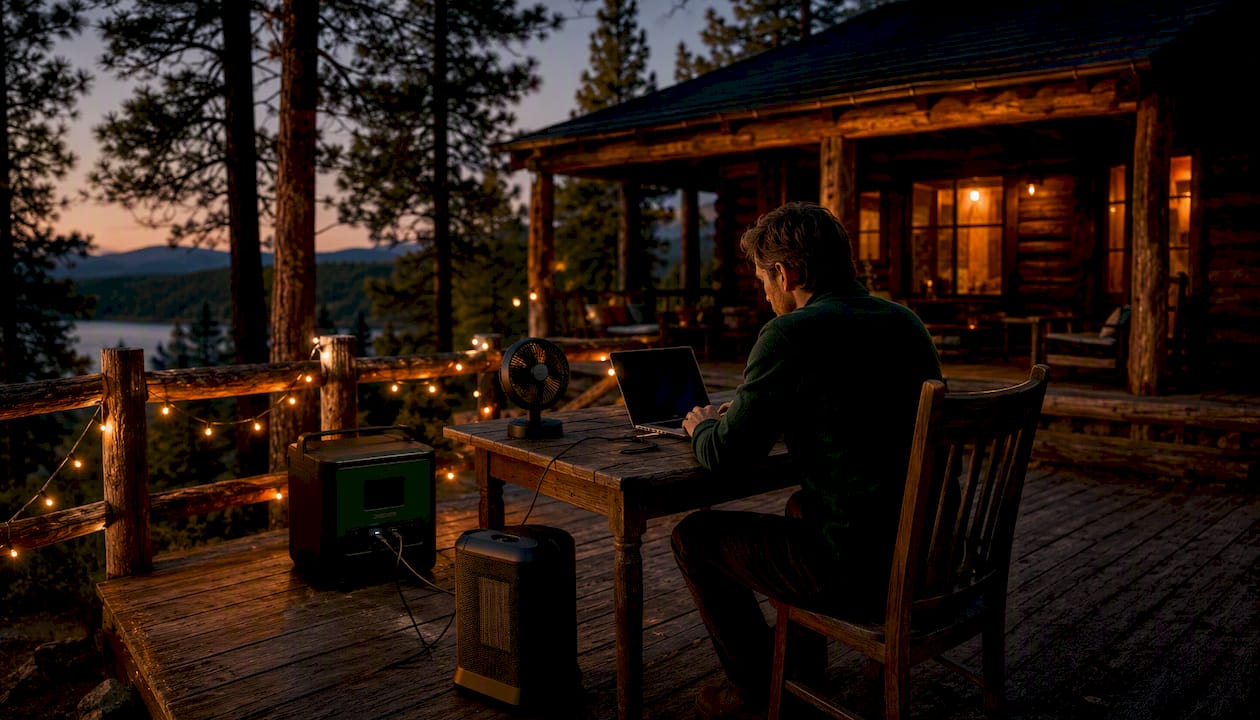
Compact tier suits tiny or very small weekend cabins where the priority is lights, device charging, and maybe a 12V cooler. These stations move easily between truck and cabin.
Mid-size tier (1,500–2,500 Wh) covers the most common cabin scenario: a weekend or seasonal retreat where you want a real refrigerator, a water pump, and the ability to charge tools or run a microwave briefly. Daily demand usually lands in a moderate range suitable for mid-size systems. The Jackery Solar Generator 2000 Plus (2,042 Wh, 3,000 W continuous, pure sine inverter, LiFePO4 chemistry) is the standout option at Toddra for this tier. Modern mid-size stations can accept up to 1,200–2,400 W of solar input, which cuts recharge time dramatically on sunny days.
Large tier (expandable) is built for full-time off-grid cabins running a full appliance load: refrigerator, well pump, lighting circuits, HVAC fan, and occasional power tools. Expandability is the defining feature here. Adding an expansion battery to a compatible base station pushes total usable capacity well beyond the base, giving you multiple days of autonomy without sunshine.
| Feature | Compact | Mid-Size | Large |
|---|---|---|---|
| Usable battery capacity | 500–1,000 Wh | 1,500–2,500 Wh | 3,000+ Wh (expandable) |
| Continuous / surge watts | 1,000 W / 2,000 W | 2,000–3,000 W / — | 3,000 W+ / 6,000 W+ |
| Typical max PV input | 200–400 W | 600–1,200 W | 1,200–2,400 W |
| Inverter type | Pure sine | Pure sine | Pure sine |
| Expandable battery | No | Some models | Yes |
| Weight band | Light | Medium | Heavy |
| Price band | Affordable | Mid-range | Premium |
| Warranty note | 1–2 years typical | 2–3 years typical | 2–5 years typical |
- Compact kits: best for weekend-only use, minimal loads, and buyers who need to carry the station in and out.
- Mid-size kits: the sweet spot for most cabin owners. Enough capacity for real appliances, fast solar recharge, and manageable weight.
- Large kits: designed for year-round reliability. Prioritize expandability and high PV input over portability.
How do you size a solar generator kit for your cabin?
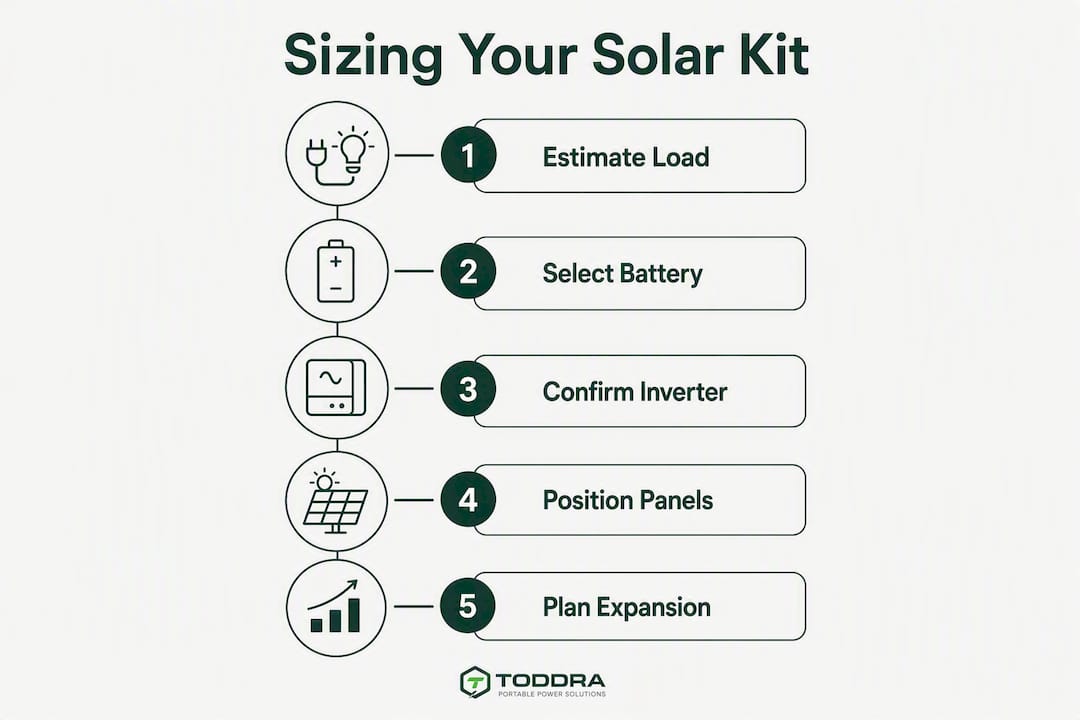
Sizing is the step most buyers skip, and it is the one that determines whether your system actually works. Follow this process before you buy anything.
Step 1: Run a load audit. List every appliance you plan to run. For each one, note its continuous watt draw and how many hours per day you use it. Multiply watts × hours to get watt-hours (Wh) per day. Add them all up for your daily kWh total.
Step 2: Apply the sizing formula. Divide your daily kWh by the usable depth of discharge (DoD) for your battery chemistry. LiFePO4 batteries are typically rated for 80–90% DoD, so a 2,000 Wh battery delivers roughly 1,600–1,800 Wh of usable energy per cycle. Multiply your daily kWh by the number of days of autonomy you want (2–3 days is standard for seasonal cabins; 3–5 days for year-round use) and divide by the usable DoD fraction to get required battery Wh.
Formula: Required battery Wh = (Daily kWh × Autonomy days) ÷ Usable DoD
Step 3: Confirm inverter ratings. Your inverter's continuous watt rating must exceed the sum of all loads you plan to run simultaneously. Its surge rating must handle the startup draw of any motor or compressor (well pumps and refrigerators can surge to 2–3× their running watts at startup).
Step 4: Size your PV input. Divide your daily kWh by the peak sun hours for your region. The U.S. Southwest averages 5–6 peak sun hours per day; the Pacific Northwest and Northeast average 3–4. An MPPT charge controller (built into most quality pre-built stations) extracts 20–30% more energy from your panels than a PWM controller under the same conditions. A practical rule of thumb: size your PV array to deliver at least 1.2× your daily kWh in peak sun hours.
Worked example for a 2–3 person weekend cabin:
- Refrigerator: 150 W × 8 hrs (duty cycle) = 1,200 Wh
- LED lighting: 30 W × 5 hrs = 150 Wh
- Water pump: 500 W × 0.5 hrs = 250 Wh
- Laptop + phones: 60 W × 3 hrs = 180 Wh
- Daily total: 1,780 Wh (≈1.8 kWh)
- Autonomy: 2 days. LiFePO4 DoD: 0.85. Required battery: (1.8 × 2) ÷ 0.85 = ≈4,235 Wh
- PV sizing at 4.5 peak sun hours: 1,780 Wh ÷ 4.5 = 396 W of panels minimum. Round up to 400–600 W for margin.
The Jackery Solar Generator 2000 Plus (2,042 Wh) paired with the Jackery Battery Pack 5000 Plus (5,040 Wh) covers this example comfortably, with room for a cloudy day or two.
Pro Tip: Face panels true south (in the Northern Hemisphere) and tilt them at an angle equal to your latitude plus 15 degrees in winter. A common mistake is mounting panels flat on a cabin roof — even a 10-degree tilt toward the sun can increase daily harvest by 15–20% compared to a completely flat mount.
What does a pre-built solar generator kit include?
A quality pre-built kit arrives with everything you need to start generating power. Knowing what is inside helps you spot gaps before you buy.
Core components in every kit:
- Solar panels: Monocrystalline panels are standard in quality kits. Check the wattage and connector type (MC4 is universal; proprietary connectors limit expansion).
- MPPT charge controller: Usually built into the power station on portable kits. Manages panel input and protects the battery from overcharge.
- Pure sine inverter: Converts DC battery power to clean AC. Pure sine is required for sensitive electronics, motors, and compressors. Never accept a modified sine inverter for cabin use.
- LiFePO4 battery pack: The preferred chemistry for remote cabins. LiFePO4 systems rated for 6,000+ cycles outlast most alternative chemistries by a wide margin and tolerate deeper discharge without degradation.
- Wiring, connectors, and mounting hardware: Quality kits include pre-terminated cables and panel mounts. Check cable gauge for your run length.
- Monitoring app or Gateway: Most modern stations include Bluetooth or Wi-Fi monitoring so you can check state of charge remotely.
Common add-ons cabin owners buy:
- Additional rigid or portable panels to increase PV input and shorten recharge time.
- Expansion battery packs (such as the Jackery Battery Pack 5000 Plus at 5,040 Wh) for multi-day autonomy.
- Transfer switches or subpanel wiring for whole-cabin AC integration.
- Solar combiner boxes when running multiple panel strings.
Portable station vs. fixed integrated kit:
| Portable power station | Fixed integrated kit | |
|---|---|---|
| Setup | Plug-and-play, minutes | Requires wiring, permits, electrician |
| Portability | High | None |
| Expandability | Limited to compatible packs | Highly flexible |
| Capacity ceiling | expandable | Virtually unlimited |
| Best for | Weekend/seasonal cabins | Full-time off-grid homes |
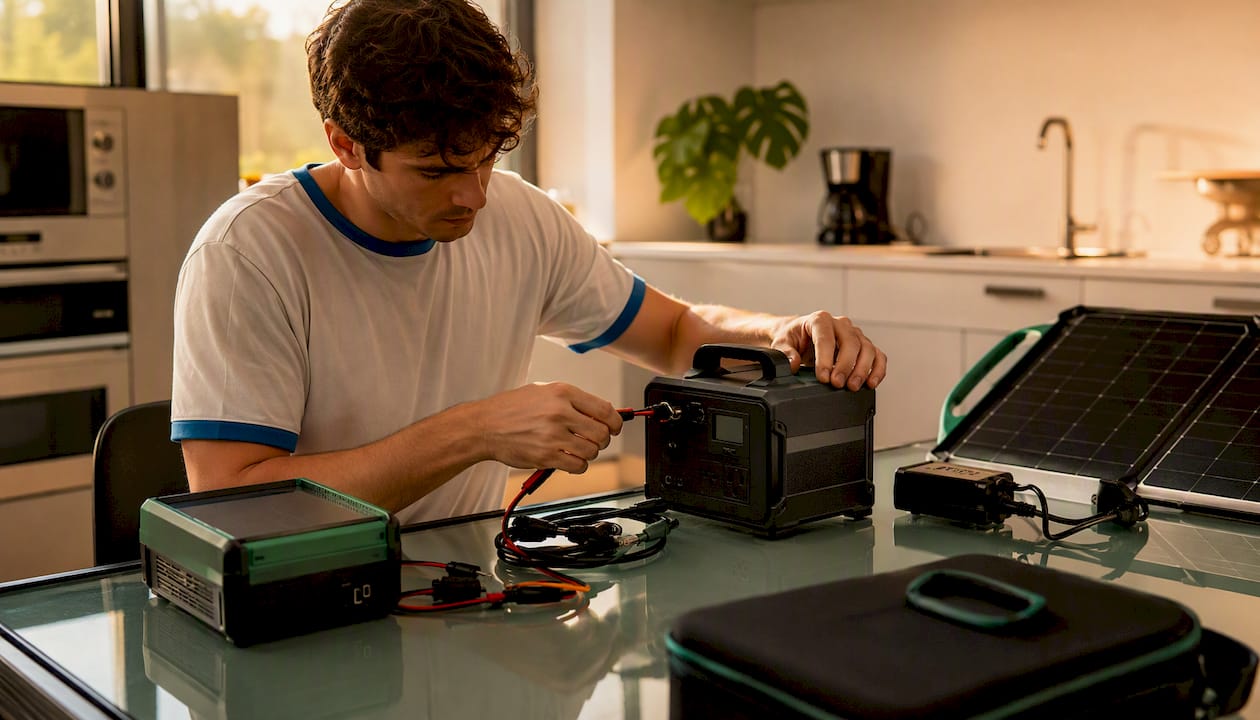
For battery storage safety: keep LiFePO4 stations in a dry, ventilated space between 32°F and 95°F. The built-in Battery Management System (BMS) handles overcharge and over-discharge protection, but extreme cold (below 14°F) will reduce usable capacity temporarily. Never store a station at 0% charge for extended periods.
Toddra's campsite and remote-use guide covers additional portability and maintenance trade-offs worth reviewing before you finalize your kit choice.
How long will your cabin appliances actually run?
Runtime depends on three variables: usable battery Wh, the appliance's continuous watt draw, and its duty cycle (how often it actually runs). A refrigerator compressor cycles on roughly 30–40% of the time, so a 150 W fridge draws an average of about 50–60 W continuously. Popular Mechanics testing found that certain mid-to-large stations ran a refrigerator for approximately 18 hours under defined test conditions, which aligns with the math for a 2,000 Wh station and a 150 W fridge at 40% duty cycle.
| Appliance | Continuous watts | Duty cycle | Runtime on 1,000 Wh | Runtime on 2,042 Wh | Runtime on 7,000 Wh |
|---|---|---|---|---|---|
| Refrigerator (full-size) | 150 W | 40% | ~18 hrs | — | — |
| LED lighting (3 bulbs) | 30 W | — | — | — | — |
| Water pump (0.5 HP) | 500 W | 10% | ~20 hrs | ~40 hrs | — |
| Well pump (1 HP) | 750 W | 10% | — | — | — |
| Small space heater | 1,500 W | — | — | — | — |
| Microwave (900 W) | 900 W | — | — | — | — |
| Laptop + phone charging | 60 W | — | ~16 hrs | — | — |
A note on surge: Motors and compressors draw 2–3× their running watts at startup for 1–3 seconds. A well pump rated at 750 W continuous may surge to 2,000 W at startup. Your inverter's surge rating must exceed that peak. The Jackery Solar Generator 2000 Plus carries a 3,000 W continuous and 6,000 W surge rating, which handles most cabin motor loads without issue.
Example runtime calculation:
- Appliance: water pump, 500 W continuous, 10% duty cycle.
- Effective average draw: 500 W × 0.10 = 50 W average.
- Available energy: 2,042 Wh (usable).
- Runtime: 2,042 ÷ 50 = ≈40 hours of pump availability before recharge is needed.
Space heaters are the one appliance that will drain any portable station quickly. If heating is a priority, a propane or wood stove for primary heat and a solar generator for everything else is a far more practical combination.
Fixed install or portable station: which setup fits your cabin?
The answer usually comes down to how often you move the station and how much capacity you need. Weight and portability matter most when you plan to move the station frequently; for a cabin that stays in one place season after season, usable Wh and inverter capacity should drive the decision.
Portability vs. capacity tradeoffs:
- Stations under 30 lbs can be carried by one person and moved between vehicles and cabins easily.
- Mid-size stations (40–70 lbs) often include wheels and a handle. They move with effort but are not truly portable in the backpacking sense.
- Large stations and integrated rack systems stay put. Treat them as fixed infrastructure.
Short installation checklist:
- Panel siting: Mount panels on a south-facing roof or ground mount. Clear any shade from trees or structures for the peak sun window (10 AM to 2 PM).
- Battery location: Choose a dry, ventilated interior space. Avoid uninsulated outbuildings where temperatures drop below 14°F in winter.
- Inverter/charger mounting: Secure the station on a stable, level surface. Keep it away from moisture and direct sunlight.
- AC transfer or subpanel wiring: For whole-cabin integration, a licensed electrician must install a transfer switch or dedicated subpanel. This is not a DIY task in most U.S. jurisdictions.
- Grounding: Follow the manufacturer's grounding instructions. Improper grounding is a leading cause of inverter damage.
- Conduit routing: Run DC wiring in conduit where it passes through walls or is exposed to weather.
U.S. safety and code notes: Permanent solar installations typically require a permit in most U.S. counties. Portable stations plugged into existing outlets generally do not. When in doubt, contact your county building department before you start. For AC wiring, transfer switches, or any work inside your cabin's electrical panel, hire a licensed electrician.
Toddra's guide on portable solar panels and field usage covers additional placement and maintenance considerations for remote setups.
Why LiFePO4 chemistry and solar generators make sense for remote cabins
The operational case for a solar-led system at a remote cabin is straightforward: no fuel runs, no oil changes, no carburetor issues after a six-month winter layoff. Popular Mechanics confirms that solar power stations carry lower lifetime operating costs than gas generators and run without emissions or noise. For a cabin 30 miles from the nearest gas station, that matters every single season.
Why LiFePO4 specifically:
- Rated for 6,000+ charge cycles at 80% depth of discharge, compared to 300–500 cycles for standard lithium-ion.
- Maintains stable capacity across a wider temperature range than NMC chemistry.
- No thermal runaway risk under normal operating conditions, making it safer for indoor storage.
- Retains usable capacity longer over years of daily cycling, which matters for year-round cabins.
At 6,000 cycles with one cycle per day, a LiFePO4 battery bank has a functional lifespan exceeding 16 years. A gas generator, by contrast, typically requires a carburetor service every season and a full rebuild or replacement every 5–8 years.
Expert tips for remote cabin reliability:
- Design for a hybrid approach: keep a small inverter generator as a rarely-used backup for extended low-sun stretches. Configure it to charge the battery bank rather than power loads directly, which minimizes runtime and maintenance.
- For seasonal cabins, 2 days of autonomy is usually sufficient. Year-round cabins in cloudy northern climates should plan for 4–5 days.
- Enable remote monitoring via the station's app so you can check state of charge before arriving at the cabin.
- Warranty matters more at a remote site than anywhere else. Look for a minimum 2-year warranty with U.S.-based support.
Pro Tip: When sizing for a hybrid system, configure your generator to kick in at 20–30% battery state of charge rather than waiting for a full drain. This protects battery longevity and keeps the generator runtime to a minimum, which means less fuel to haul and fewer service intervals.
What does a cabin solar generator system actually cost?
Pre-built kits span a wide range, and the price difference between tiers is driven by a handful of specific factors.
Typical price bands:
- Compact kits (500–1,000 Wh): $400–$900. Covers the station and one or two small panels. Suitable for weekend-only, minimal-load use.
- Mid-size kits (1,500–2,500 Wh): $1,500–$2,800. Includes a capable power station, 200–600 W of panels, and often a carry case or wheels. The Jackery Solar Generator 2000 Plus falls in this range.
- Large kits (3,000+ Wh, expandable): $2,800–$5,000+. Base station plus expansion battery and a full panel array. Adding the Jackery Battery Pack 5000 Plus (5,040 Wh) to a compatible base puts total usable capacity above 7,000 Wh.
What drives price up:
- LiFePO4 chemistry costs more upfront than standard lithium-ion but pays back through cycle life. The per-cycle cost of a LiFePO4 system is substantially lower over a 10-year horizon.
- Higher continuous and surge inverter ratings require more robust electronics.
- Panel wattage and efficiency: monocrystalline panels at 22%+ efficiency cost more than budget polycrystalline options but produce more power per square foot.
- Shipping to remote locations adds cost. Factor in freight for heavy stations.
- Permit and electrician fees for permanent installs typically run $500–$2,000 depending on scope and jurisdiction, though these are one-time costs.
Lifetime cost vs. gas: A gas generator running 4 hours per day at current fuel prices costs several hundred dollars per year in fuel alone, plus oil, filters, and periodic rebuilds. A properly sized solar generator system has near-zero operating costs after the initial purchase. The crossover point where solar's total cost of ownership beats gas typically arrives within 3–5 years for regular cabin users.
U.S.-based support and a solid warranty reduce the hidden cost of ownership at remote sites. When something goes wrong 40 miles from town, a brand with responsive U.S. support and a clear replacement policy is worth paying a modest premium for.
This article provides general information about solar generator systems and is not a substitute for advice from a licensed electrician or energy professional. Confirm permit requirements and installation standards with your local authority having jurisdiction before beginning any permanent installation.
Key Takeaways
A properly sized LiFePO4 solar generator system covers most remote cabin loads at lower lifetime cost than a gas generator, with zero fuel logistics and near-zero maintenance.
| Point | Details |
|---|---|
| Match tier to cabin use | Compact for weekend-only, mid-size for seasonal, large/expandable for full-time off-grid living. |
| LiFePO4 cycle life | LiFePO4 batteries rated for 6,000+ cycles outlast standard lithium-ion by a wide margin for remote use. |
| Size battery by autonomy | Multiply daily kWh by desired autonomy days, then divide by usable DoD (0.85 for LiFePO4) to get required Wh. |
| Solar input speeds recharge | Mid-to-large stations accepting 1,200–2,400 W of PV input recharge in hours, not days, on sunny days. |
| Toddra's ready-made options | The Jackery Solar Generator 2000 Plus (2,042 Wh, 3,000 W) and Jackery Battery Pack 5000 Plus (5,040 Wh) cover mid-size and large cabin tiers at Toddra. |
Why these kits earn our confidence for remote cabin use
The recommendations in this guide are grounded in a clear set of priorities: LiFePO4 chemistry for long-term reliability, high PV input for practical recharge times, and expandable capacity for the cabins that need it most. Toddra carries the Jackery Solar Generator 2000 Plus and the Jackery Battery Pack 5000 Plus because they meet those criteria at a price point that makes sense for real cabin owners, not just enthusiasts with unlimited budgets.
What stands out about Toddra's approach is the combination of carefully selected products, U.S.-based customer support, and the kind of transparent product information that lets you make a confident decision before you buy. At a remote cabin, the last thing you want is a support call that routes to an overseas call center with a 72-hour response window. Responsive, domestic support is a practical feature, not a marketing line.
The one thing most buyers underestimate is how much the expandability option changes the calculus. Buying a mid-size station with expansion battery compatibility gives you a system that grows with your needs. Start with 2,042 Wh, add 5,040 Wh when you're ready, and you have a full-time off-grid system without replacing the core unit.
Toddra has the right kit for your cabin, ready to ship
Skip the guesswork of assembling components from multiple vendors. Toddra's pre-built solar generator kits arrive with everything matched and tested, backed by U.S.-based support and a clear warranty. The Jackery Solar Generator 2000 Plus (2,042 Wh, 3,000 W continuous, LiFePO4) handles the mid-size cabin tier with room to grow, and the Jackery Battery Pack 5000 Plus adds 5,040 Wh of expansion capacity for full-time off-grid use.
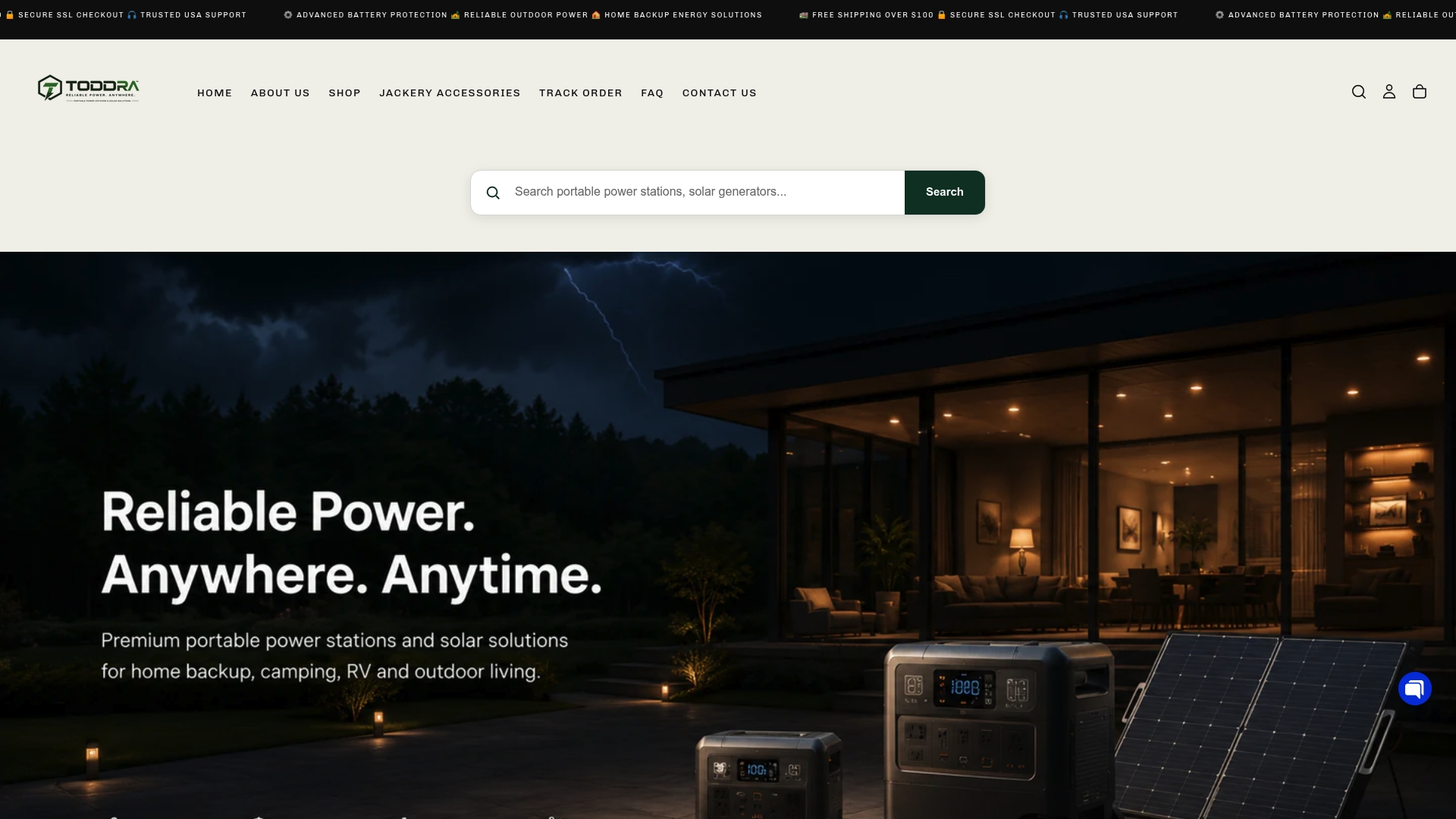
Every product at Toddra is carefully selected for quality, safety, and real-world reliability. Whether you are powering a weekend retreat or a year-round off-grid home, the right system is already on the shelf. Visit Toddra's solar generator catalog to browse available kits, check compatibility with expansion batteries, or reach out to the support team for a custom sizing recommendation matched to your cabin's specific load profile.
Useful sources for further reading
These resources support the sizing, chemistry, and lifecycle cost guidance in this article. For any permanent AC wiring or transfer switch installation, consult a licensed electrician in your state.
- Popular Mechanics: The 8 Best Solar Generators of 2026 — Hands-on testing, runtime examples, and lifetime cost comparison vs gas generators.
- Lipower: Solar Power Systems for Off-Grid Cabins — LiFePO4 chemistry guidance, hybrid system design, and sizing methodology for remote cabins.
- Toddra: Jackery Solar Generator 2000 Plus product page — Full specifications, compatibility notes, and purchase options for the mid-size/large cabin tier.
- Toddra: Jackery Battery Pack 5000 Plus product page — Expansion battery specifications and compatibility for extended autonomy.
- Toddra: Solar Generator Benefits for Campsites Guide — Practical portability, maintenance, and trade-off guidance for portable stations in remote settings.