TL;DR:
- Solar trickle charging uses small photovoltaic panels to maintain vehicle batteries during inactivity by offsetting parasitic drain. Proper setup requires the right panel wattage, a charge controller, and correct placement to ensure effective battery maintenance. It is most effective for long-term storage and cannot recover fully dead batteries without additional charging methods.
Solar trickle charging is the process of using a small photovoltaic panel to deliver a continuous, low-level electrical current that keeps a vehicle's battery healthy during periods of inactivity. Known in the industry as "solar battery maintenance charging," this method uses panels typically rated between 1.5W and 10W to offset the parasitic drain that slowly kills batteries left sitting in garages, driveways, or storage lots. The result is a battery that stays ready, lasts longer, and costs you less to replace. If you own a seasonal vehicle, a boat, an RV, or a car that sits idle for weeks at a time, understanding what solar trickle charging does for a vehicle is genuinely useful knowledge.
How does solar trickle charging work in vehicles?
Solar trickle charging works by converting sunlight into direct current electricity through photovoltaic cells, then feeding that current into the vehicle's 12V battery at a slow, steady rate. The goal is not to fully charge a depleted battery. The goal is to replace the small amount of charge the battery loses every day on its own.
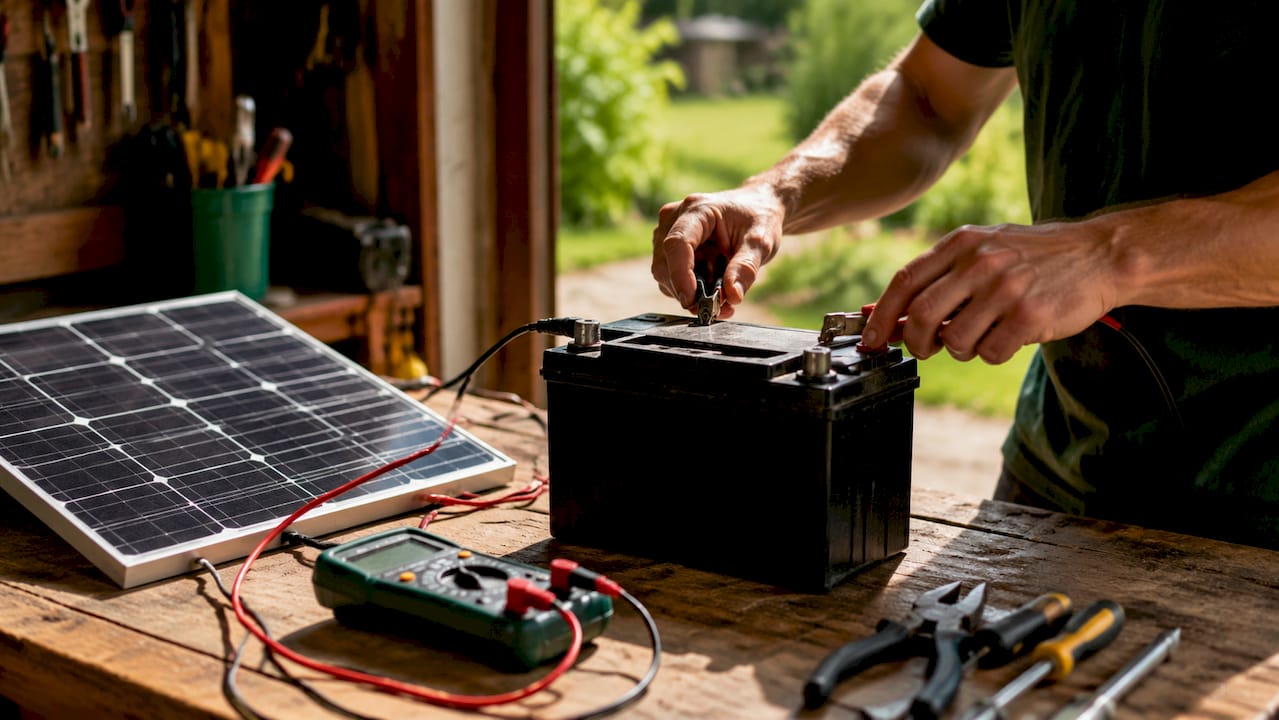
Every vehicle battery loses charge through two processes. The first is natural self-discharge, where chemical reactions inside the battery slowly drain stored energy even with nothing connected. The second is parasitic drain, where onboard electronics like alarm systems, clocks, and keyless entry modules draw a small but constant current even when the vehicle is off. A solar trickle charger for cars replaces exactly that lost current, keeping the battery at or near full charge without human intervention.
Panel sizes and what they actually produce
Panel wattage determines how much current reaches the battery. Standard cars need 2.5W to 5W panels, while larger vehicles with higher parasitic loads, such as RVs or trucks with multiple electronics, need 5W to 10W or more. A 5W panel produces roughly 300–350 mA in direct sunlight. A 12W panel produces 700–900 mA. Those numbers matter because a typical car's parasitic drain runs between 20–50 mA, meaning even a modest 5W panel comfortably covers the loss on a sunny day.
The role of blocking diodes and charge controllers
A charge controller or blocking diode is not optional. Without protective circuitry, the panel can reverse current flow at night, actually draining the battery it was supposed to protect. Quality units include this protection by default. Budget units often skip it entirely, which is a serious problem. When shopping for a solar charging system for vehicles, always confirm the unit includes a blocking diode or a pulse-width modulation (PWM) controller before buying.
Pro Tip: If you are connecting a solar panel directly to a battery terminal, use a PWM charge controller rated for at least twice your panel's output current. This gives you a safety margin and extends both the panel's and the battery's working life.
- Photovoltaic cells convert sunlight to DC electricity
- Current flows through a charge controller or blocking diode
- The controller limits voltage to prevent overcharging
- Excess energy is cut off once the battery reaches full charge
- At night, the controller blocks reverse current flow
What are the benefits and limitations of a solar trickle charger?
Solar trickle chargers deliver real, measurable value for vehicle owners who store cars, motorcycles, boats, or RVs for extended periods. They also have firm limits that you need to understand before relying on them.
The core benefits
-
Battery lifespan extension. Deep discharge is the leading cause of permanent capacity loss in lead-acid batteries. Deep discharge reduces a lead-acid battery's lifespan from a typical 4–5 years down to 2–3 years. A solar maintainer prevents that from happening by keeping the battery topped off continuously.
-
Eco-friendly and low cost. Solar trickle chargers draw no power from the grid. Once purchased, they run for free using sunlight. There are no recurring electricity costs and no need to remember to plug anything in.
-
Hands-free convenience. A properly installed solar maintainer requires almost no attention. You connect it once, position the panel for good sun exposure, and the system handles itself. One reported case showed a 1.5W charger maintaining charge for 180 days without intervention.
-
Safe for long-term connection. Modern controllers switch to float mode automatically once the battery is full, preventing overcharge. You can leave a quality unit connected indefinitely without worrying about damaging the battery.
-
Works for multiple vehicle types. Cars, motorcycles, boats, ATVs, RVs, and classic cars in storage all benefit from the same basic technology.
The real limitations
Solar trickle chargers cannot recover a dead battery. Their low power output lacks the surge current needed to revive a battery that has fully discharged. If your battery is already dead, you need a jump start or a mains-powered smart charger first. After recovery, the solar maintainer takes over to prevent the problem from repeating.
Cold weather also reduces panel output and slows the chemical reactions inside the battery, meaning a 5W panel in winter may not fully compensate for parasitic drain in northern climates. Heavy parasitic loads from aftermarket electronics can exceed what a small panel produces, requiring a larger panel or a supplementary charging method.
What should you look for when choosing a solar trickle charger?
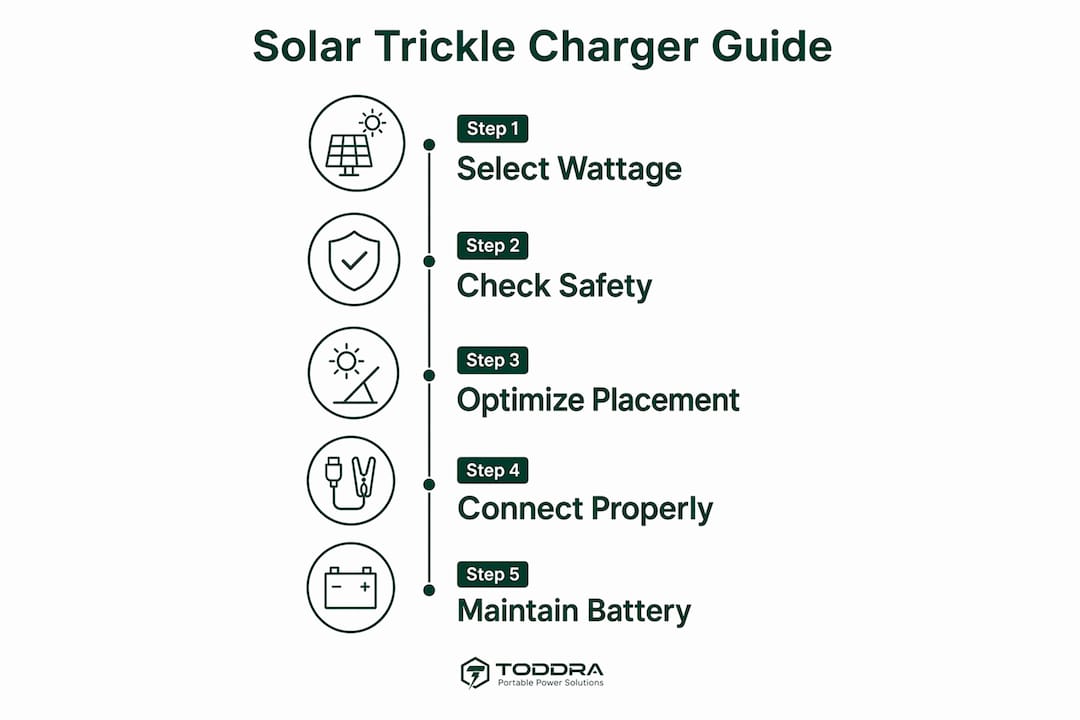
Choosing the right solar trickle charger for your vehicle comes down to four practical decisions: wattage, safety features, placement, and connection method.
Wattage selection by vehicle type
Match the panel's output to your vehicle's parasitic drain and storage conditions. A motorcycle or small car with minimal electronics does well with a 2.5W panel. A full-size truck, SUV, or RV with multiple alarm systems and electronics needs at least a 5W to 10W panel. If you store the vehicle in a region with limited winter sunlight, size up by one wattage tier to compensate for reduced panel efficiency.
You can read more about matching panel wattage to your specific energy needs in Toddra's campsite solar setup guide, which covers the same sizing principles in detail.
Safety features to require
Never buy a solar trickle charger without a charge controller or blocking diode. Cheaper units often omit blocking diodes, leaving your battery vulnerable to overnight discharge. A PWM or MPPT controller is the gold standard. For guidance on safe charge controller setup, Toddra's solar connection guide walks through the key safety steps clearly.
Placement for maximum output
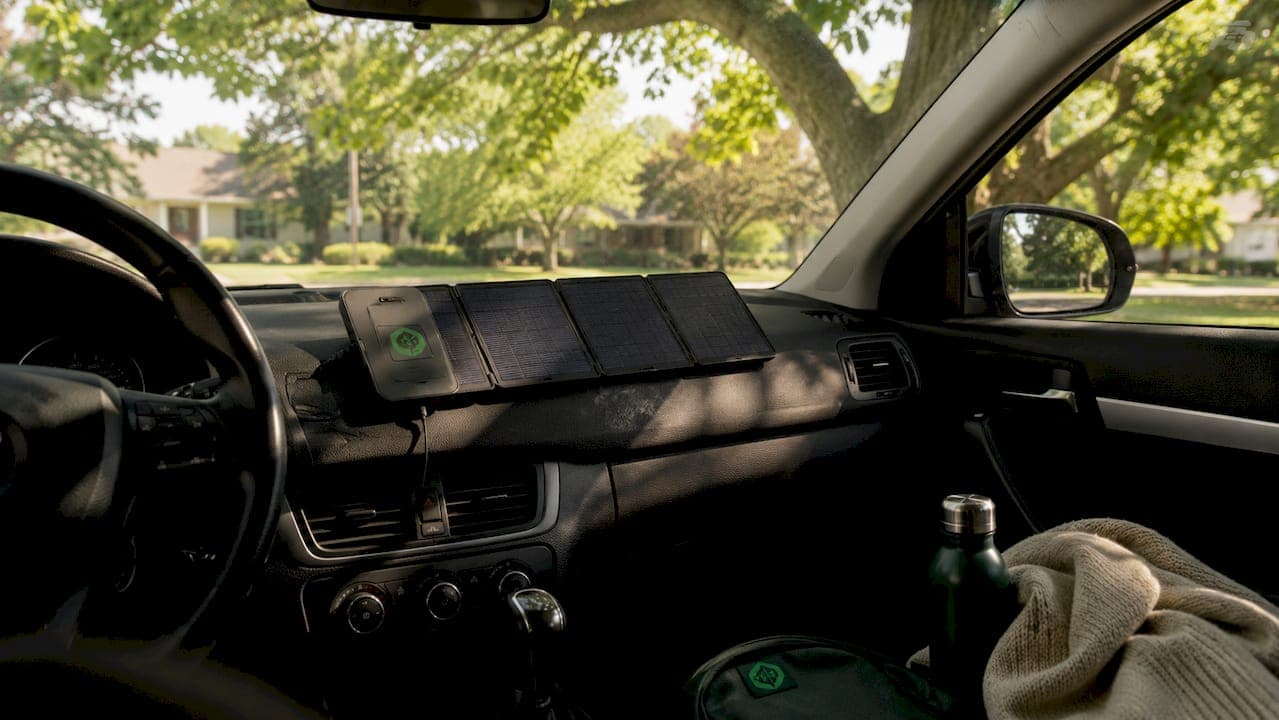
Panel placement is where most people make mistakes. Dashboard-mounted panels lose 30–50% of available sunlight due to glass attenuation from tinted or angled windshields. Exterior mounting on the roof, hood, or dashboard with the panel facing outward through an open window produces significantly better results. For vehicles in covered storage, position the panel near any available light source and angle it toward the brightest direction.
Pro Tip: Use a small suction-cup mount to position the panel on the outside of a side window rather than behind the glass. This simple change can recover the 30–50% efficiency loss caused by windshield tinting.
| Placement method | Efficiency | Best for |
|---|---|---|
| Exterior roof or hood mount | Highest | Long-term outdoor storage |
| Outside window via suction cup | High | Garage or driveway storage |
| Dashboard behind windshield | Reduced (30–50% loss) | Temporary or low-drain vehicles |
| Covered storage near window | Low to moderate | Motorcycles, classics |
Connection methods
Most solar trickle chargers connect either directly to the battery terminals via alligator clips or through the vehicle's 12V accessory socket. Direct battery connection is more reliable and works even when the vehicle is fully off. Accessory socket connection is easier to set up but may not function if the socket cuts power when the ignition is off.
How does solar trickle charging compare to other battery maintenance methods?
Solar trickle charging and plug-in smart chargers are not competitors. They serve complementary but distinct roles in battery care, and understanding when to use each one saves you money and frustration.
- Solar maintainer: Best for ongoing, hands-free maintenance during storage. Works anywhere with sunlight. No power outlet needed. Cannot recover a dead battery.
- Plug-in smart charger: Best for recovering a discharged battery and bringing it back to full charge quickly. Requires a power outlet. Not practical for remote or off-grid storage.
- Jump starter: Best for emergency starts only. Does not charge the battery. Provides the surge current a solar panel cannot.
- Combined approach: Use a plug-in smart charger to fully recover the battery at the start of storage season, then switch to a solar maintainer for the duration of storage.
Solar trickle charging is the clear winner for remote storage situations. If your vehicle sits in a field, a marina, or a rural property without grid power, a solar maintainer is the only practical option. In cold climates or situations with heavy parasitic loads, pair the solar panel with a periodic plug-in charge every few months to keep the battery in top condition.
Key takeaways
Solar trickle charging is the most practical, hands-free method for maintaining vehicle battery health during long-term storage, provided you choose the right panel wattage and include proper protective circuitry.
| Point | Details |
|---|---|
| Core function | Solar trickle chargers offset parasitic drain, not replace full charging. |
| Panel sizing | Match wattage to vehicle type: 2.5W–5W for cars, 5W–10W+ for RVs and trucks. |
| Safety requirement | Always use a unit with a blocking diode or PWM charge controller. |
| Placement matters | Exterior mounting outperforms dashboard placement by up to 50% efficiency. |
| Know the limits | Dead batteries need a jump start or smart charger before a solar maintainer helps. |
What I've learned from years of watching batteries fail
Most people buy a solar trickle charger after losing a battery, not before. That is the wrong order of operations, and it is the most common mistake I see. A battery that has deep-discharged even once has already lost some of its capacity permanently. The solar maintainer should go on before the vehicle goes into storage, not after the battery dies in spring.
The second thing I have noticed is that people underestimate the placement problem. I have seen setups where a perfectly good 5W panel was mounted behind a dark-tinted windshield, producing barely enough current to matter. Moving the panel outside the glass, even temporarily, made an immediate and measurable difference. The physics are simple: glass blocks light, and blocked light means less power.
My honest recommendation is to treat a solar trickle charger as insurance, not a solution. Pair it with a quality smart charger for seasonal recovery, size the panel generously for your climate, and never skip the charge controller. That combination protects your battery reliably and costs far less than replacing it every two years.
— Jackson
Reliable solar power solutions from Toddra
Vehicle owners who want dependable solar energy setups beyond basic battery maintenance will find Toddra's product range worth exploring. Toddra carries a carefully selected lineup of solar generators built for outdoor adventures, off-grid storage, and emergency backup, all designed with LiFePO4 battery technology and smart management systems for safe, long-term use.

Whether you are maintaining a seasonal vehicle or building a full off-grid power setup, Toddra's US-based customer service team is ready to help you find the right solution. Every product ships with secure checkout and responsive support, so you can buy with confidence and focus on what matters most: keeping your energy reliable wherever you need it.
FAQ
What is a solar trickle charger for a vehicle?
A solar trickle charger is a small photovoltaic panel, typically rated 1.5W–10W, that delivers a continuous low-level current to a vehicle's battery during storage. Its purpose is to offset parasitic drain and prevent the deep discharge that shortens battery life.
Can a solar trickle charger recharge a dead battery?
No. Solar trickle chargers lack the surge current needed to recover a fully discharged battery. Use a jump starter or plug-in smart charger first, then connect the solar maintainer to prevent future discharge.
Is it safe to leave a solar trickle charger connected all the time?
Yes, provided the unit includes a charge controller or blocking diode. Modern controllers switch to float mode automatically once the battery is full, preventing overcharge and making continuous connection safe.
What size solar panel do I need for my vehicle?
Standard cars need a 2.5W–5W panel. Larger vehicles like RVs or trucks with higher parasitic loads need 5W–10W or more. A 5W panel produces roughly 300–350 mA in direct sunlight, which comfortably covers most cars' parasitic drain.
Does panel placement really affect charging performance?
Yes, significantly. Dashboard-mounted panels lose 30–50% of available sunlight due to glass attenuation from tinted or angled windshields. Exterior mounting on the roof or outside a window produces the best results.