
A solar generator replaces grid connection by combining solar panels, integrated battery storage, and an inverter to supply reliable, renewable electricity without continuous reliance on the utility grid. This shift is now practical for most American homeowners, not just off-grid enthusiasts. Systems like the Jackery Explorer 5000 Plus and Tesla Powerwall have made solar-plus-storage accessible, affordable, and capable of covering essential household loads through outages and daily use alike. Understanding why solar generator replaces grid connection starts with the technology that makes it work, and the economics that make it worth it.
Why solar generators can replace grid connections
The core technology behind a solar generator is straightforward. Solar panels capture sunlight and convert it to direct current (DC) electricity. That DC power either charges a battery bank or feeds directly into an inverter, which converts it to alternating current (AC) power that runs your home appliances. The battery stores surplus energy so your home stays powered after dark or during cloudy periods.
The critical distinction between a basic grid-tied solar system and a true solar generator setup is battery storage. Grid-tied solar without storage shuts down automatically during a grid outage for safety reasons, leaving you without power even on a sunny day. A solar-plus-storage system, by contrast, isolates your home from the grid and routes battery power through the inverter to keep your circuits live.
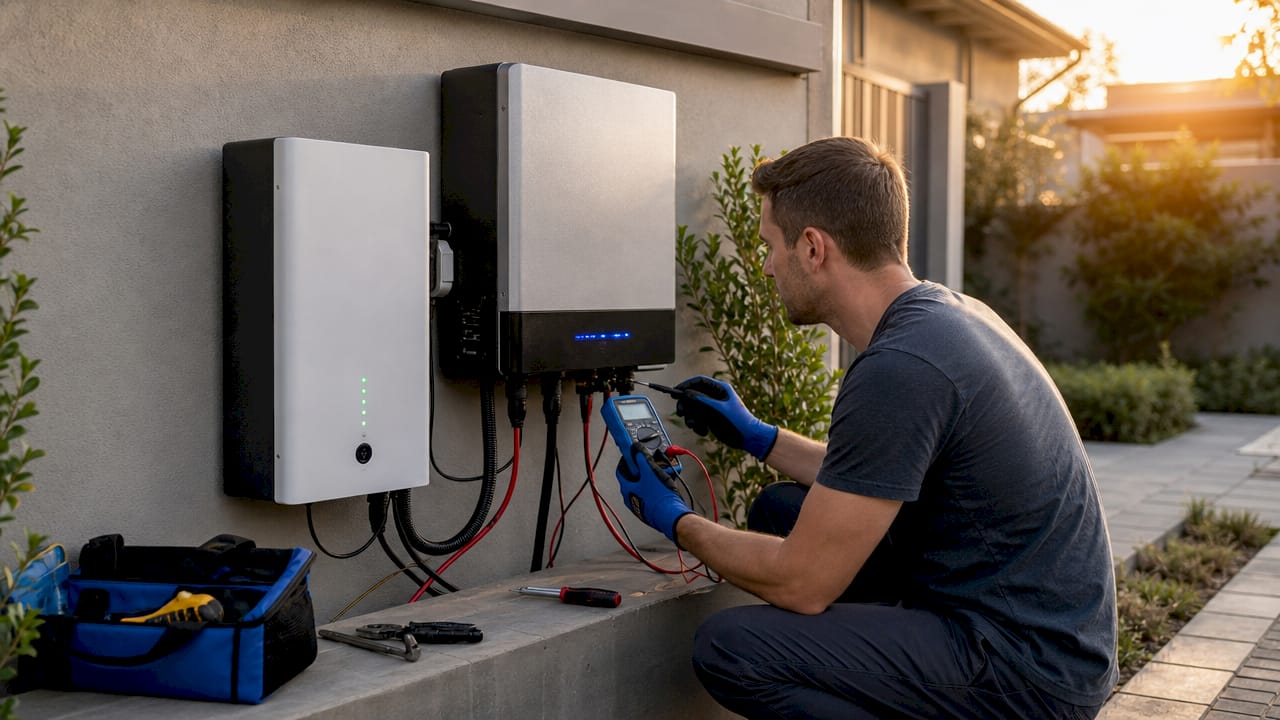
Automatic transfer switches (ATS) are what make this transition feel effortless. An automatic transfer switch detects a grid failure within milliseconds and reroutes power from your battery to your home circuits, with no manual intervention required. This is the same technology used in hospital backup systems, now available for residential use.
Here is what a complete solar generator system includes:
- Solar panels to capture and generate electricity from sunlight
- Battery storage (typically LiFePO4 chemistry for safety and longevity) to hold surplus energy
- Inverter to convert DC battery power to AC for home appliances
- Charge controller to regulate the flow of power from panels to battery
- Transfer switch to isolate the home and switch seamlessly between grid and battery power
Most solar generators in 2026 include grid-forming inverters and advanced energy management systems, with 19 to 25 kWh capacity systems achieving up to 85% load coverage across multiple outages annually. That level of performance makes full grid replacement realistic for many households.
Pro Tip: If you want true grid independence, look for systems with an automatic transfer switch included or compatible. A manual transfer switch works, but the automatic version removes the need to act during a stressful outage.
What are the economic advantages of solar vs grid power?
The financial case for solar generators is one of the strongest reasons homeowners make the switch. Grid electricity in the U.S. averages around $0.135 per kWh, and that price rises roughly 3.8% annually due to fuel inflation and aging infrastructure costs. The levelized cost of solar sits between $0.04 and $0.08 per kWh over the system's lifetime. That gap compounds significantly over 10 to 25 years.
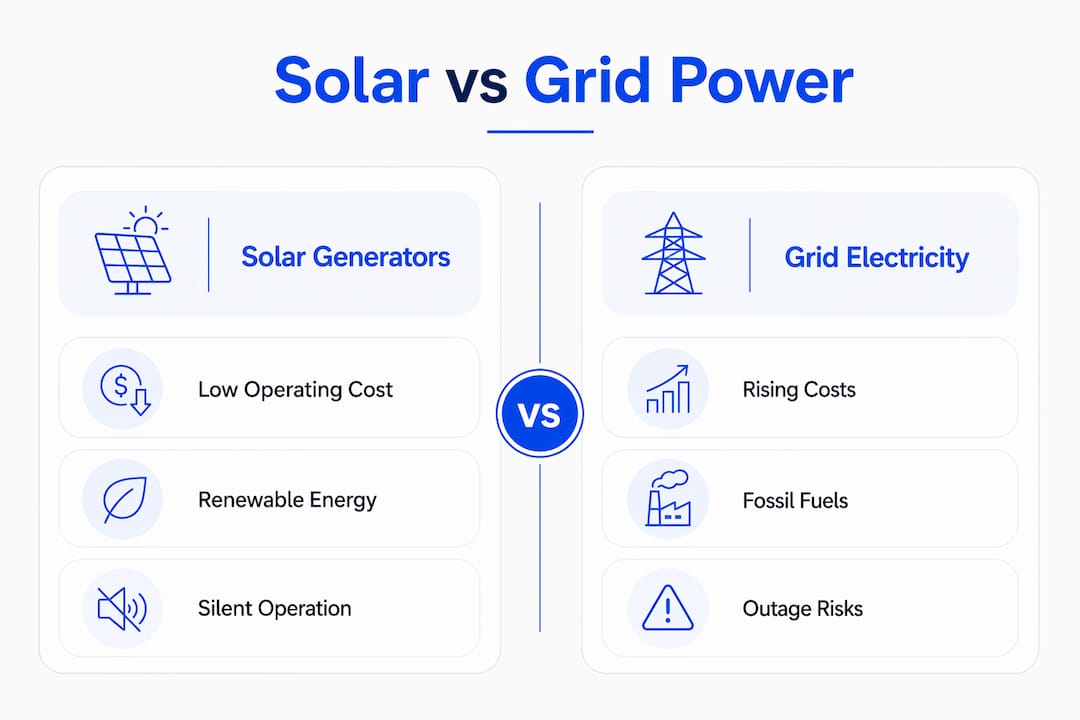
Federal incentives accelerate the payback period considerably. The Residential Clean Energy Credit covers 30% of the total cost of solar panels and battery storage, reducing upfront investment by thousands of dollars. For a $20,000 solar-plus-storage system, that translates to a $6,000 tax credit applied directly to what you owe the IRS.
The broader picture is equally compelling. 63% of U.S. households can save money and weather blackouts with solar plus storage, covering roughly half their energy needs on average. That means the majority of American homeowners are not taking a financial risk by going solar. They are making a financially sound decision.
| Cost factor | Grid electricity | Solar generator system |
|---|---|---|
| Cost per kWh (lifetime) | ~$0.135, rising 3.8%/year | ~$0.04–$0.08, fixed after install |
| Federal incentive | None | 30% tax credit on system cost |
| Fuel dependency | Yes (utility rates) | No (sunlight is free) |
| Outage protection | None without backup | Yes, automatic with battery |
| 10-year cost trend | Increases significantly | Stable or declining |
The solar generator benefits here go beyond the monthly bill. When grid outages occur, homeowners without backup power lose refrigerated food, heating or cooling, and sometimes medical equipment. The economic value of avoided losses during outages adds meaningfully to the total return on investment.
What are the limitations of replacing grid power with solar?
Solar generators are not a perfect solution for every home in every situation. Knowing the real constraints helps you plan a system that actually works rather than one that disappoints during its first extended outage.
Battery sizing is the most common planning mistake. Battery size and load profile determine backup duration and system autonomy. A 10 kWh battery running a refrigerator, lights, and a few outlets might last 24 to 36 hours. Add an electric water heater or central air conditioning, and that same battery drains in under 12 hours.
Regional solar resources vary significantly across the U.S. Arizona and Southern California receive 5.5 to 6.5 peak sun hours daily on average. The Pacific Northwest and New England average closer to 3.5 to 4.5 hours. Fewer sun hours mean slower recharge and less daily generation, which directly affects how long your battery lasts through a multi-day outage.
Consider these practical limitations before committing to full grid replacement:
- Multi-day cloudy weather limits recharge and can deplete batteries faster than they recover
- High-load appliances like electric dryers, well pumps, and HVAC systems require larger battery banks and higher inverter capacity
- Battery degradation reduces capacity by roughly 20 to 30% over 10 years, depending on chemistry and usage cycles
- Upfront cost remains significant even after tax credits, typically $15,000 to $30,000 for a whole-home system
- Grid fallback may still be the right choice for homes in low-sun regions or with very high energy demands
Pro Tip: Before sizing your system, run your home on a circuit-by-circuit audit. Identify which loads are truly essential during an outage and size your battery for those loads only. You will get better autonomy and spend less.
True grid replacement requires planning for recharge cycles, since multi-day cloudy weather can limit autonomy in ways that a fuel generator simply does not face. Pairing solar storage with a small grid connection as a fallback is a practical middle ground for many households.
How do solar generators compare to fuel-powered generators?
The comparison between solar generators and traditional fuel-powered generators reveals why solar wins on almost every dimension for residential use. The one area where fuel generators still lead is raw runtime at high loads, which matters in specific scenarios.
Gas generators require fuel refills every 8 to 12 hours and depend on fuel supply chains that can fail during the same disasters that cause outages. During Hurricane Ian in 2022, gas stations across Southwest Florida ran dry within 48 hours of landfall. Homeowners with solar-plus-storage had power. Those waiting in gas lines did not.
| Attribute | Solar generator | Fuel-powered generator |
|---|---|---|
| Fuel source | Sunlight (free, renewable) | Gasoline, propane, or diesel |
| Noise level | Silent | 65–75 dB (loud) |
| Emissions | Zero | Carbon monoxide risk indoors |
| Recharge/refuel | Daily via solar panels | Every 8–12 hours manually |
| Maintenance | Minimal (no oil changes) | Regular oil, filter, spark plug service |
| Automatic operation | Yes, with ATS | Rarely, requires manual start |
| Supply chain risk | None | High during disasters |
Solar generators also operate silently and automatically. A fuel generator requires someone to physically start it, manage fuel levels, and run it outdoors to avoid carbon monoxide poisoning. A solar-plus-storage system with an automatic transfer switch does none of that. It simply works.
Battery-backed solar transitions backup questions from fuel runtime to balancing stored energy, load, and recharge time. That is a more manageable and predictable problem for most homeowners.
How to transition your home from grid reliance to solar independence
Moving from grid-dependent to solar-powered living is a process, not a single purchase. A structured approach prevents costly mistakes and makes the transition feel secure rather than stressful.
- Audit your essential loads. List every appliance you need during an outage: refrigerator, medical devices, lighting, phone charging, and heating or cooling. Calculate their combined wattage and daily energy use in kWh.
- Choose your system capacity. Match battery capacity to your essential load and your target backup duration. A 20 kWh system covers most households for 24 to 48 hours of essential use.
- Select compatible solar panels. Panel wattage determines how fast your battery recharges. A solar panel connector kit ensures your panels integrate cleanly with your power station.
- Install a transfer switch. A manual transfer switch is a cost-effective starting point for connecting a solar generator to your home circuits safely.
- Plan for expansion. Choose a system that supports additional battery modules or EV charging integration as your needs grow.
- Work with a licensed installer. Permit requirements and utility interconnection rules vary by state. A qualified installer handles compliance and maximizes your tax credit eligibility.
The reasons to choose solar energy for home backup go beyond the technology. They include the confidence of knowing your home stays powered regardless of what the grid does.
Key takeaways
Solar generators replace grid connections by combining battery storage, inverters, and automatic transfer switches to deliver clean, autonomous power that outperforms grid reliance on cost, reliability, and environmental impact.
| Point | Details |
|---|---|
| Core technology | Battery storage plus inverters enable solar generators to power homes independently of the grid. |
| Economic advantage | Solar LCOE of $0.04–$0.08/kWh beats grid rates of $0.135/kWh, with a 30% federal tax credit reducing upfront cost. |
| Key limitation | Battery sizing and regional sun hours determine real-world autonomy; multi-day cloudy weather requires careful planning. |
| Solar vs fuel generators | Solar generators operate silently, automatically, and without fuel supply risk, outperforming fuel generators in most residential scenarios. |
| Transition steps | Audit essential loads, size your battery, install a transfer switch, and work with a licensed installer for best results. |
My honest read on where home solar is heading
I have followed home energy technology closely for years, and the shift happening right now is unlike anything I have seen before. Solar generators are no longer a niche product for off-grid cabins or survivalist households. They are becoming the default backup and, increasingly, the primary power source for homes across the country.
What strikes me most is how the conversation has changed. Three years ago, homeowners asked whether solar could replace their grid connection. Today, the question is how quickly they can make it happen. That shift reflects real improvements in battery chemistry, inverter efficiency, and system pricing, not just marketing.
The one thing I would caution homeowners about is over-relying on manufacturer claims about backup duration. Real-world performance depends on your specific loads, your local sun hours, and how you manage energy during an outage. A system that promises "whole-home backup" may mean different things to a 1,200-square-foot home in Phoenix versus a 3,000-square-foot home in Seattle.
The solar generator benefits are real and growing. But the homeowners who get the most out of these systems are the ones who go in with clear expectations, a well-sized system, and a plan for the edge cases. Energy independence is not a product you buy. It is a setup you design.
— Jackson
Power your home with Toddra's solar generator solutions
Toddra carries a carefully selected range of solar generators, portable power stations, and accessories designed to help you move toward real energy independence. Whether you are looking for a compact unit to cover essential loads during outages or a high-capacity system to reduce your grid reliance long-term, Toddra's product lineup has options built for reliability and everyday use.
Explore Jackery power stations and solar accessories that connect directly to your home setup. Every product on Toddra comes with US-based customer support and secure checkout, so you can shop with confidence. Visit Toddra to find the right solar generator for your home and start building the energy security your family deserves.
FAQ
What does a solar generator need to fully replace grid power?
A solar generator needs solar panels, a battery bank sized to your essential loads, an inverter, and an automatic or manual transfer switch. Battery storage and transfer switching are the two components that allow the system to operate independently during a grid outage.
How long can a solar generator power a home during an outage?
Runtime depends on battery capacity and the loads you run. A 20 kWh system covering essential appliances typically provides 24 to 48 hours of backup, with daily solar recharging extending that indefinitely in good weather.
Are solar generators more cost-effective than grid electricity?
Yes, over the system's lifetime. The levelized cost of solar ranges from $0.04 to $0.08 per kWh, compared to the national grid average of $0.135 per kWh, with grid prices rising roughly 3.8% annually.
Can a solar generator work during cloudy weather?
Solar generators continue to draw power from panels during cloudy weather, but at reduced output. Battery storage covers the gap, though extended cloudy periods of three or more days can deplete reserves if loads are not managed carefully.
What is the difference between grid-tied solar and a solar generator?
Grid-tied solar without battery storage shuts down during outages for safety. A solar generator with battery storage and a transfer switch isolates your home from the grid and keeps power flowing, making it a true backup and potential grid replacement.