TL;DR:
- A camping power checklist helps travelers determine the right devices and energy sources for their trips. A 1,000Wh lithium iron phosphate power station paired with a 100W solar panel generally meets the needs of a typical 2-3 day camping trip. Proper sizing, safety practices, and realistic solar expectations ensure reliable power for essential devices like fridges and CPAP machines.
A camping power checklist is the complete list of devices, power sources, and energy management steps you need to keep your gear running from the first night to the last. Most campers underestimate their daily draw. Typical weekend car campers need about 400–500Wh daily for phones, lighting, and a 12V fridge. That number shapes every decision on this list, from the size of your power station to whether you bring a solar panel. The best starting point for a 2–3 day trip is a 1,000Wh power station paired with a 100W solar panel.
1. What belongs on your camping power checklist first?
The checklist starts with a full inventory of every device you plan to power. Write down each item, its wattage, and how many hours per day you will run it. Add those numbers together to get your total daily watt-hour requirement. That single figure drives every other decision on your power setup.

Measuring and summing watt-hours across every device prevents the most common mistake campers make: buying a power station that runs out on day two. A phone charges at roughly 20Wh per session. A 12V fridge pulls 40–60W continuously, adding up to 500–700Wh per day. LED lanterns and headlamps are light loads, but they add up across a long trip.
2. Essential devices on the camping gadgets worth powering list
Not every gadget deserves a spot in your pack. Focus on devices that deliver real comfort or safety value.
High-priority devices:
- Smartphones and tablets. Two phones consume roughly 40Wh per day combined. Bring a USB-C power delivery cable for faster top-offs.
- Portable LED lighting. LED lanterns draw 5–15W. Headlamps are even lighter on power and better for hands-free tasks after dark.
- 12V fridge or cooler. This is your biggest power draw. A quality 12V compressor fridge pulls 40–60W and requires 500–700Wh daily. Size your power station around this appliance first.
- CPAP machine. A travel CPAP without a humidifier uses roughly 30–60Wh per night. If you rely on one, it moves to the top of your priority list.
- Bluetooth speaker. A small speaker draws 5–10W and adds real enjoyment to camp evenings for minimal energy cost.
- Portable fan. A 12V fan runs at 10–30W and makes a significant difference in warm weather camping.
- Camera and drone batteries. These charge quickly but add 20–50Wh per session depending on battery size.
Pro Tip: Charge phones and small devices during the day while your solar panel is active. Save your stored watt-hours for the fridge and CPAP overnight.
3. How to choose the right portable power station for your camping trip
Power station selection comes down to three numbers: total watt-hours, continuous inverter output, and surge wattage. Getting any one of them wrong causes real problems in the field.
Watt-hours (Wh) measure how much total energy the station stores. A 500–800Wh station covers phones, LED lights, and small devices for a 2–3 day car camping trip. Add a 12V fridge or a CPAP and you need 1,000Wh or more.
Inverter output determines which appliances you can run at once. Many campers buy stations with inverters too small for their appliances. Always check both the continuous wattage and the surge wattage rating before you buy. A device like a mini coffee maker can spike to 1,200W at startup even if it only draws 600W while running.
Battery chemistry matters more than most campers realize. LiFePO4 batteries offer higher safety, faster charging, and a lifespan about 5 times longer than older lithium-ion types. That longevity means a LiFePO4 station you buy today will still perform reliably years from now. For a deeper look at why the chemistry difference matters, the LiFePO4 vs. lithium-ion breakdown at Toddra's blog is worth reading before you shop.
| Trip type | Recommended capacity | Key consideration |
|---|---|---|
| Weekend car camping (no fridge) | 500–800Wh | Covers phones, lights, fan |
| Weekend car camping (with fridge) | 1,000–1,500Wh | Fridge is the dominant load |
| Extended trip (4+ days) | 2,000Wh+ | Solar supplementation required |
| CPAP or cooking appliances | 1,500Wh+ | Check inverter surge rating |
Pro Tip: Use the power station sizing guide at Toddra's blog to calculate your exact watt-hour needs before purchasing. A five-minute calculation saves you from a dead battery on night two.
4. How solar panels supplement your camping power needs
Solar power for camping works best as a daily top-off source, not an overnight replacement for stored energy. A 100W portable solar panel yields about 300–500Wh daily in ideal conditions, assuming five peak sun hours. That output is enough to offset phone charging, LED lighting, and part of a high-efficiency cooler's daily draw.
Real-world output is lower than the rated spec. Actual field output runs at 60–70% of advertised peak wattage because of shade, panel angle, heat, and dust. A 100W panel realistically delivers 180–350Wh on a typical camping day. A 200W panel roughly doubles that figure.
Best practices for solar panel use at camp:
- Face panels directly south (in the Northern Hemisphere) and tilt them at an angle matching your latitude for peak output.
- Move panels out of shade throughout the day. Even partial shade on one cell drops total output significantly.
- Keep panel surfaces clean. Dust and debris cut efficiency faster than most campers expect.
- Connect panels to your power station during daylight hours only. Charging overnight from panels is not possible and leaving connections live can cause minor parasitic drain.
- For real-world setup examples, the solar camping setups guide at Toddra's blog shows actual output scenarios across different panel sizes.
Pro Tip: A 200W panel paired with a 1,000Wh station creates a self-sustaining loop for most 3–5 day trips. You generate enough during the day to replace what you used overnight.
5. What safety and maintenance steps belong on your power checklist
Safe power use at camp protects both your equipment and your fellow campers. These steps are easy to skip and costly to ignore.
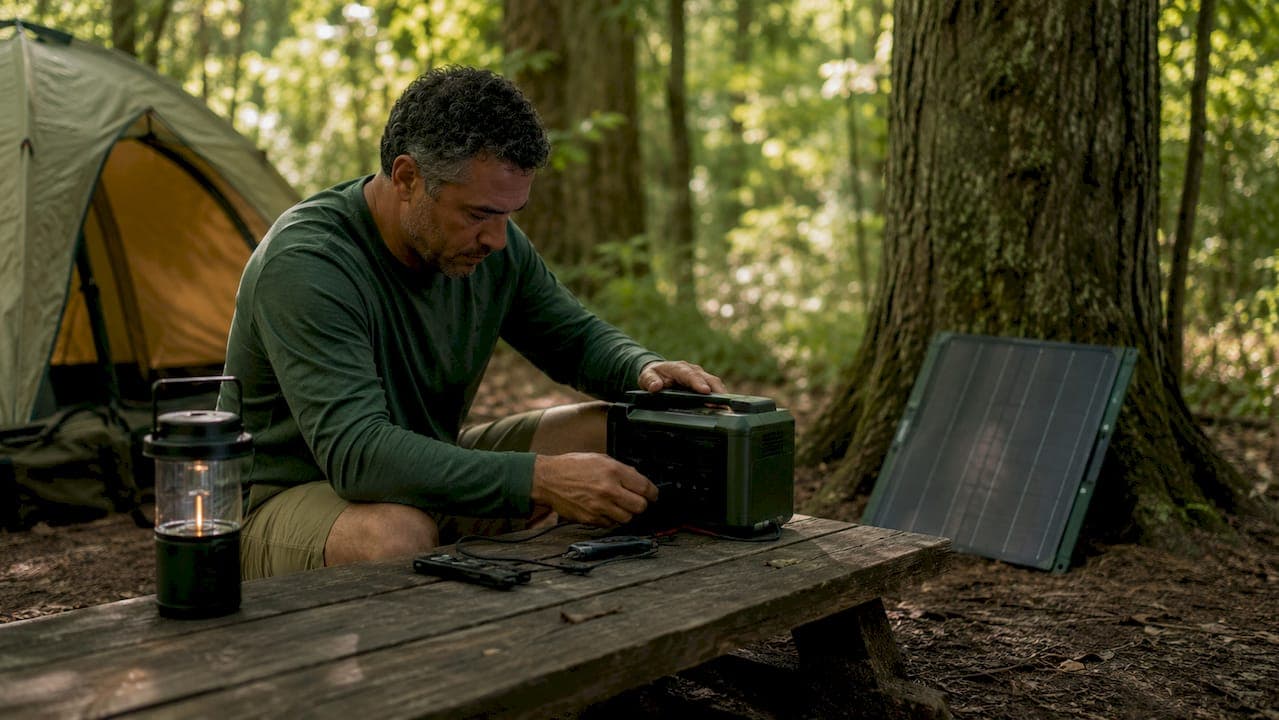
- Elevate your power station. Keeping power stations elevated improves cooling and reduces dust buildup, extending device lifespan. A small folding table or a flat rock works well. Direct ground placement restricts airflow to the cooling fans.
- Respect inverter limits. Never plug in appliances that exceed your station's continuous wattage rating. Mismatched inverter capacity causes device failure or shuts down the station mid-use.
- Store stations properly between trips. Charge to 50–80% before storage. Avoid leaving a station fully depleted for extended periods, as this degrades battery cells. The portable power station storage guide at Toddra's blog covers this in detail.
- Mind campsite etiquette. Keep generator noise and light pollution to a minimum. Battery-based power stations run silently, which is one of their biggest advantages over gas generators at shared campsites.
- Protect from extreme temperatures. LiFePO4 batteries handle heat and cold better than older lithium-ion cells, but prolonged exposure to temperatures above 113°F or below 14°F still reduces performance and lifespan.
Key takeaways
A 1,000Wh LiFePO4 power station paired with a 100W solar panel covers the camping power requirements for most 2–3 day car camping trips, including a 12V fridge and essential devices.
| Point | Details |
|---|---|
| Calculate daily watt-hours first | Add up every device's draw before choosing a power station size. |
| Size up for fridges and CPAP | These two appliances push daily needs past 1,000Wh on their own. |
| Choose LiFePO4 chemistry | It lasts 5 times longer than older lithium-ion and charges faster. |
| Treat solar as supplemental | Expect 60–70% of rated panel output in real field conditions. |
| Elevate and ventilate your station | Ground placement restricts airflow and shortens equipment life. |
What I've learned from getting camping power wrong
The first time I built a camping power setup, I bought a 500Wh station and thought it would handle everything. It died halfway through night two because I forgot to account for the fridge running all night. That mistake taught me the most important rule in this whole checklist: size for your worst-case load, not your average load.
The second lesson took longer to learn. I kept buying panels based on their rated wattage without adjusting for real conditions. A 100W panel in partial shade on a hot afternoon delivers maybe 50W. Once I started planning around 60–70% of rated output, my setups stopped falling short.
Technology has genuinely made this easier. LiFePO4 stations are lighter, safer, and far more durable than the lithium-ion units I started with. The chemistry difference is not marketing. A station built on LiFePO4 cells will still perform well after hundreds of charge cycles. That matters when you camp regularly.
The last thing I'd tell any camper building their first power kit: resist the urge to buy the cheapest option. A power station is not a place to cut corners. Buy the right capacity, check the inverter rating, and get LiFePO4 if your budget allows. You will not regret it.
— Jackson
Reliable power for your next trip, from Toddra
Toddra carries a carefully selected range of portable power stations and solar generators built for exactly the kind of trips this checklist covers.
The Jackery Battery Pack 2000 Plus Expansion Battery offers 2,042.8Wh of LiFePO4-backed capacity, solar compatibility, and the kind of dependable output that handles a fridge, CPAP, and full device charging without stress. For longer expeditions or larger setups, the 5,040Wh expansion battery provides the headroom to power demanding appliances across extended trips. Visit Toddra.com to browse the full lineup, with US-based customer support and secure checkout ready when you are.
FAQ
What size power station do I need for camping?
A 1,000Wh station covers most 2–3 day car camping trips with a 12V fridge and essential devices. Add solar panels to extend that endurance on longer trips.
How many watt-hours does a 12V camping fridge use per day?
A 12V compressor fridge typically draws 40–60W continuously, consuming 500–700Wh per day. This single appliance is usually the largest load in any camping power setup.
Is solar power enough to run a camping setup on its own?
Solar panels work best as a supplemental source. A 100W panel yields 300–500Wh daily in ideal conditions, but real output runs closer to 60–70% of rated wattage in the field.
What is LiFePO4 and why does it matter for camping power stations?
LiFePO4 (lithium iron phosphate) is a battery chemistry that offers higher safety, faster charging, and a lifespan roughly 5 times longer than standard lithium-ion. It is the best available technology for portable camping power stations.
How do I keep my power station running longer at camp?
Elevate the station off the ground to improve airflow, avoid exceeding the inverter's continuous wattage rating, and store the unit at 50–80% charge between trips to protect battery cell health.