TL;DR:
- A sump pump battery backup is a secondary pump that activates during power outages or mechanical failures to prevent flooding. It relies on a deep-cycle battery, independent float switch, and controller to automatically protect your basement. Regular testing and maintenance ensure reliable operation when needed most.
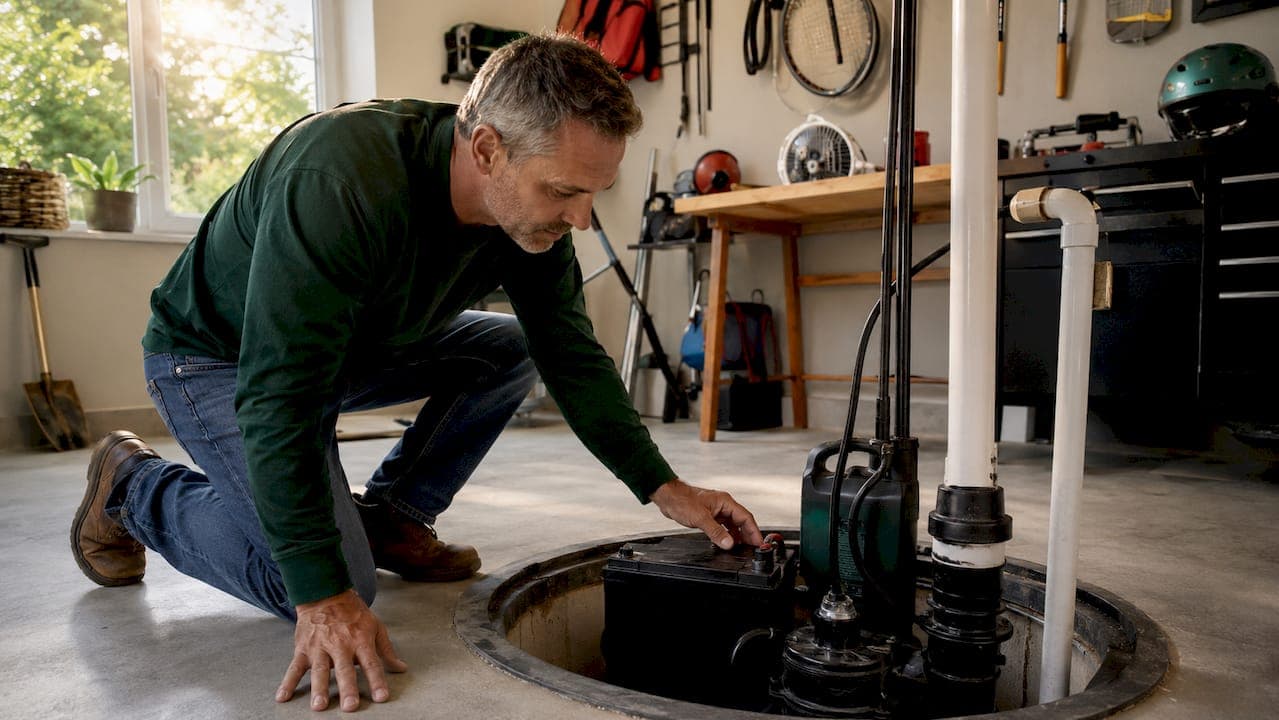
A sump pump battery backup is defined as a secondary, battery-powered pump system that automatically activates when your primary sump pump fails due to a power outage or mechanical breakdown. Most homeowners focus on the power outage scenario, but primary pumps have a 100% failure rate over time, meaning mechanical failure is just as likely a threat as a storm knocking out the grid. Understanding how sump pump battery backup works gives you real control over your home's flood protection. The system relies on three core technologies: a deep-cycle battery, an independent float switch, and a controller unit that monitors grid power continuously. Together, these components create a layer of redundancy that no generator alone can replicate.
What are the main components of a sump pump battery backup system?
A battery backup sump pump system has four distinct parts, each with a specific job. Knowing what each part does helps you buy the right system and spot problems before they become floods.
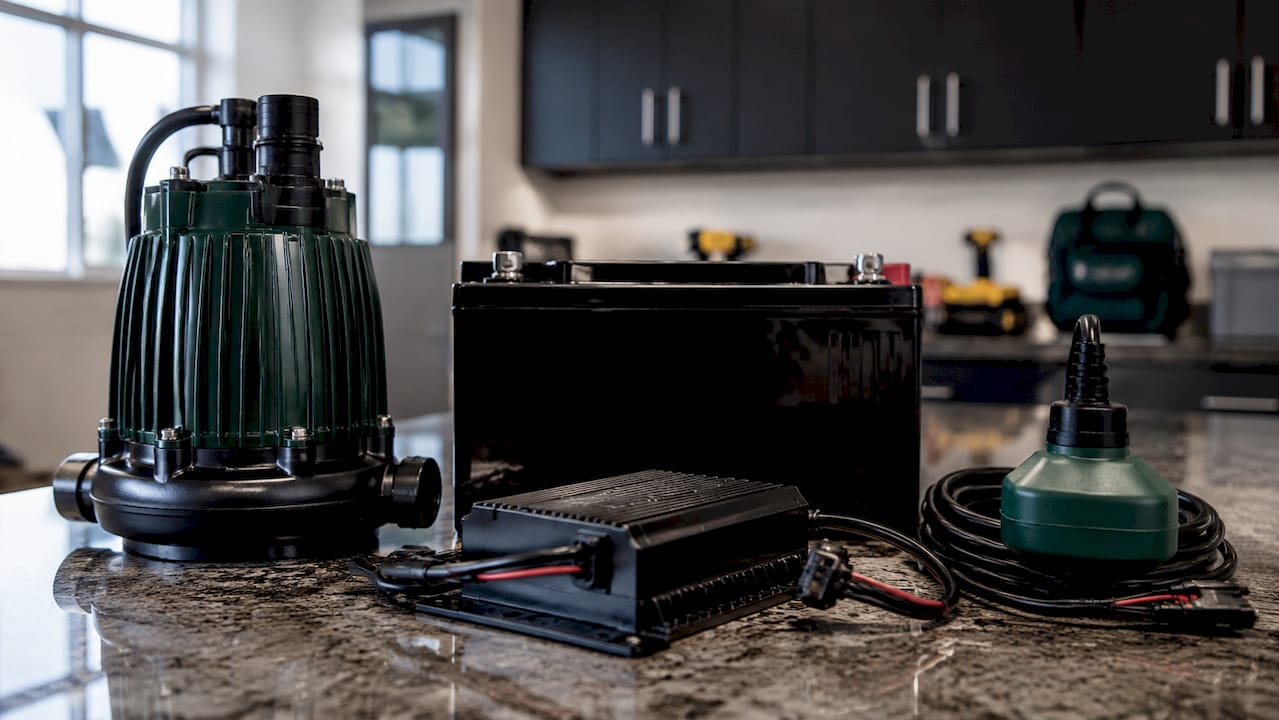
The backup pump itself is a DC-powered centrifugal pump, separate from your primary AC pump. Dedicated DC backup pumps typically move 1,000 to 3,000 gallons per hour, while primary AC pumps handle 3,000 to 5,000 gallons per hour. That capacity gap is real, but the backup pump's job is to keep water out long enough for power to return or for you to address the primary pump failure.
The deep-cycle battery is the heart of the system. Deep-cycle batteries are built to endure repeated discharge and recharge cycles, unlike standard automotive batteries, which fail prematurely under this kind of demand. AGM (Absorbent Glass Mat) and sealed marine deep-cycle batteries are the preferred choices because they hold a charge reliably, require no maintenance, and resist vibration. Most dedicated systems use batteries rated between 75Ah and 100Ah.
The charger and controller unit does two jobs at once. It keeps the battery at full charge during normal operation, and it triggers audible alarms when it detects power loss or low battery voltage. That alarm is your early warning signal. Many homeowners ignore it, which is a costly mistake.
The independent float switch monitors water level in the sump pit on its own, completely separate from the primary pump's float switch. This independence matters because if the primary pump's float switch fails, the backup system still detects rising water and responds.
Pro Tip: When buying a backup system, confirm the float switch is physically separate from the primary pump's switch. Combo float switches that share a single unit are a single point of failure.
How does a sump pump battery backup system work during power outages and pump failures?
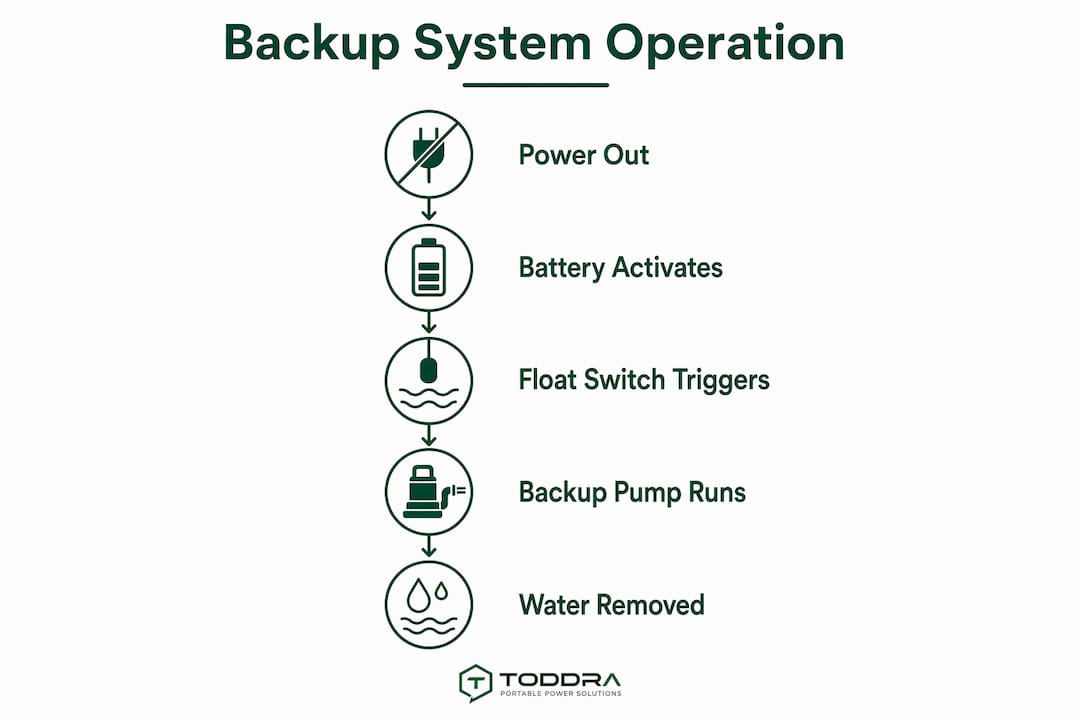
The operation of a sump pump backup system follows a clear sequence. Understanding each step shows why the system is more reliable than most homeowners expect.
- Normal conditions. The primary AC pump runs as needed, controlled by its own float switch. The backup controller monitors grid power continuously and keeps the battery fully charged.
- Power loss or pump failure detected. The controller detects the loss of grid power within milliseconds. If the primary pump fails mechanically while power is still on, the rising water level triggers the backup system's independent float switch instead.
- Automatic activation. The controller shifts power load in milliseconds, switching the DC backup pump on before water can overflow the pit. There is no manual step required from you.
- Continuous pumping. The backup pump removes water from the pit and discharges it through the same or a separate discharge line. It runs until water drops below the float switch trigger point.
- Alarm notification. The controller sounds an audible alarm to alert you that the backup system is actively running. This is your cue to investigate the primary pump or contact a plumber.
- Return to standby. When grid power returns and the primary pump resumes, the controller switches back to normal mode and begins recharging the battery.
A generator restores power to your home, but it cannot fix a broken pump motor. A battery backup system runs its own independent pump, which means it protects your basement even when the primary pump has mechanically failed. That distinction is the reason battery backup and generator protection are not interchangeable.
A generator cannot fix a primary pump's mechanical failure, which is why a dedicated secondary pump is the only complete solution. For homeowners weighing the broader question of backup power types, a comparison of portable vs. stationary emergency power options clarifies where each technology fits best.
One technical note worth understanding: some backup systems use an AC inverter design rather than a native DC pump. In those systems, the inverter converts battery DC power back to AC to run a standard pump. Inverter-based systems must be correctly sized to handle the pump's startup surge current. An undersized inverter shuts down at the exact moment you need it most.
What factors influence the runtime and effectiveness of battery backup sump pumps?
Runtime is the most practical question homeowners ask about a sump pump power outage solution. The answer depends on several interacting factors.
| Factor | Effect on runtime |
|---|---|
| Battery capacity (Ah rating) | Higher Ah = longer runtime; 75Ah–100Ah is standard |
| Pump electrical draw | Higher draw drains battery faster |
| Pumping lift (vertical height) | Greater lift increases pump effort and draw |
| Water inflow rate | Faster inflow means the pump runs more continuously |
| Battery age and condition | Older batteries hold less charge and reduce runtime |
A 12V lead-acid battery paired with a standard backup pump delivers roughly 4 to 8 hours of runtime under continuous use. That range covers most storm-related outages. Extended outages or high-inflow conditions require larger battery banks or supplemental charging.
Battery chemistry matters as much as capacity. AGM and sealed marine deep-cycle batteries outperform flooded lead-acid batteries in backup applications because they tolerate partial states of charge better and lose less capacity over repeated cycles. LiFePO4 (lithium iron phosphate) batteries offer even longer cycle life and higher usable capacity per pound, though they carry a higher upfront cost.
Pro Tip: If your area experiences outages lasting longer than 8 hours, consider a system that accepts an external solar panel or a second battery in parallel. This extends runtime without replacing the entire unit.
Pump flow rate also affects how hard the battery works. A backup pump moving water against a tall discharge pipe works harder than one with a short, straight run. Keeping the discharge line as short and direct as possible reduces pump strain and extends battery life during an outage.
How to properly maintain and test your sump pump battery backup system?
A backup system that has never been tested is not a backup system. It is a false sense of security. Regular maintenance keeps the system ready when it counts.
- Test the system 2 to 5 times per year. Testing at least 2 to 5 times annually confirms the pump activates correctly and the controller responds as expected. Simulate a power outage by unplugging the primary pump, then pour water into the pit to trigger the float switch.
- Inspect the battery every 6 months. Check terminal connections for corrosion, confirm the charger shows a full charge, and look for any swelling or cracks in the battery case. A swollen battery needs immediate replacement.
- Replace the battery on schedule. Most sealed lead-acid and AGM batteries last 3 to 5 years in backup service. Replace proactively rather than waiting for a failure during a storm.
- Listen to the alarms. The controller's audible alarm signals a real condition: power loss, low battery, or pump activation. Never silence an alarm without investigating the cause.
- Clear the discharge line seasonally. Check that the discharge pipe is free of debris, ice (in winter), and obstructions. A blocked discharge line causes the pump to work against back pressure and can burn out the motor.
- Check the float switch for freedom of movement. The backup float switch can get tangled or stuck against the pit wall. Confirm it moves freely up and down without obstruction.
Skipping these steps is the most common reason backup systems fail during actual emergencies. A 15-minute check twice a year is a small investment compared to the cost of a flooded basement.
Key Takeaways
A sump pump battery backup system provides true flood protection by running an independent DC pump on a deep-cycle battery, covering both power outages and primary pump mechanical failures that a generator alone cannot address.
| Point | Details |
|---|---|
| Core function | The backup system activates automatically within milliseconds when the primary pump fails or power cuts out. |
| Battery choice matters | AGM and marine deep-cycle batteries outperform automotive batteries for reliability and cycle life. |
| Runtime expectations | Standard systems run 4 to 8 hours continuously; larger battery banks extend this range. |
| Generators are not enough | A generator cannot operate a mechanically failed pump motor; only a secondary pump provides full redundancy. |
| Regular testing is required | Test the system 2 to 5 times per year to confirm it will activate when you actually need it. |
Why I think most homeowners underestimate their sump pump risk
Most homeowners I talk to assume their sump pump will simply keep working. They buy a generator, feel prepared, and move on. The uncomfortable truth is that generators address only one of the two ways a sump pump can fail. Mechanical failure is the other, and it happens without warning, often during the exact storm that puts the most stress on the system.
I have seen basements flood not because the power went out, but because a float switch stuck in the down position or a pump motor burned out after years of hard use. A generator running in the garage does nothing in that situation. The only thing that saves the basement is a second pump that operates independently.
The cost argument also shifts when you look at it honestly. A quality battery backup system costs a fraction of what a single basement flood costs in cleanup, mold remediation, and damaged belongings. For homeowners in flood-prone areas, the home battery backup ROI calculation is straightforward. The backup system pays for itself the first time it activates.
My practical advice: treat the battery backup as a non-negotiable part of your sump pump setup, not an optional upgrade. Test it before storm season every year. Replace the battery before it reaches the 5-year mark. And when the alarm sounds, take it seriously. The system is telling you something important.
— Jackson
Reliable power for your sump pump backup, from Toddra
When your sump pump backup system needs a dependable power source, the battery bank you choose makes all the difference. Toddra carries a carefully selected range of battery banks built for exactly this kind of sustained, reliable discharge, with options that support extended runtime and easy recharging between outages.

For homeowners who want renewable backup power that recharges without grid dependence, Toddra's solar generators pair solar input with high-capacity storage, giving you extended autonomy during prolonged outages. Every product ships with US-based customer support and secure checkout, so you can shop with confidence. Browse Toddra's power solutions and find the right fit for your home's flood protection plan.
FAQ
What is a sump pump battery backup system?
A sump pump battery backup is a secondary DC-powered pump connected to a deep-cycle battery that activates automatically when the primary pump fails or loses power. It provides independent flood protection without any manual intervention.
Do I need a battery backup for my sump pump if I have a generator?
Yes. A generator restores electricity but cannot operate a mechanically failed pump motor. A battery backup runs its own independent pump, covering failures that a generator cannot address.
How long does a sump pump battery backup last during an outage?
A standard 12V deep-cycle battery paired with a backup pump runs 4 to 8 hours under continuous use. Larger battery banks or supplemental solar charging can extend runtime significantly beyond that range.
What type of battery is best for a sump pump backup system?
AGM and sealed marine deep-cycle batteries are the most reliable choices. AGM and marine deep-cycle batteries handle repeated discharge cycles better than automotive batteries and require no maintenance.
How often should I test my sump pump battery backup?
Test the system 2 to 5 times per year by simulating a power outage and confirming the backup pump activates. Regular testing is the only way to confirm the system will work during an actual emergency.