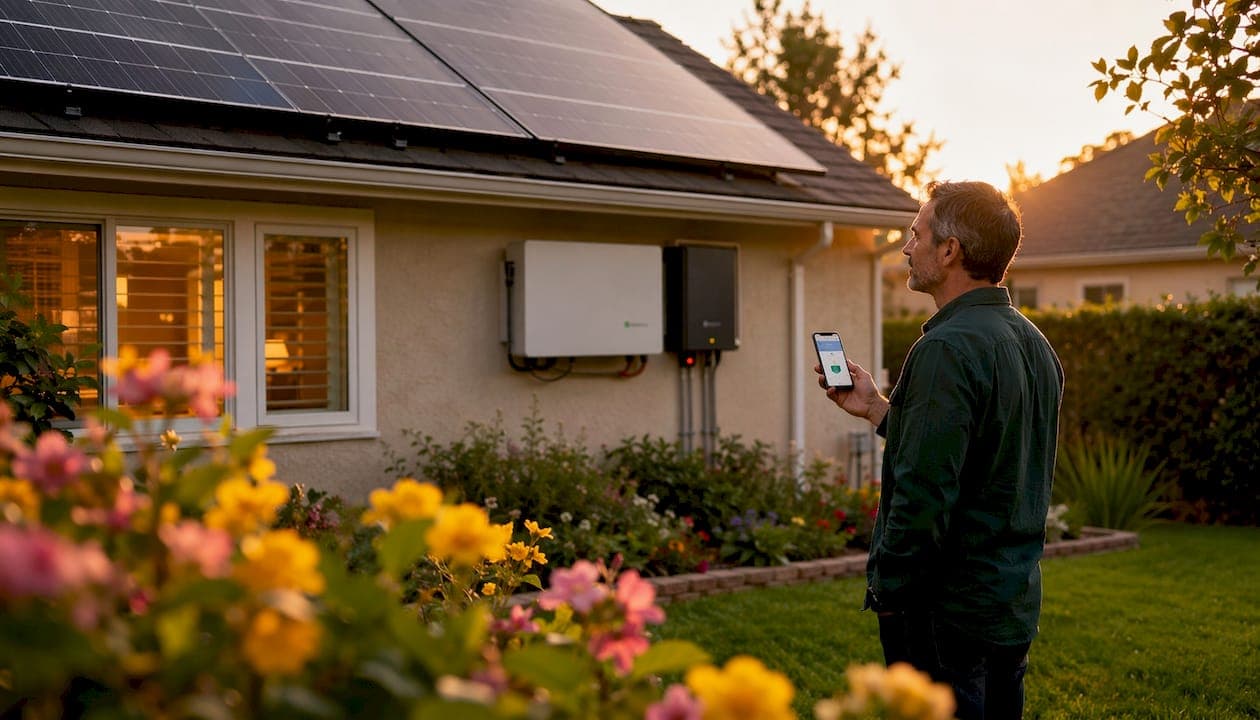
TL;DR:
- Standard grid-tied solar systems shut down instantly during power outages due to safety regulations, preventing power from feeding utility lines.
- Adding batteries, an islanding inverter, and backup gateways enables solar recharge during outages, extending power support for days.
Solar recharge is the process by which solar panels replenish battery backup systems during power outages, enabling continuous power supply without relying on the grid. The role of solar recharge during outage scenarios is not automatic. Most homeowners are surprised to learn their existing solar panels go dark the moment the grid fails. Understanding why this happens, and how to build a system that keeps recharging through a blackout, is the foundation of real emergency preparedness. Battery storage combined with solar recharge can sustain critical home loads for days, breaking dependence on fuel-based generators entirely.
Why do standard grid-tied solar systems shut down during outages?
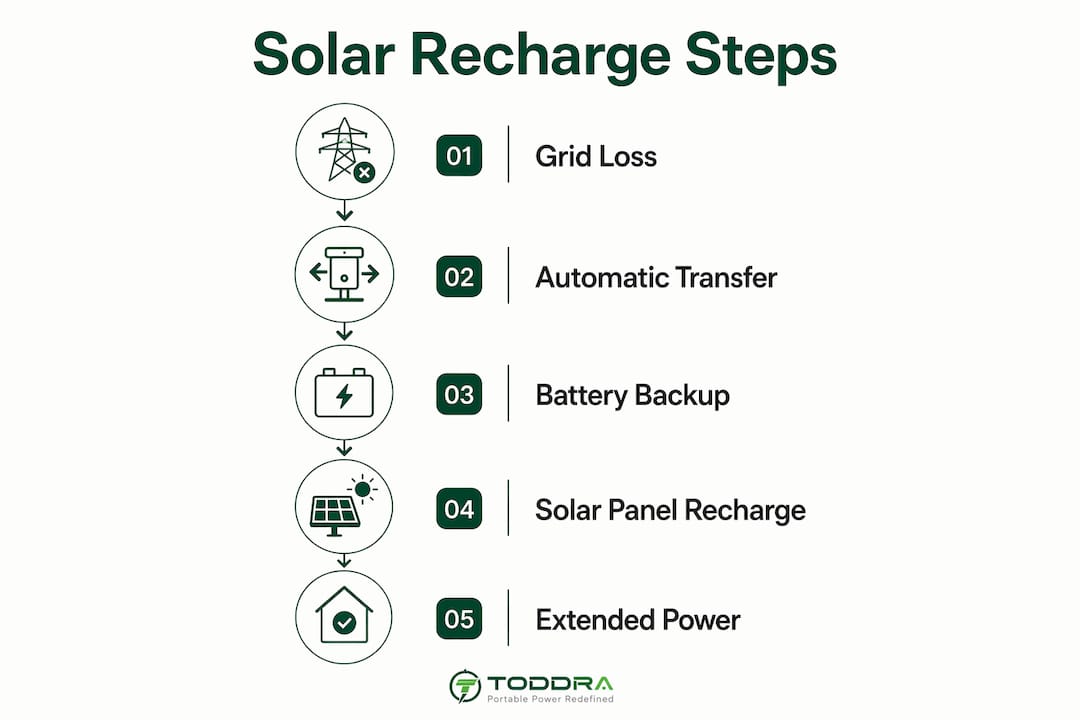
Standard grid-tied solar systems shut down within ~2 seconds of a grid failure. That near-instant cutoff is not a malfunction. It is a mandatory safety response.
The technical term for this behavior is anti-islanding protection. When the grid goes down, utility workers go out to repair damaged lines. If your solar system kept pushing electricity into those lines, it could electrocute a lineworker who believes the circuit is dead. To prevent that, safety standards require every grid-tied inverter to detect grid loss and disconnect immediately.
Two standards govern this requirement in the United States:
- UL 1741 sets the product safety requirements for inverters and power conversion equipment used in grid-tied systems.
- IEEE 1547 defines the interconnection and interoperability requirements for distributed energy resources, including the anti-islanding response time.
Both standards mandate disconnection within approximately 2 seconds of grid failure. That window is too short for any manual intervention.
Without a battery system and a backup gateway that enables island mode, solar panels alone provide zero usable power during a blackout. The panels may be generating electricity on your roof, but your inverter is legally and physically required to block it from reaching your home.
This is the most common misconception among homeowners who invest in solar. They assume the panels will keep the lights on. They will not, unless the system includes the right battery and inverter configuration. Many homeowners overestimate their system's outage capability because standard grid-tied inverters lack islanding functionality by design.
How solar recharge extends the duration of backup power during outages
Battery storage capacity determines how long your home can run without the grid. Solar recharge determines how long that battery can keep going.
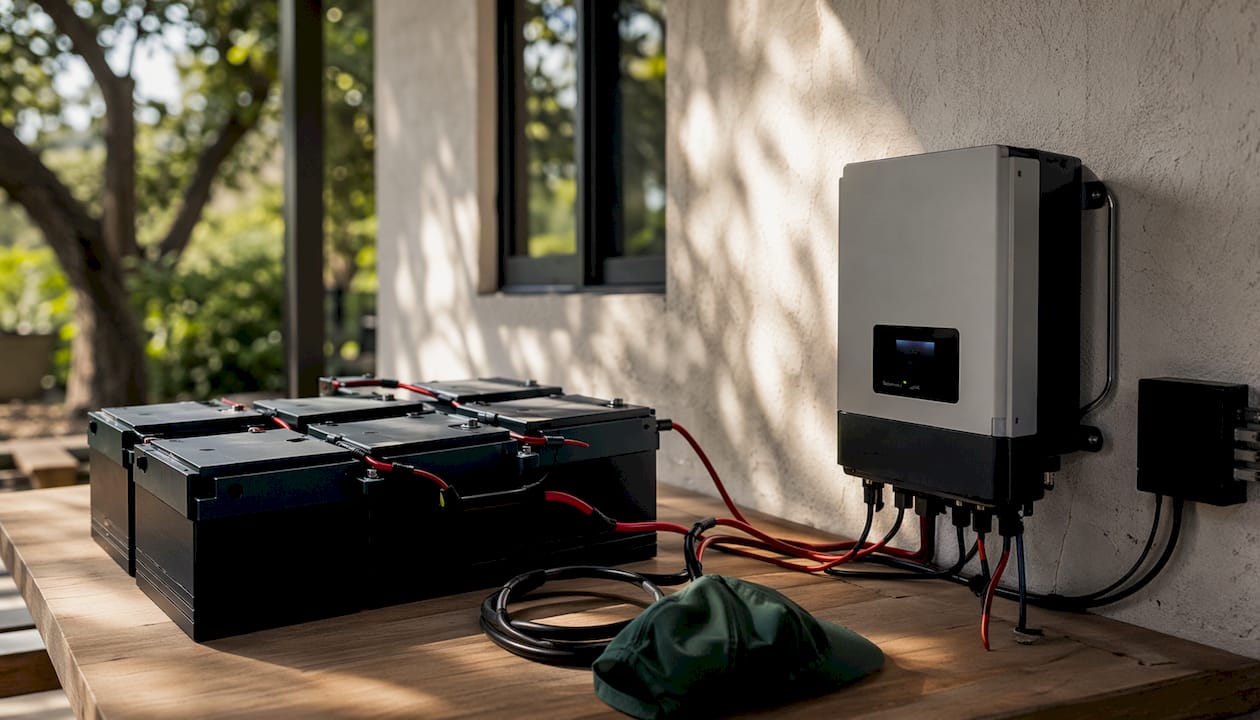
A battery system in the 10–15 kWh range supports critical home loads for 8–24 hours on a single charge. A smaller 5 kWh system covers roughly 4–6 hours. Those numbers assume no recharging. Once you add solar recharge, the math changes completely.
During daylight hours, solar panels feed power back into the battery while simultaneously supplying your home's loads. A well-sized solar array can replace overnight energy use each day, creating a sustainable cycle. That cycle is what separates a one-night backup from a multi-day resilience system. Solar energy plus batteries extend preparedness far beyond the limits of stored battery capacity alone.
| Scenario | Battery Size | Backup Without Solar | Backup With Solar Recharge |
|---|---|---|---|
| Small critical loads | 5 kWh | 4–6 hours | Potentially indefinite |
| Medium household essentials | 10 kWh | 8–12 hours | Multi-day with load management |
| Larger home backup | 15 kWh | 12–24 hours | Extended multi-day |
Recharge rate is not unlimited. A hybrid inverter charges at 3–7 kW while also supplying home loads. A 20 kWh battery may need roughly 2.8 hours of peak solar production to fully recharge. That means your solar array needs to be large enough to cover both your active home loads and the recharge demand during the same daylight window.
Pro Tip: Run your heaviest appliances, such as the dishwasher or washing machine, during peak solar hours (typically 10:00 AM to 2:00 PM). This reduces the draw on your battery and lets more solar production go toward recharging it.
What system components do you need for solar recharge during outages?
Solar recharge during a blackout requires more than panels on your roof. The system must include specific components that work together to enable safe island mode operation.
Battery storage
LiFePO4 (lithium iron phosphate) batteries are the preferred chemistry for home backup. They offer a longer cycle life, better thermal stability, and safer discharge behavior than older lithium-ion chemistries. Typical residential systems use 10–15 kWh of storage, though expandable systems let you add capacity over time.
Backup gateway and automatic transfer switch
A backup gateway detects grid loss and automatically switches your home to island mode. This happens in milliseconds, fast enough to keep sensitive electronics running without interruption. Without this component, your inverter has no mechanism to safely disconnect from the grid and begin operating independently.
Islanding-capable inverter
Not all inverter and battery setups allow for safe islanding and solar recharge during outages. You need a battery-backed, grid-forming inverter that can regulate voltage and frequency independently of the grid. Standard string inverters cannot do this.
Grid-forming microinverters
Grid-forming microinverters offer a lower-cost alternative at roughly $4,000–$5,000 for selective circuit backup. The tradeoff is significant: they provide daytime-only backup and lack the reliability of a full battery system at night. For grid-forming microinverter setups, backup load should stay at or below 30% of solar output to avoid system failure under variable cloud conditions.
The choice between whole-home backup and critical-loads backup also matters:
- Whole-home backup powers every circuit in your house, requiring a larger battery and solar array.
- Critical-loads backup powers only selected circuits (refrigerator, medical equipment, lighting, phone charging), making the battery last significantly longer and the solar recharge cycle more achievable.
Most homeowners benefit from starting with a critical-loads approach and expanding capacity over time.
Practical strategies to maximize solar recharge benefits during outages
Effective solar recharge during a multi-day outage requires active energy management, not just the right equipment. The system does the heavy lifting, but your behavior shapes the outcome.
-
Size your solar array to replace overnight use. System resilience depends on your solar array generating as many kWh during the day as your home uses overnight. If you drain 8 kWh overnight, your array needs to produce at least 8 kWh the next day after accounting for loads and inverter losses.
-
Develop a solar recharging habit. Experts recommend proactively managing loads to ensure the battery reaches full charge each day during peak sunlight. This means reducing consumption in the morning, running high-draw appliances at midday, and conserving power in the evening.
-
Prioritize critical loads ruthlessly. Electric water heaters, HVAC systems, and electric ranges consume enormous amounts of power. Switching to manual alternatives for those appliances during an outage can cut your daily consumption by more than half.
-
Account for weather and panel orientation. A south-facing array at a 30-degree tilt produces the most consistent output in the continental United States. Overcast days can reduce solar production by 50–75%, so your recharge plan needs a buffer for cloudy stretches.
-
Keep panels clean and unshaded. Dust, pollen, and debris reduce output measurably. A quick rinse before a forecasted outage-causing storm can meaningfully improve your recharge performance in the days that follow.
Pro Tip: Before a storm season, check your solar panel connection setup to confirm all connections are secure and your system is configured for island mode. Discovering a configuration gap during an actual outage is the worst time to troubleshoot.
For families weighing different backup configurations, the solar generator advantages for families guide covers how portable solar generators pair with battery storage for multi-day outage resilience.
Key Takeaways
Solar recharge transforms a one-night battery backup into a sustainable, multi-day power source by replenishing stored energy through daylight solar production every day.
| Point | Details |
|---|---|
| Standard solar shuts off instantly | Grid-tied inverters disconnect within ~2 seconds of grid failure due to UL 1741 and IEEE 1547 requirements. |
| Battery plus solar enables indefinite backup | A 10–15 kWh battery supports 8–24 hours alone; solar recharge can extend that to multi-day operation. |
| Island mode requires specific equipment | You need an islanding-capable inverter, a backup gateway, and compatible battery storage to enable solar recharge during outages. |
| Array sizing is critical | Your solar array must generate at least as many kWh daily as your home uses overnight to sustain the recharge cycle. |
| Load management multiplies resilience | Reducing heavy appliance use and running loads during peak solar hours dramatically extends how long your backup system lasts. |
Solar backup is more misunderstood than most homeowners realize
I have spoken with dozens of homeowners who installed solar panels and genuinely believed they were covered for outages. They were not. The gap between "I have solar" and "I have solar that works during a blackout" is significant, and it costs real money and planning to close.
What surprises me most is how few people think about load behavior. The equipment conversation gets all the attention. Battery capacity, inverter specs, panel wattage. But the homeowner who cuts their overnight consumption from 10 kWh to 5 kWh effectively doubles their system's resilience without buying a single new component. That is a free upgrade most people leave on the table.
The environmental case for solar recharge over fuel generators is also underappreciated. A gas generator burns through fuel in hours and requires resupply during the exact conditions when resupply is hardest. Solar recharge runs on sunlight. It produces no exhaust, no noise, and no fuel storage risk. For extended outages caused by hurricanes or ice storms, that difference is not just convenient. It is the reason some families stay comfortable while neighbors run out of gas on day three.
My honest recommendation: treat your solar backup system like a fire extinguisher. Test it before you need it, size it for your actual worst-case scenario, and build the habit of checking battery levels and panel condition regularly. The families who come through multi-day outages well are almost always the ones who planned for them before the storm arrived.
— Jackson
Reliable backup power, backed by Toddra
Power outages do not wait for a convenient moment. Having the right battery storage ready before one hits makes all the difference.

Toddra carries the Jackery Battery Pack 5000 Plus, a 5,040 Wh expansion battery built for serious home backup and solar recharge compatibility. It pairs with solar generators to create a system that keeps recharging through daylight hours, giving your household the staying power to handle extended outages with confidence. Toddra's US-based support team is available to help you find the right configuration for your home. Browse the full range of portable power solutions and build a backup setup you can count on.
FAQ
What is the role of solar recharge during an outage?
Solar recharge replenishes battery backup systems using solar panel output during daylight hours, extending backup power from a single overnight charge to potentially multi-day operation with proper load management.
Why do my solar panels stop working when the power goes out?
Grid-tied solar inverters are required by UL 1741 and IEEE 1547 to disconnect within approximately 2 seconds of grid failure to protect utility workers from backfed electricity on downed lines.
How long can a solar battery system last during an outage?
A 10–15 kWh battery supports critical home loads for 8–24 hours without recharging. With daily solar recharge and active load management, the same system can sustain power indefinitely during a prolonged outage.
Do I need special equipment to enable solar recharge during a blackout?
Yes. You need an islanding-capable inverter, a backup gateway or automatic transfer switch, and a compatible battery system. Standard grid-tied inverters cannot enable solar recharge during outages without these components.
How big does my solar array need to be for outage recharge?
Your array must generate at least as many kWh per day as your home consumes overnight. Sizing for recharge is a separate calculation from sizing for normal grid-tied production, and it requires accounting for inverter charge limits and daytime load demand.