TL;DR:
- Weather-proof power stations like the Bluetti AC240 and EcoFlow DELTA Pro 3 combine IP ratings with advanced battery management systems to ensure outdoor durability. Selecting the right model depends on your environmental exposure, power needs, portability, and charging options, with LiFePO4 batteries offering better thermal stability for outdoor use. Proper understanding of IP ratings and BMS functions is crucial for choosing a reliable station that withstands real-world outdoor conditions.
What are the best weather-proof power stations for outdoor use right now?
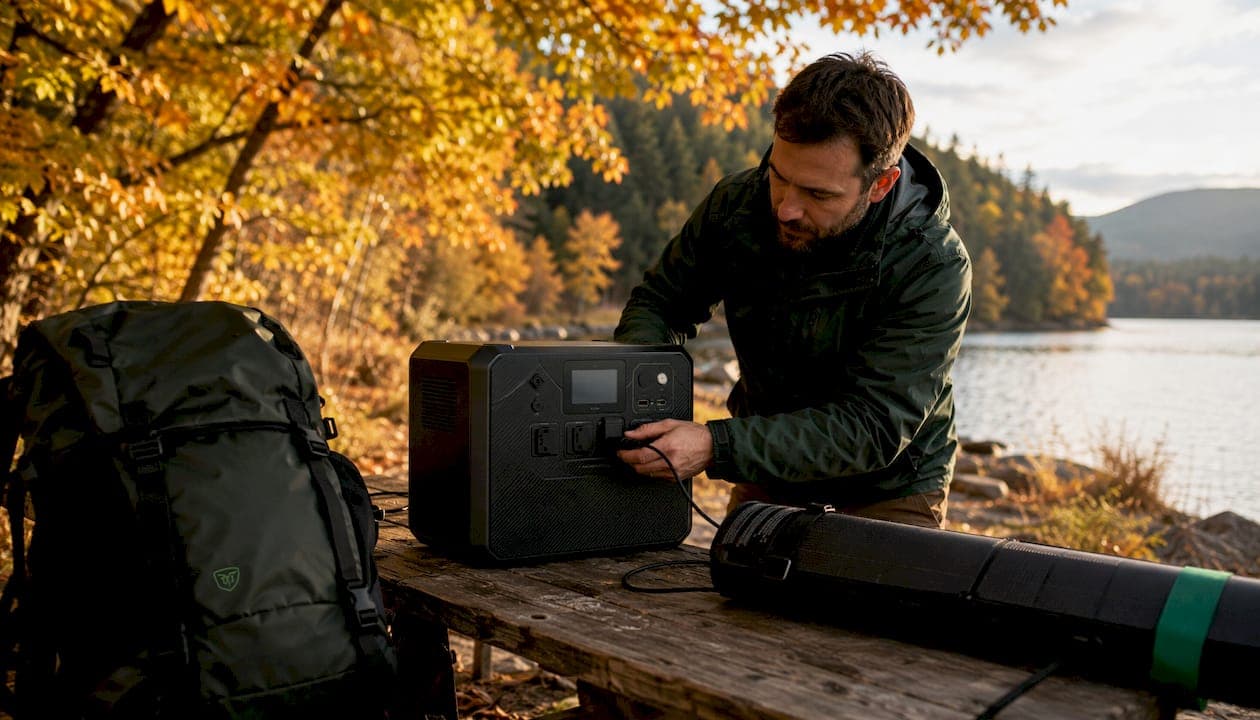
The top weather-proof power stations for outdoor use currently include models such as the Bluetti AC240, EcoFlow DELTA Pro 3, Anker Solix C1000, Jackery Explorer 2000 v2, and Bluetti AC60. These models lead the category because they combine certified IP weather resistance with capable battery management systems, giving campers and emergency preppers genuine protection against rain, dust, and temperature swings rather than just a marketing claim.
Field testing confirms that IP-rated power stations handle incidental water exposure without failure, though they still require careful handling in heavy precipitation. That distinction shapes every recommendation here. A unit rated IP65 is dust-tight and resists water jets from any angle, but it is not designed for submersion or operation in a downpour. Think of the rating as a reliable safety buffer, not a license to leave your station out in a storm.
The models below were evaluated against criteria that actually matter outdoors: verified IP ratings, battery management system quality, real-world portability, charging flexibility, and port variety. Expert reviews from OutdoorGearLab and published field tests informed the rankings alongside manufacturer specifications.
Standout features across the top picks:
- IP65 certification (dust-tight, water-jet resistant) on Bluetti AC240, AC60, and EB70S
- LiFePO4 battery chemistry for longer cycle life and better thermal stability
- Multi-path charging: solar, AC wall, and 12V car input
- Battery management systems that monitor temperature, voltage, and current in real time
- Port variety covering USB-A, USB-C, AC outlets, and 12V DC
| Model | Output (W) | Capacity (Wh) | IP Rating | Weight | Charging Options | Best For |
|---|---|---|---|---|---|---|
| Bluetti AC240 | — | — | IP65 | — | Solar, AC, Car | Heavy-duty camping, emergency power |
| Bluetti AC60 | 600 | — | IP65 | ~17.6 lbs | Solar, AC, Car | Day trips, lightweight campers |
| Bluetti EB70S | 1,000 | — | IP65 | — | Solar, AC, Car | Versatile all-weather outdoor use |
| EcoFlow DELTA Pro 3 | — | — | IP54 | ~99 lbs | Solar, AC, Car | Off-grid preppers, extended stays |
| Anker Solix C1000 | — | — | Splash-resistant | ~27.6 lbs | Solar, AC, Car | General outdoor and emergency use |
| Jackery Explorer 2000 v2 | — | — | IPX4 | — | Solar, AC, Car | Extended camping, rugged conditions |
| Jackery Explorer 300 | 300 | — | Splash-resistant | ~7.1 lbs | Solar, AC, Car | Light outdoor use, backpacking |
| Goal Zero Yeti Series | Varies | Varies | Weather-resistant | Varies | Solar, AC, Car | Casual to moderate outdoor use |
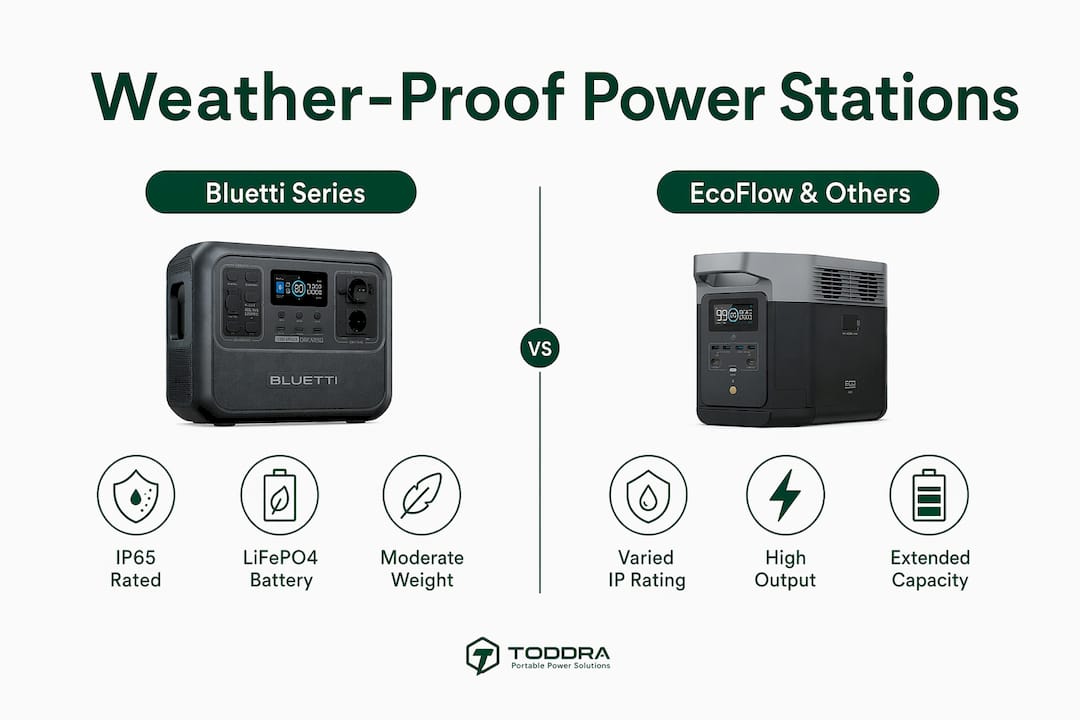
How do the leading weather-resistant power stations compare in 2026?
Choosing between these models comes down to matching specs to your actual outdoor scenario. A weekend camper powering a phone, lantern, and small fan has very different needs from a prepper running a refrigerator through a three-day outage. The brands below each occupy a distinct position in that spectrum.
Bluetti: the IP65 benchmark
Bluetti has done something no other major brand matched until recently: it built an entire outdoor lineup around certified IP65 protection. The AC240 and AC60 use a double-layer design where an exterior rubber cover and water-resistant socket work together to prevent water ingress. Every unit undergoes a 100% airtightness test before leaving the factory. The vacuum-coated fan resists both dust and water intrusion, and the drainage channels actively improve heat dissipation in challenging environments.
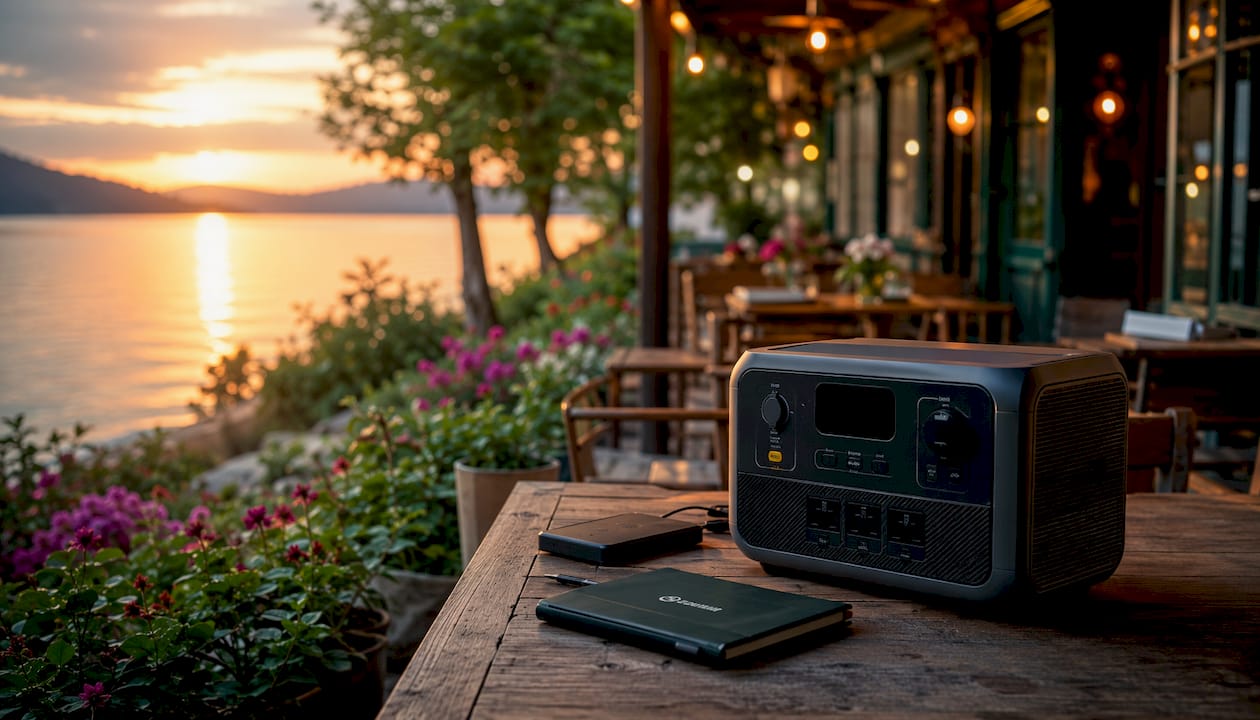
The Bluetti AC240 is the flagship of this approach. It offers high output and capacity with a LiFePO4 battery to handle power-hungry gear like electric coolers, power tools, and CPAP machines without hesitation. The IP65 rating also covers salt erosion resistance, which matters for coastal camping or marine use. Its weight suits base camp setups more than backpacking.
The Bluetti AC60 sits at the opposite end of the size scale. It offers portable IP65-rated protection with balanced output and capacity suitable for day hikers and weekend campers wanting genuine weather protection in a carry-on-sized package.
The Bluetti EB70S lands in the middle with moderate capacity and output, IP65 rating, and heat tolerance. It handles varying climates particularly well, making it a reliable choice for desert camping or humid coastal trips where temperature swings are the real threat.
EcoFlow DELTA Pro 3: power-first for serious preppers
The EcoFlow DELTA Pro 3 leads the category in raw output with continuous high wattage and expandable capacity. Its IP54 rating, lower than Bluetti's IP65, resists splashing water from any direction but not sustained water jets. For most camping and emergency scenarios that is adequate, but it is worth noting if you expect heavy rain exposure. EcoFlow's X-Boost technology lets the unit power appliances rated above its nominal output by managing draw intelligently, which extends what you can run off a single charge. The DELTA Series more broadly shares this quick-recharge capability, making EcoFlow a strong choice when grid access is unpredictable.
Anker Solix C1000: fast charging in a durable shell
The Anker Solix C1000 charges quickly, which is genuinely useful when you have limited solar window or a brief grid connection before heading back out. Its output and LiFePO4 capacity cover most camping loads comfortably. Anker rates it as splash-resistant rather than IP65, so it handles incidental moisture well but warrants more careful placement in wet conditions. Its weight places it between compact and heavier expedition-class units.
Jackery: accessible and growing
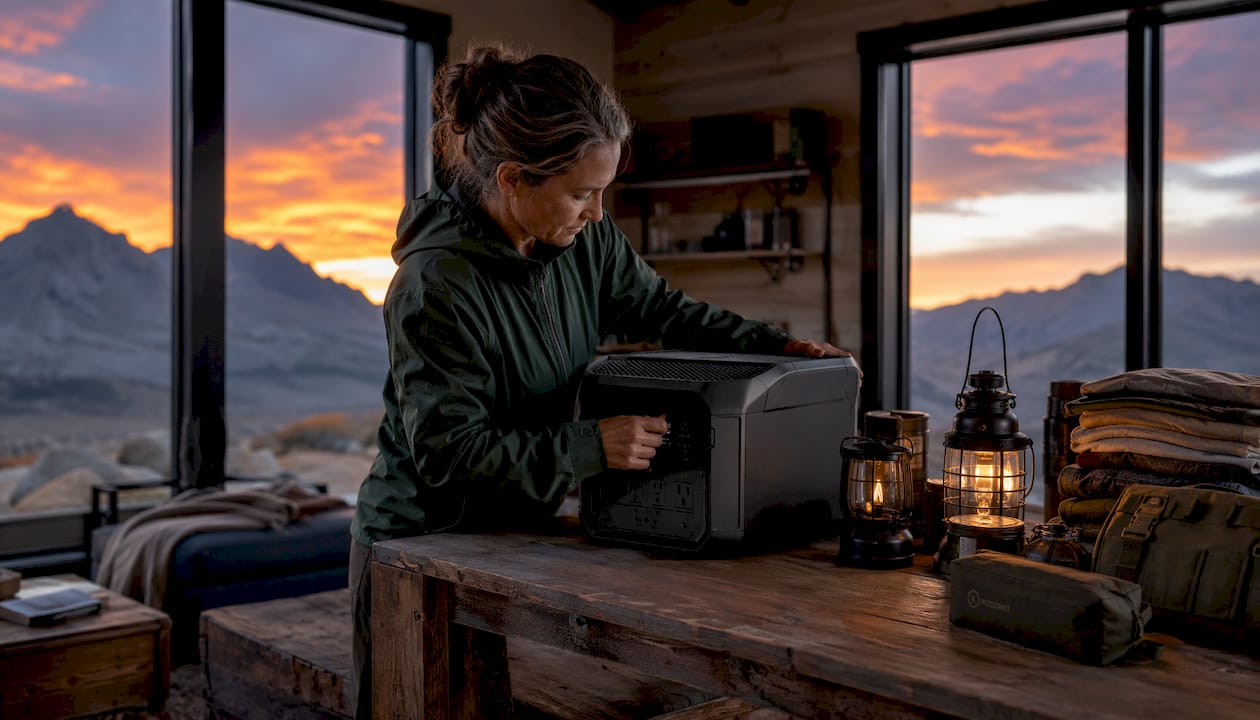
Jackery's lineup spans a wide range with varying capacities. The Explorer 2000 v2 carries an IPX4 rating, meaning it resists water splashing from any direction, and its premium battery management system handles multiple charging inputs simultaneously. The Jackery Explorer Series broadly offers an approachable entry point for outdoor power with a growing accessory ecosystem including foldable solar panels. Weather resistance across the Jackery lineup is generally splash-level rather than full IP65, so these units reward careful placement under a canopy or tarp when rain is expected.
The Explorer 300 deserves a specific mention for backpackers. It is lightweight with modest output, and its proven reliability across field uses makes it a trustworthy companion for light trips.
Goal Zero Yeti Series: established and accessory-rich
Goal Zero built its reputation on rugged outdoor design before IP ratings became a standard marketing metric. The Yeti Series covers a wide capacity range and pairs with Goal Zero's own solar panels and accessories, which simplifies building a complete off-grid setup. Weather resistance is solid for typical outdoor conditions, though Goal Zero does not publish IP ratings for most Yeti models the way Bluetti does. For casual to moderate outdoor use where you want a proven brand with broad accessory compatibility, the Yeti Series delivers.
Key strengths and limitations at a glance:
- Bluetti AC240/AC60/EB70S: IP65 certified, double-layer protection, LiFePO4 chemistry. Heavier flagship models; AC60 is the exception.
- EcoFlow DELTA Pro 3 / DELTA Series: Highest output and expandable capacity, X-Boost technology. IP54 rather than IP65; significant weight on the Pro 3.
- Anker Solix C1000: Fastest charging in the group, solid LiFePO4 durability. Splash-resistant rather than full IP65.
- Jackery Explorer 2000 v2 / Explorer Series: IPX4 on the flagship, wide product range, strong solar ecosystem. Lower weather resistance than IP65 models.
- Goal Zero Yeti Series: Established outdoor credibility, broad accessories. IP ratings not consistently published.
How to choose a weather-proof power station for outdoor and emergency use
The right portable power supply for outdoor use depends on four things working together: how much power you need, how wet or dusty your environment gets, how far you carry the unit, and how you plan to recharge it. Getting one of those wrong means buying a station that either underperforms or sits unused because it is too heavy to bring along.
Matching capacity to your actual load
Start by listing every device you plan to power and its wattage. A smartphone draws around 18W to charge; a portable refrigerator runs at 40–60W continuously; a CPAP machine needs 30–60W per night. Add those up, multiply by the hours you need coverage, and you have your minimum capacity in watt-hours. Build in a 20% buffer for efficiency losses. A weekend camping trip powering lights, phones, and a small fan typically needs 300–600Wh. Running a refrigerator through a 72-hour power outage calls for 4,000Wh or more.
Understanding IP ratings before you buy
IP65 certification means a unit is completely dust-tight and resists water jets from any angle. The first digit (6) covers dust; the second (5) covers water. IP54 means dust-protected (not fully dust-tight) and splash-resistant. IPX4 means splash-resistant with no dust rating published. These are not interchangeable, and a unit marketed as "weather-resistant" without a published IP number should be treated with skepticism. Always verify the rating against the manufacturer's spec sheet, not just the product listing headline.
Port covers matter as much as the rating itself. Operators must keep port covers on IP65-rated units properly sealed to maintain water resistance. An open USB port during a rain shower can compromise the entire protection system regardless of the housing's rating.
Portability versus power output
Weight is the most common trade-off in this category. The Bluetti AC60 at 17.6 lbs and the Jackery Explorer 300 at 7.1 lbs are genuinely portable for hiking and day trips. The EcoFlow DELTA Pro 3 at 99 lbs requires a vehicle. Most campers land in the 20–50 lb range, where units like the Anker Solix C1000 and Jackery Explorer 2000 v2 sit. If you are balancing portability and ruggedness, the sweet spot for most outdoor enthusiasts is a unit under 30 lbs with at least 1,000Wh capacity.
Charging flexibility for off-grid stays
Solar compatibility is non-negotiable for extended off-grid use. Look for units with MPPT (Maximum Power Point Tracking) solar controllers, which extract more energy from panels in variable light conditions. All the top models here support solar input alongside AC wall and 12V car charging. The EcoFlow DELTA Series and Bluetti lineup both accept high solar input wattages, which shortens recharge time on sunny days. For emergency preparedness, a unit that can recharge fully from solar in a single day gives you genuine independence from the grid.
Red flags to watch for
- "Waterproof" claims with no published IP number
- IP ratings that apply only to the housing, not the port covers
- No mention of battery management system features in the spec sheet
- Unusually low weight for the stated capacity (often signals lower-quality cells)
- No solar input or a very low maximum solar wattage
Questions to ask before purchasing:
- What is the exact IP rating, and does it cover the ports when open?
- What battery chemistry is used (LiFePO4 vs. NMC), and what is the rated cycle life?
- What is the maximum solar input wattage?
- Does the unit have pass-through charging for use while recharging?
- What does the warranty cover for weather-related damage?
Pro Tip: Always check whether the published IP rating was tested with port covers closed. Some manufacturers test the housing alone. If port covers are not rated separately, treat the unit as splash-resistant only when ports are in use.
What do IP ratings and battery management systems actually mean for outdoor durability?
Two technical factors determine whether a power station genuinely survives outdoor conditions or just looks like it will: the IP rating standard and the quality of the internal battery management system (BMS). Understanding both helps you cut through marketing language and evaluate real durability.
IP ratings: what they cover and what they don't
The IP (Ingress Protection) rating system is defined by the IEC 60529 standard. Each rating consists of two digits. The first rates solid particle protection on a scale of 0–6; the second rates liquid ingress protection on a scale of 0–9. IP65 means the enclosure is completely dust-tight (6) and protected against water jets from any direction (5). It does not mean the unit can be submerged, used in heavy rain while ports are open, or left sitting in standing water.
A common misconception is that a higher second digit always means better all-around protection. IP67 means the unit can be submerged to 1 meter for 30 minutes, but it does not necessarily mean it handles sustained water jets as well as IP65. For outdoor power stations, IP65 is the most practically useful rating because it covers the real-world threats: rain showers, splashing, and dusty trails.
Field testers confirm that IP-rated stations handle incidental water exposure reliably, but active use in heavy precipitation remains inadvisable regardless of rating. The Bluetti AC60 was the first power station widely tested under IP65 conditions, and its results set the benchmark for what the rating means in practice for this product category.
Battery management systems: the real safety layer
A battery management system monitors voltage, current, and temperature across every cell in the pack. When conditions approach dangerous thresholds, the BMS cuts power or alerts the user before damage occurs. This matters outdoors because temperature extremes are the primary cause of battery degradation and failure in the field. A BMS that handles over-temperature, overcurrent, over-voltage, under-voltage, and short-circuit conditions protects both the unit and whatever is connected to it.
LiFePO4 (lithium iron phosphate) batteries pair especially well with quality BMS designs because the chemistry is inherently more thermally stable than NMC (nickel manganese cobalt). Bluetti, EcoFlow, and Anker all use LiFePO4 in their outdoor-focused models, and the expandable battery systems built around this chemistry maintain protection across added capacity modules. A BMS also prolongs battery lifespan against temperature extremes typical in outdoor settings, which directly affects the long-term value of your investment.
Environmental hazards and how quality designs address them:
- Rain and splashing: IP65 housing with sealed port covers and water-resistant sockets
- Dust and sand: Dust-tight enclosures with vacuum-coated fans (Bluetti AC240/AC60)
- Salt corrosion: Exterior rubber covers and corrosion-resistant materials (Bluetti AC240 specifically engineered for maritime use)
- Heat: BMS over-temperature cutoff, drainage channels for heat dissipation, heat-tolerant cell chemistry
- Cold: LiFePO4 chemistry performs better at low temperatures than NMC; some units include low-temperature charging protection
Safety precautions for outdoor use:
- Never operate a power station in active heavy rain, even with an IP65 rating
- Keep port covers closed when ports are not in use
- Store the unit in a dry, shaded location between uses
- Do not place the station directly on wet ground; use an elevated, dry surface
- Allow the unit to return to ambient temperature before charging in extreme cold
- Check port cover seals regularly for wear or debris that could compromise the seal
Statistic callout: The Bluetti AC240 and AC60 each undergo a 100% airtightness test before leaving the factory, a manufacturing standard that directly supports the IP65 certification's real-world reliability.
Key Takeaways
The most reliable weather-proof power stations for outdoor use combine IP65-certified housing with LiFePO4 battery chemistry and a quality BMS, giving campers and preppers genuine protection without sacrificing runtime or port variety.
| Point | Details |
|---|---|
| IP65 is the outdoor standard | IP65 means dust-tight and water-jet resistant; it does not cover submersion or heavy rain with open ports. |
| BMS quality drives real durability | A quality battery management system prevents overheating and short circuits, protecting both the unit and your gear. |
| Match capacity to your load | Calculate your total watt-hour needs before buying; a weekend camp typically needs 300–600Wh, while emergency prep needs far more. |
| Bluetti leads on certified weather resistance | The Bluetti AC240 and AC60 carry IP65 ratings backed by 100% factory airtightness testing, setting the benchmark for the category. |
| Toddra offers LiFePO4 systems for outdoor use | Toddra's portable power stations use LiFePO4 chemistry with advanced BMS technology, designed for campers and preppers who need dependable, expandable power. |
The trade-off most buyers get wrong when choosing an outdoor power station
Most buyers focus on IP rating and capacity, then pick the highest numbers they can afford. That approach misses the single most important variable: battery management system quality. A unit with IP65 housing and a mediocre BMS will degrade faster in the field than a unit with IP54 and an excellent BMS. The housing keeps water out; the BMS keeps the battery alive through temperature swings, partial charges, and the irregular load patterns that outdoor use creates.
The 2026 market has clarified something that was murkier two years ago: LiFePO4 chemistry combined with a well-engineered BMS is the only combination worth considering for serious outdoor or emergency use. NMC batteries charge faster in ideal conditions, but they are more sensitive to heat and cold, and their cycle life drops faster under the kind of irregular use that camping and emergency prep involve. The brands that have committed fully to LiFePO4 across their outdoor lines, including Bluetti and EcoFlow, have a genuine technical advantage over those still mixing chemistries.
There is also a misconception worth addressing directly. Many buyers treat an IP65 rating as permission to use their station in any weather. It is not. The rating describes what the unit survives, not what it is designed to operate in. IP ratings protect against incidental exposure, not sustained use in hazardous weather. A unit left in the rain with port covers open will fail regardless of its housing rating. The practical rule is simple: IP65 means you do not panic if it gets rained on; it does not mean you leave it out overnight in a storm.
Weight is the other trade-off that buyers consistently underestimate. The EcoFlow DELTA Pro 3 is an extraordinary piece of engineering, but 99 lbs is a vehicle-only proposition. If your camping style involves any carrying at all, the Bluetti AC60 at 17.6 lbs or the Anker Solix C1000 at 27.6 lbs will serve you far better in practice, even if their capacity numbers look smaller on paper. A station you actually bring is worth more than a station you leave in the garage because it is too heavy to load.
My honest recommendation for most outdoor enthusiasts is to start with a unit in the 600–1,100Wh range with a confirmed IP65 rating and LiFePO4 chemistry. That covers the vast majority of camping and short-term emergency scenarios without the weight penalty of the expedition-class units. If your needs grow, choose a platform with modular expansion rather than buying a second station.
Toddra's portable power systems are built for the outdoors
If you have worked through this guide and want a power station that puts battery safety and expandability first, Toddra's lineup is worth a close look. Toddra specializes in portable power solutions built around LiFePO4 battery technology and advanced BMS designs, specifically for campers, preppers, and off-grid users who need dependable energy in variable conditions.
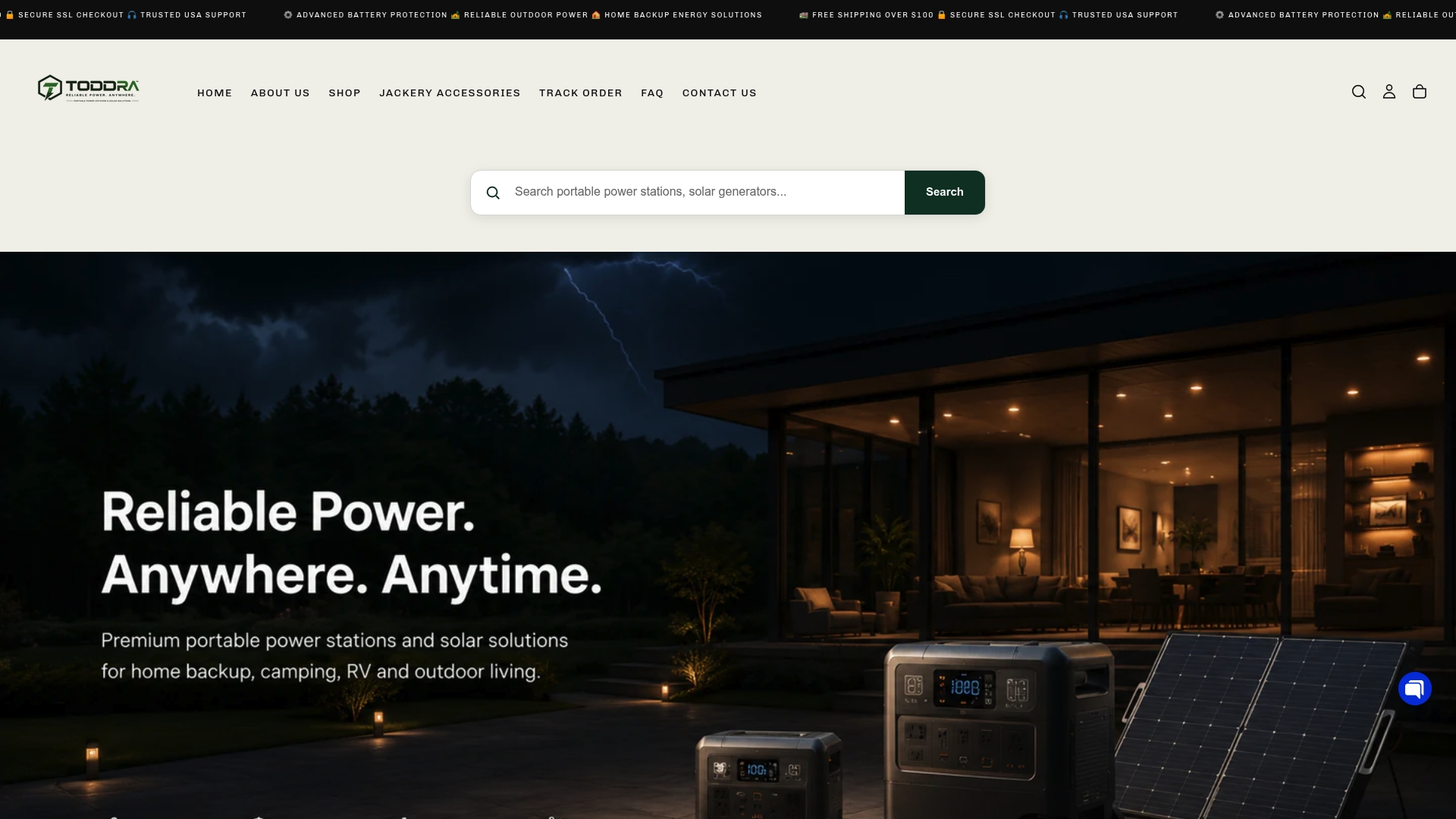
What sets Toddra apart is the combination of modular capacity scaling and safety-first engineering. You can start with a core unit sized for weekend trips and expand capacity as your needs grow, without replacing the entire system. Every product is backed by US-based customer support and a secure checkout process, so you are never navigating a purchase alone. Toddra also publishes detailed educational resources on emergency power planning to help you size your setup correctly before you buy.
Why outdoor enthusiasts choose Toddra:
- LiFePO4 battery chemistry for thermal stability and long cycle life
- Advanced BMS with over-temperature, overcurrent, and short-circuit protection
- Modular expandability to grow capacity without buying a new unit
- Solar-compatible designs for genuine off-grid independence
- US-based customer service and responsive support
- Secure checkout and straightforward warranty coverage
Useful sources and further reading
Deepening your knowledge before buying a weather-proof power station pays off in the field. These resources cover IP rating standards, expert field testing, and battery system fundamentals.
- IP Ratings Explained — Clear breakdown of the IEC 60529 standard, including what each digit means and common misconceptions about submersion versus water-jet resistance.
- Is a 'Water-Resistant' Power Station Too Good to Be True? — ZDNET's hands-on field test of the Bluetti AC60, the first widely tested IP65-rated power station, with honest conclusions about real-world limits.
- Best Power Stations of 2026: Lab Tested and Ranked — OutdoorGearLab's independently tested rankings covering performance, durability, and weather resistance across leading models.
- Bluetti Water-Resistant and Dust-Proof Portable Power — Manufacturer detail on the AC240 and AC60's double-layer IP65 design, airtightness testing, and salt-erosion resistance.
- Best Outdoor Portable Power Station: True Gear — Practical field guide covering durability criteria, solar charging considerations, and safety precautions for outdoor generator use.
- Expandable Battery System Benefits for Camping — Toddra's guide to how modular LiFePO4 systems work and why BMS quality matters for long-term outdoor reliability.
- Emergency Power Station Explained: Your Complete Guide — Toddra's resource on sizing and selecting a power station for emergency preparedness, including weather-proofing considerations.