TL;DR:
- Power stations use pre-configured emergency response plans and asset prioritization to quickly contain disasters and restore power. Advanced monitoring technology and regular drills improve preparedness, while human factors like clear roles and communication are critical for effective responses. Physical hardening alone does not ensure resilience without ongoing procedural testing and updates.
A power station's disaster response is defined by a systematic emergency response plan that integrates technology, asset prioritization, and procedural drills to maintain safety and operational continuity during crises. Understanding how power station handles disaster scenarios matters whether you manage a facility or rely on backup power at home. The difference between a controlled shutdown and a cascading failure often comes down to preparation made weeks or months before the event. Regulatory bodies like OSHA, the NRC, and FERC all require documented emergency protocols, and facilities that meet those standards recover faster and with fewer injuries.
How power stations handle disaster scenarios through emergency response plans
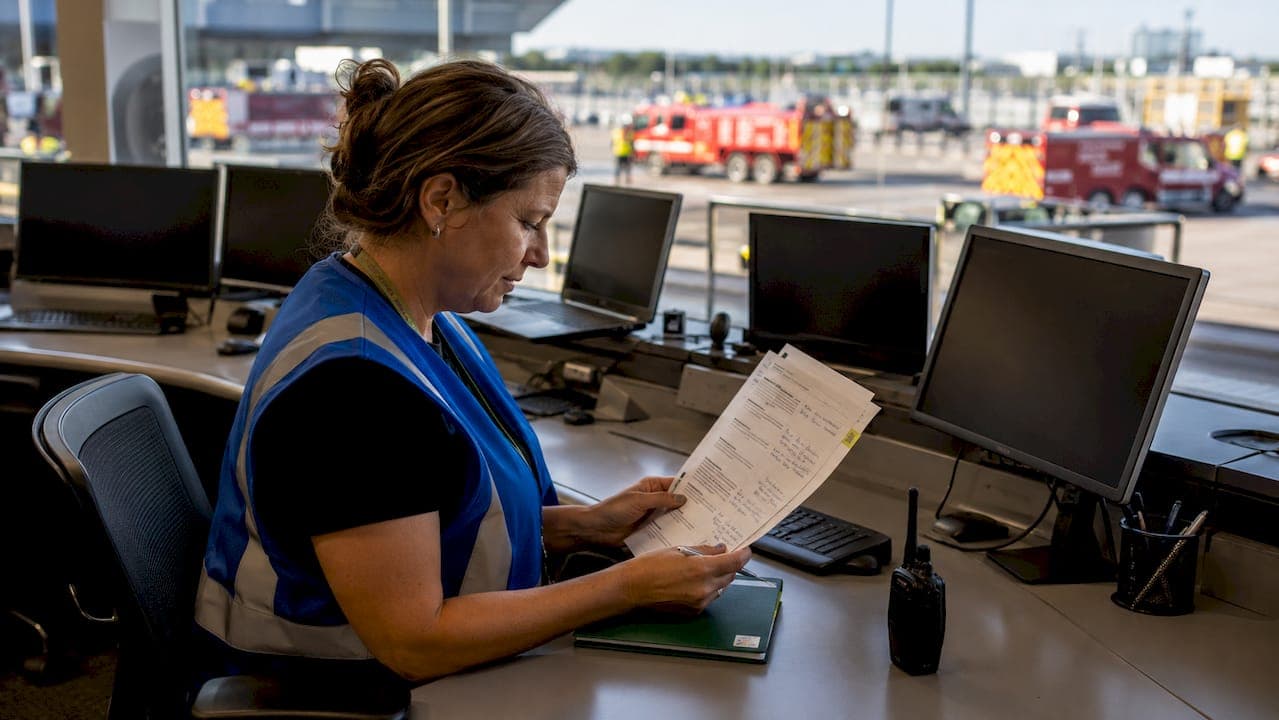
A pre-configured emergency response plan, or ERP, is the backbone of power station disaster handling. An ERP defines activation triggers, assigns roles, and sequences every action from the moment a crisis begins. Without one, operators face multi-hour delays in mobilizing vendors and notifying escalation chains. With one, response initiation drops to within 20 minutes of failure detection.
The time structure of an ERP is not arbitrary. Response sequences cover three critical windows: the first 5 minutes, the first 30 minutes, and the first 4 hours post-event. Each window has distinct objectives.
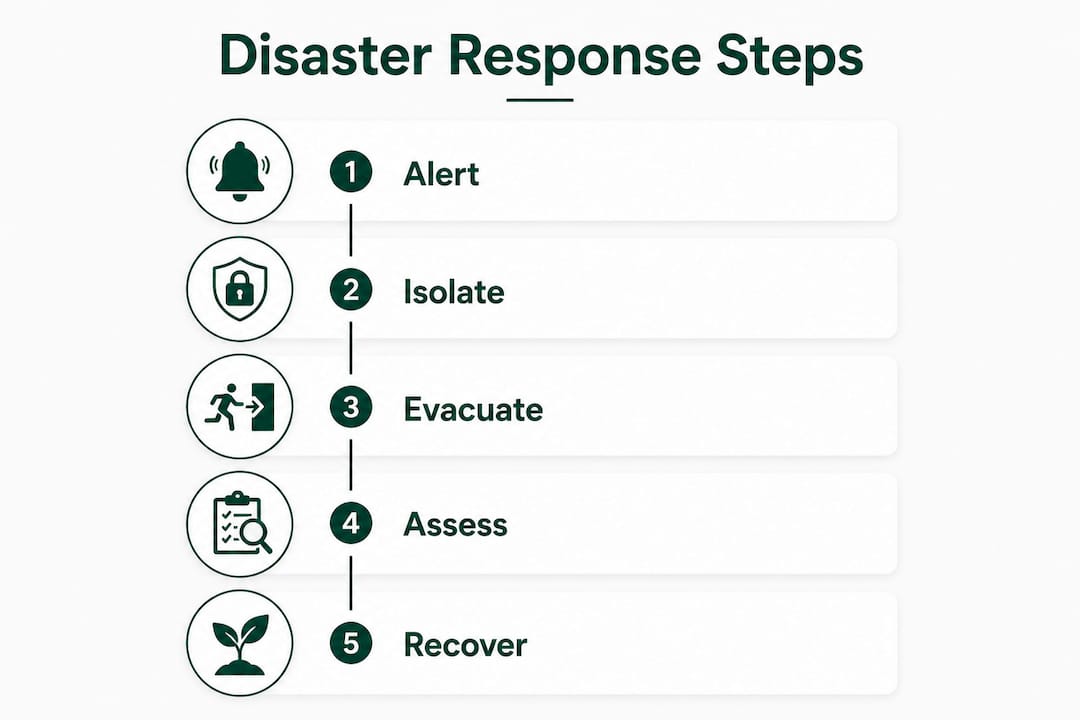
- Minutes 1–5: Isolate the hazard, confirm personnel accountability, and activate the incident command structure.
- Minutes 6–30: Execute evacuation or shelter-in-place, notify regulatory agencies, and begin equipment isolation procedures.
- Hours 1–4: Coordinate external emergency services, initiate damage assessment, and begin controlled restoration of critical systems.
These sequences apply across scenario types. A gas release requires immediate ventilation and ignition source removal. A dam breach triggers flood barrier deployment and downstream community notification. A fire demands suppression system activation and fuel isolation. Each scenario gets its own procedure card within the ERP, so operators never improvise under pressure.
Computerized Maintenance Management Systems, known as CMMS, turn static ERP documents into live, executable workflows. Digitized ERPs automate alerts, route tasks, and maintain compliance records in real time. That shift from paper to digital is not cosmetic. It means a technician receives a work order on a mobile device within seconds of an alarm, rather than searching a binder in a smoke-filled control room.
Pro Tip: Schedule ERP drills at least twice per year and log outcomes in your CMMS. Drill data reveals gaps in role assignments and equipment readiness before a real event exposes them.
How does asset prioritization speed up disaster recovery?
Not every piece of equipment at a power station carries equal weight during a crisis. Industry asset categorization by severity tier ensures scarce emergency resources go to the most critical equipment first. This tiered approach is what separates a facility that restores power in hours from one that stays dark for days.
The two most common tiers are:
- Generation Critical: Turbines, generators, and primary transformers. Failure here stops all output. These assets receive immediate attention and pre-approved emergency spending authority.
- Safety Critical: Control instrumentation, fire suppression systems, and cooling circuits. Tier 2 assets like control instrumentation get prioritized for restoration within 8 hours of a disaster declaration.
Automatic escalation chains remove the need for manual approval at every step. When a Generation Critical asset fails, the CMMS triggers a pre-approved purchase order for spare parts and notifies the plant manager, the maintenance supervisor, and the emergency vendor simultaneously. No one waits for a signature.
Pre-disaster baseline data makes this process faster and more accurate. Thermal imaging and vibration signatures collected before a disaster let engineers distinguish storm damage from pre-existing wear. That distinction matters because it directs repair crews to the right component on the first attempt, cutting restoration time significantly.
Pro Tip: Build a critical materials register that maps each tier-1 asset to its spare parts, lead times, and pre-negotiated vendor contacts. Review it every six months.
What role does technology play in disaster preparedness?
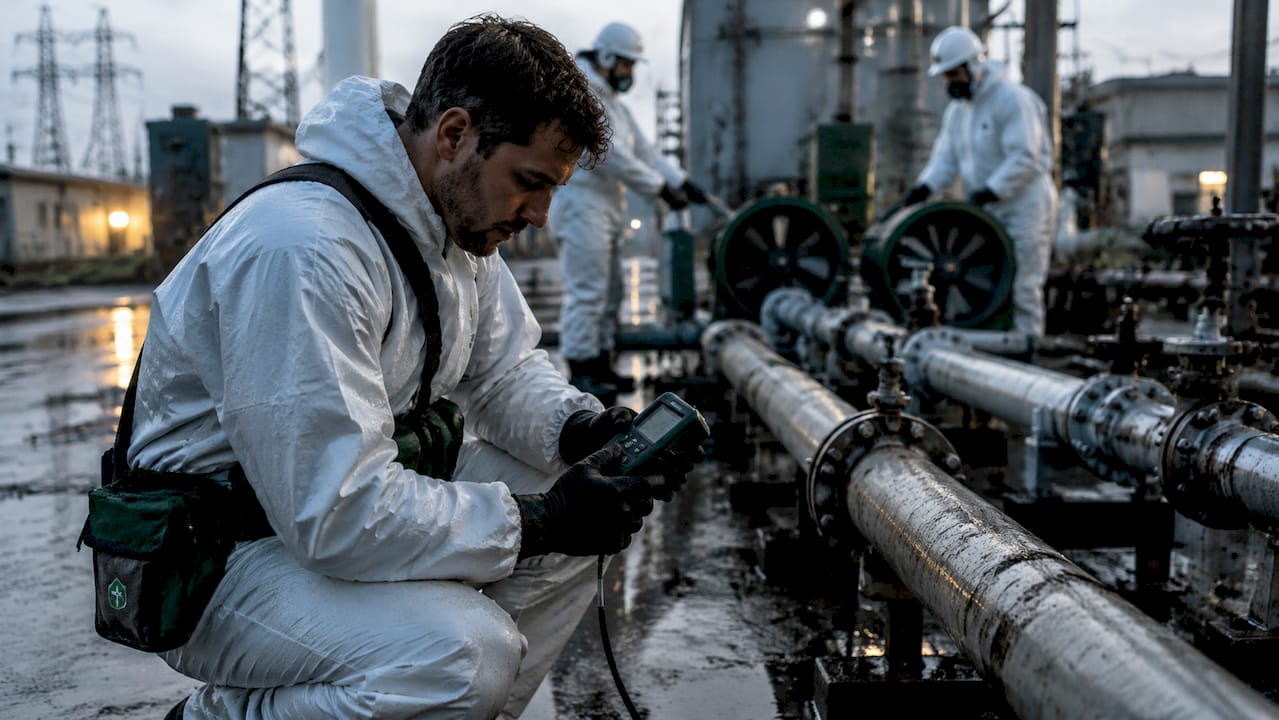
Modern power station risk management depends on continuous monitoring, not periodic inspections. Technology now detects faults hours or days before they become failures, giving operators time to act before a disaster forces their hand.
The most effective monitoring tools in use today include:
- AI-driven anomaly detection: Sensors track vibration, heat, and acoustic signatures across rotating equipment. AI flags deviations from baseline before human operators notice anything unusual.
- Dissolved gas-in-oil analysis (DGA): Transformers release specific gases as they degrade. DGA monitors catch early insulation breakdown, which is a leading cause of transformer fires during high-load disaster conditions.
- Digital twins: A digital twin is a real-time virtual model of a physical asset. Engineers run failure simulations on the twin without touching the live equipment, identifying weak points before extreme weather arrives.
- Drone inspections: Drones survey transmission lines, dam faces, and cooling towers after a disaster, reaching areas that are unsafe for personnel and cutting damage assessment time from days to hours.
Conceptual hardening through anomaly detection is as important as physical equipment upgrades. A facility can install flood barriers and reinforced switchgear, but if it lacks real-time monitoring, it will still miss the early warning signs that precede most catastrophic failures.
Climate adaptation for power plants now requires forward-looking engineering that goes beyond historical weather data. Facilities that design for the climate conditions projected over the next 30 years, rather than the last 30, build genuine resilience. Those that rely on historical averages are planning for a world that no longer exists.
For households and small organizations, the parallel is clear. Understanding portable vs. stationary emergency power options is the first step toward building your own layered backup strategy.
Why do human factors determine disaster response outcomes?
Technology monitors and alerts, but people act. Human efficiency in manual emergency responses significantly influences nuclear power plant resilience and safety outcomes during blackouts and disasters. Modeling shows that the speed and accuracy of human intervention determines whether a plant degrades safely or cascades toward a larger failure.
Three human factors carry the most weight:
- Defined role authorizations: Every operator knows exactly what decisions they can make without escalation. Ambiguity in authority costs minutes, and minutes cost safety margins.
- Succession plans: If the primary incident commander is unreachable, a named backup takes over immediately. Facilities without succession plans lose critical time identifying who is in charge.
- Real-time communication systems: Hardened radio networks and satellite-linked communication tools keep teams coordinated when cellular infrastructure fails, which it routinely does during major disasters.
Regular drills convert written protocols into muscle memory. A team that has practiced a gas release scenario three times responds faster and makes fewer errors than one reading the procedure for the first time under stress. Clear role definitions and timely manual actions critically determine disaster resilience in power facilities. That finding applies equally to large utility plants and to households running a backup power setup during a hurricane.
Pro Tip: After every drill, hold a 15-minute debrief and log findings in your CMMS. Patterns across multiple drills reveal systemic training gaps that single-event reviews miss.
For a deeper look at how emergency power systems work at the facility level, the emergency power station guide covers the core concepts clearly.
Key Takeaways
A power station's disaster resilience depends on pre-configured CMMS protocols, tiered asset prioritization, continuous monitoring technology, and well-drilled human response teams working together.
| Point | Details |
|---|---|
| Pre-configured ERPs cut response time | Integrated CMMS protocols reduce vendor mobilization from hours to within 20 minutes of failure. |
| Asset tiers direct scarce resources | Generation Critical and Safety Critical tiers ensure the right equipment gets attention first during recovery. |
| Technology enables early warning | AI anomaly detection, digital twins, and DGA monitoring catch faults before they become disasters. |
| Human speed determines outcomes | Defined roles, succession plans, and regular drills directly determine whether a crisis stays controlled. |
| Baseline data accelerates restoration | Pre-disaster thermal and vibration records let repair crews identify damage causes on the first attempt. |
The part most facilities get wrong about disaster readiness
I have spent years watching organizations invest heavily in physical upgrades while treating their emergency protocols as a compliance checkbox. New flood barriers go up. Switchgear gets replaced. Then the ERP document sits in a shared drive, last updated three years ago, with role assignments that no longer match the current org chart.
The uncomfortable truth is that physical hardening without procedural hardening creates a false sense of security. A facility with state-of-the-art monitoring and a stale, untested ERP will still fumble the first 30 minutes of a real event. Those 30 minutes are exactly when the most consequential decisions get made.
What actually works is treating the ERP as a living system. That means quarterly reviews, annual full-scale drills, and CMMS integration so that every procedure update automatically reaches the people responsible for executing it. The facilities I have seen recover fastest from disasters are not always the ones with the newest equipment. They are the ones where every operator knows their role cold, the spare parts are pre-staged, and the escalation chain has been tested under realistic conditions.
The same principle scales down to individual households. Knowing your backup power setup, testing it before you need it, and having a clear plan for who does what during an outage is the personal equivalent of a well-drilled ERP.
— Jackson
Reliable backup power for your emergency preparedness plan
Building a personal or organizational disaster preparedness plan means having dependable energy when the grid goes down.

Toddra carries the Jackery Battery Pack 5000 Plus Expansion Battery, a 5,040Wh high-capacity unit built for exactly these situations. It pairs with compatible solar generators for off-grid charging, supports a wide range of appliances, and uses LiFePO4 battery technology for long cycle life and stable output. Whether you are protecting a home, a small business, or a remote site, this unit gives you the capacity to keep critical devices running through extended outages. Toddra offers US-based customer support and secure checkout, so getting set up is straightforward and trustworthy.
FAQ
What is a power station emergency response plan?
A power station emergency response plan, or ERP, is a documented set of procedures that defines activation triggers, role assignments, and time-sequenced actions for disaster events. Effective ERPs are digitized within a CMMS to automate alerts and task routing during a crisis.
How quickly can a power plant respond to a disaster?
Plants with pre-configured CMMS protocols can initiate vendor mobilization within 20 minutes of a failure, compared to multi-hour delays at facilities without integrated systems.
What are the critical time windows in a power plant disaster response?
The three critical windows are the first 5 minutes (isolation and accountability), the first 30 minutes (evacuation and agency notification), and the first 4 hours (damage assessment and controlled restoration).
How does asset prioritization work during a power plant disaster?
Assets are classified into severity tiers. Generation Critical equipment receives immediate attention, while Safety Critical assets like control instrumentation are targeted for restoration within 8 hours of a disaster declaration.
Why do drills matter for power station disaster preparedness?
Regular drills convert written protocols into practiced responses, reducing errors and decision time during real events. Logging drill outcomes in a CMMS helps identify systemic gaps before an actual disaster exposes them.