TL;DR:
- Emergency power stations are rechargeable lithium battery systems that provide clean, quiet backup electricity during outages. They operate quickly, support sensitive devices with built-in safety features, and require minimal maintenance, making them ideal for home or personal use.
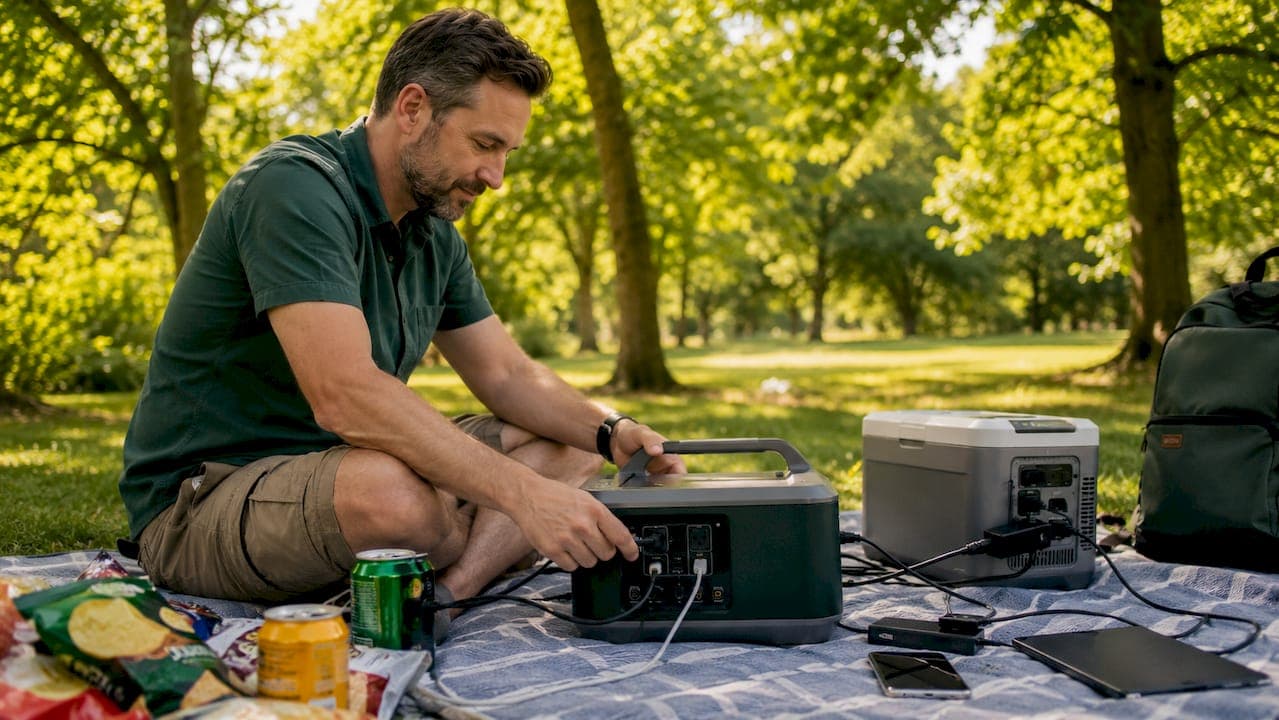
An emergency power station is a rechargeable battery system that delivers clean, quiet backup electricity the moment your main grid fails. Unlike fuel generators, these units use lithium battery technology, most commonly LiFePO4 cells, to store energy and release it through standard AC and DC outlets without combustion, noise, or fumes. NFPA 110 sets the performance standards for emergency power supply systems in the United States, and modern battery stations increasingly meet or complement those requirements. This guide covers how these systems work, the different types available, their real advantages over traditional generators, and how to choose the right one for your home or personal needs.
How do emergency power stations work?
An emergency power station stores electrical energy in a battery bank and releases it on demand through built-in inverters and outlets. The process has four distinct stages: charging, storing, monitoring, and delivering power.
Charging and storing energy
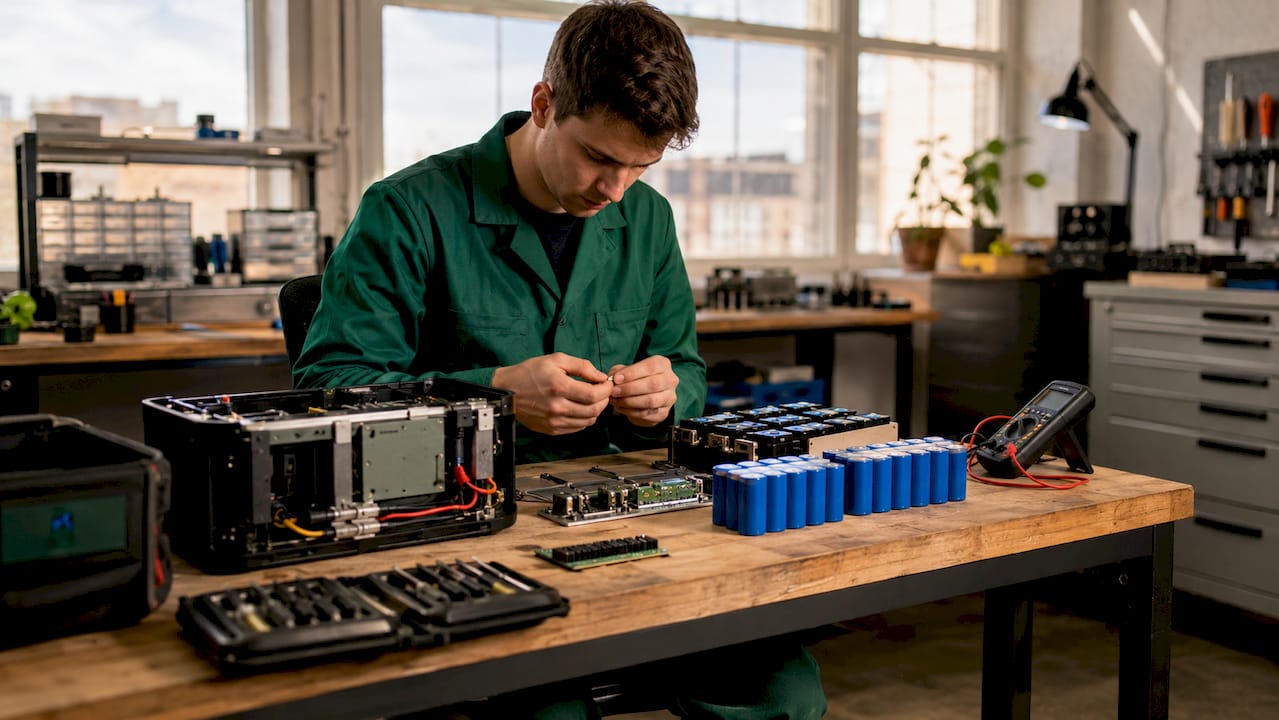
The battery bank sits at the heart of every unit. LiFePO4 cells support over 3,000 charge cycles before significant capacity loss, which means years of reliable service without battery replacement. Standard lithium-ion cells are cheaper but degrade faster. Most units charge from a standard wall outlet, a car port, or solar panels through a built-in MPPT controller. MPPT, which stands for Maximum Power Point Tracking, extracts the most energy possible from solar panels regardless of sun angle or cloud cover.
Monitoring and safety
A Battery Management System, or BMS, runs continuously inside every quality unit. The BMS monitors individual cell voltage, temperature, and current to prevent overheating, overcharging, and short circuits. This is the single most important safety feature in any portable power station. A weak BMS is the primary reason low-cost units fail or become hazardous.
Delivering power during an outage
When grid power drops, the unit detects the loss and activates its inverter within milliseconds. The inverter converts stored DC battery power into standard AC electricity for appliances. Most units also provide USB, 12V DC, and car-style ports for direct device charging.
- AC outlets power refrigerators, fans, lights, and laptops
- USB-C ports charge phones, tablets, and small medical devices
- 12V DC ports run car accessories and certain medical equipment
- Solar input ports accept renewable charging from compatible panels
Pro Tip: Keep your unit plugged in at home on a trickle charge setting. This keeps the battery topped off so it is ready the moment you need it, without degrading the cells.
What are the different types of backup power systems?
Three main categories of backup power exist: portable battery stations, standby generators, and hybrid systems. Each serves a different set of needs.
Portable power stations
Portable power stations are silent, battery-based units designed for small to medium electrical loads. They run phones, laptops, CPAP machines, lights, and small appliances. Runtime typically ranges from 6 to 24 hours on a single charge, depending on battery size and how much power your devices draw. They require no fuel, no installation, and no ventilation. You can use them indoors safely.
Standby generators
Standby generators connect permanently to your home's electrical panel and activate automatically when the grid fails. They run on natural gas or propane and can power an entire house for days. The trade-off is a brief power gap during switching. Standby generators cause a 50–100 millisecond outage during the transfer from grid to generator power. That gap is harmless for most appliances but can crash sensitive electronics or medical equipment. Standby generators also require regular exercise cycles to stay ready. Skipping maintenance causes fuel degradation and generator failure during real outages.
Hybrid systems and UPS
Hybrid systems combine a battery station with a standby generator. The battery handles the immediate gap and powers sensitive electronics, while the generator covers heavy loads over longer periods. Emergency generators for critical facilities must reach full power within 10 seconds of a utility failure. Even that 10-second window creates a risk for computers and medical equipment. A UPS, or Uninterruptible Power Supply, bridges that gap by providing instant battery power until the generator reaches full output. For home use, a quality portable power station effectively acts as both the UPS and the primary backup for sensitive devices.
| System type | Response time | Noise level | Indoor use | Fuel required | Maintenance |
|---|---|---|---|---|---|
| Portable power station | Milliseconds | Silent | Yes | No | Minimal |
| Standby generator | 10–60 seconds | Loud | No | Yes | Regular cycles |
| UPS only | Instant | Silent | Yes | No | Battery replacement |
| Hybrid system | Instant to 10 sec | Moderate | Partial | Yes (generator) | Regular |
What are the benefits of emergency power stations over traditional generators?
Battery-based emergency power stations offer five clear advantages over combustion generators for home and personal use.
-
Silent, clean operation. Portable power stations produce zero emissions and zero engine noise. You can run one in a bedroom, apartment, or garage without ventilation. Gas generators produce carbon monoxide and must stay outdoors, which limits where and how quickly you can deploy them.
-
No fuel costs or ongoing maintenance. Portable power stations are more cost-effective long term because they eliminate fuel purchases, oil changes, and filter replacements. The upfront cost per watt is higher, but the total cost of ownership over years of use is lower for most households.
-
Instant portability. You can carry a portable power station to a campsite, a car, a neighbor's house, or a shelter. A standby generator is bolted to a concrete pad outside your home. Portability matters when emergencies force you to move.
-
Long battery life with LiFePO4 chemistry. LiFePO4 cells deliver over 3,000 charge cycles. That translates to roughly 8–10 years of regular use before the battery needs attention. Standard lithium-ion cells in cheaper units degrade noticeably after 500–800 cycles.
-
Built-in safety through BMS technology. Every quality unit includes a BMS that prevents the battery from overheating, overcharging, or discharging too deeply. This protection is automatic and requires no action from you. Learn more about why battery power is safer than a fuel generator for home use.
The real limitation: Battery stations have finite capacity. A 2,000Wh unit running a full-size refrigerator, a few lights, and phone chargers will last roughly 12–18 hours. A gas generator can run for days with enough fuel. For extended outages, portable power stations work best as part of a layered backup strategy alongside a larger fuel-based generator.
Pro Tip: Pair your portable power station with solar panels. A 200W solar panel can add 800–1,000Wh of charge on a sunny day, extending your runtime significantly without any fuel cost.
How to choose the right emergency power station for your needs?
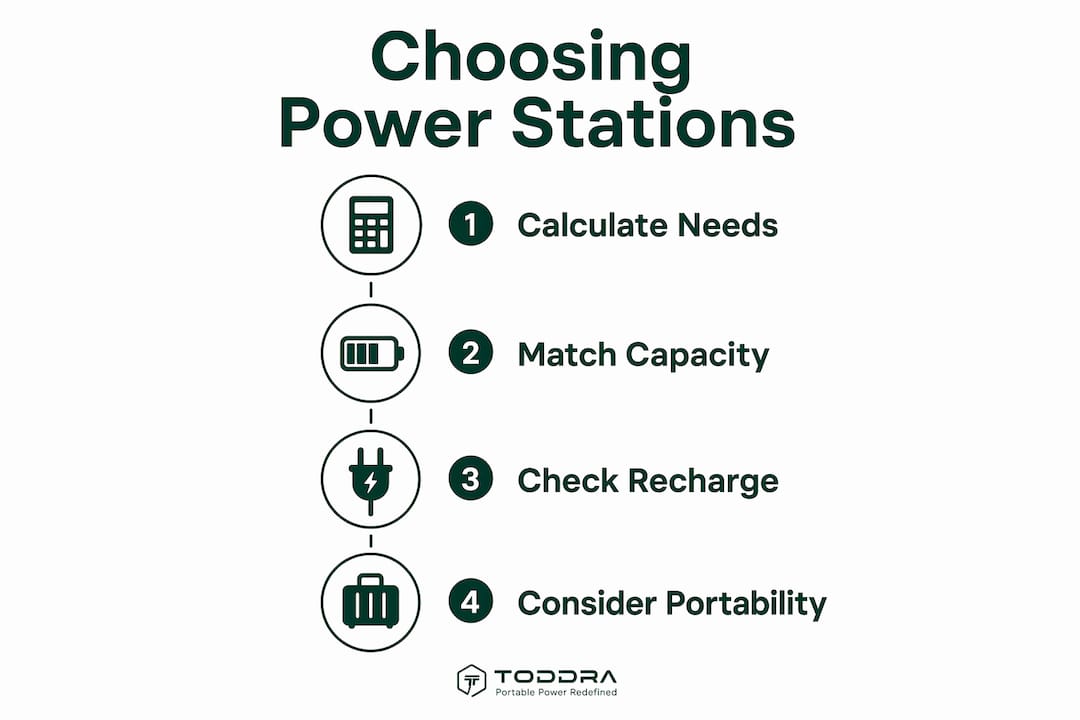
Choosing the right unit comes down to four factors: capacity, output, recharge options, and portability.
Step 1: Calculate your power needs
List every device you plan to run during an outage and note its wattage. Add those numbers together to get your total load. A CPAP machine uses roughly 30–60W. A laptop uses 45–90W. A small refrigerator uses 100–200W. Your total load determines the minimum wattage output your unit needs.
Step 2: Match battery capacity to runtime
Divide your battery capacity in watt-hours by your total load in watts to estimate runtime. A 1,500Wh battery running a 300W load lasts approximately 5 hours. Check the power station wattage guide for detailed sizing examples across common use cases.
Step 3: Confirm recharge options
Solar compatibility extends your independence during long outages. Confirm the unit accepts solar input and check the maximum solar input wattage. Higher input wattage means faster recharging from panels. MPPT controllers are standard on quality units and improve solar efficiency.
Step 4: Weigh portability against capacity
Larger batteries weigh more. A 2,000Wh unit typically weighs 40–60 pounds. A 500Wh unit weighs 12–15 pounds. If you need to carry the unit to different rooms or take it camping, weight matters. If it stays home as a fixed backup, prioritize capacity.
| Capacity range | Best use case | Typical weight | Devices supported |
|---|---|---|---|
| Under 500Wh | Phone, laptop, small lights | Under 15 lbs | Personal devices |
| 500–1,500Wh | CPAP, router, fan, laptop | 15–35 lbs | Small home essentials |
| 1,500–3,000Wh | Refrigerator, TV, medical devices | 35–65 lbs | Most home appliances |
| Over 3,000Wh | Full home backup, extended outages | 65+ lbs | Heavy loads, long runtime |
What are common real-world uses for emergency power stations?
Emergency power stations serve a wider range of situations than most people expect before they own one.
- Medical device backup. CPAP machines, home oxygen concentrators, and nebulizers require uninterrupted power. A battery station provides that without the noise or fumes of a generator running outside a bedroom window.
- Communication during outages. Routers, modems, and cell phones stay charged and connected. Staying informed during a storm or disaster is a safety priority, not a convenience.
- Camping and outdoor events. Portable power stations replace noisy generators at campsites where quiet hours are enforced or where fuel is impractical to transport. They power lights, fans, electric coolers, and cooking equipment.
- RV and van travel. Many travelers use battery stations as a primary or supplemental power source, charging them from solar panels mounted on the roof.
- Sensitive electronics protection. Computers, NAS drives, and smart home hubs can be damaged by the brief power gap during generator transfer. A battery station provides instant, clean power that protects these devices.
- Emergency lighting and safety equipment. Flashlights, lanterns, and emergency radios stay powered throughout an extended outage. Explore what appliances your station can run to plan your setup before an emergency happens.
Key Takeaways
An emergency power station is the most practical, safe, and low-maintenance backup power solution for home and personal use, especially when paired with solar charging for extended outages.
| Point | Details |
|---|---|
| LiFePO4 battery longevity | LiFePO4 cells last over 3,000 cycles, giving years of reliable backup without replacement. |
| BMS is the core safety feature | A quality Battery Management System prevents overheating, overcharging, and short circuits automatically. |
| Runtime depends on load | A 1,500Wh battery running 300W of devices lasts roughly 5 hours. Size up for critical needs. |
| Layered backup works best | Battery stations cover sensitive devices and immediate needs; fuel generators handle heavy, extended loads. |
| Solar charging extends independence | Pairing a station with solar panels removes fuel dependency during multi-day outages. |
Why I think most people underestimate these systems until it's too late
I have watched the portable power station category grow from a niche camping product into a genuine home safety tool. The shift happened because battery technology finally caught up with real-world demand. LiFePO4 chemistry changed the equation. Before it became widely available, battery stations were expensive, short-lived, and underpowered. Now a mid-range unit can run a CPAP machine through an entire night and still have capacity left over.
What surprises me most is how many people still treat a battery station as a backup to their backup. They buy a gas generator, feel covered, and stop there. That approach misses the point. A gas generator sitting in a garage for two years without maintenance is a liability, not an asset. Standby generators require regular exercise cycles to stay functional. Most homeowners skip that step entirely.
The smarter approach is to lead with a quality battery station for everyday outages and sensitive devices, then add a fuel generator only if your load genuinely demands it. Most households never need the generator at all. A 2,000Wh station with solar charging handles the vast majority of real outages, which last hours, not days.
My one honest warning: do not buy the cheapest unit you can find. The BMS is where corners get cut, and a weak BMS is a fire risk. Spend the extra money on a unit from a brand that publishes its battery chemistry and cycle count. That information tells you everything about long-term reliability.
— Jackson
Reliable backup power, ready when you need it
When an outage hits, the last thing you want is uncertainty about your power supply. Toddra carries a carefully selected range of solar generators and portable power stations built around LiFePO4 technology, fast charging, and multi-port output for exactly these moments.
The Jackery Solar Generator 2000 Plus offers 2,042Wh of LiFePO4 capacity and 3,000W of output, enough to run a refrigerator, lights, a router, and medical devices simultaneously. It accepts solar input for fuel-free recharging and operates silently indoors. For those who need even more capacity, Toddra also offers expandable battery options and complete bundle systems with smart transfer switches. Browse the full solar generators collection at Toddra to find the right fit for your home, outdoor adventures, or emergency preparedness plan.
FAQ
What is an emergency power station?
An emergency power station is a rechargeable battery unit that stores electricity and delivers it through AC and DC outlets when the main grid fails. Most quality units use LiFePO4 battery cells and include a built-in Battery Management System for safe, reliable operation.
How long does an emergency power station last on one charge?
Runtime ranges from 6 to 24 hours depending on battery capacity and the power draw of connected devices. A 1,500Wh unit running 300W of appliances lasts approximately 5 hours.
Can I use an emergency power station indoors?
Yes. Battery-based power stations produce zero emissions and operate silently, making them fully safe for indoor use. This is a key advantage over gas generators, which must always be used outdoors due to carbon monoxide risk.
What is the difference between a portable power station and a standby generator?
A portable power station responds in milliseconds, operates silently, and requires no fuel or installation. A standby generator takes 10–60 seconds to start, runs on natural gas or propane, and requires regular maintenance to stay ready.
How do I recharge an emergency power station after an outage?
You can recharge from a standard wall outlet, a car port, or solar panels. Solar charging is the most useful option during extended outages when grid power is unavailable. Units with MPPT controllers charge faster and more efficiently from solar panels.