
TL;DR:
- Power banks charge USB devices and are lightweight, while portable power stations can run larger appliances with AC inverters. The key difference is their output type and capacity, with power stations offering higher watt-hour ratings and AC power for heavier loads. Using both respectively ensures readiness for short outages and extended power needs.
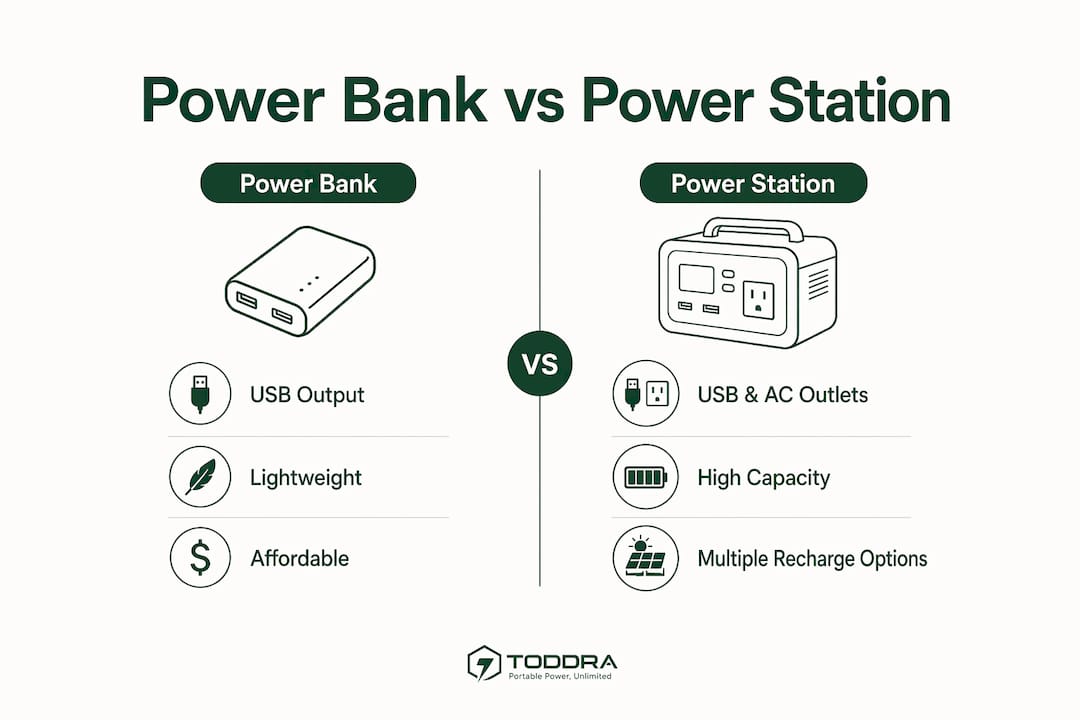
A power bank is a portable battery pack that charges USB devices like phones and earbuds, while a portable power station is a larger battery system with an AC inverter that runs appliances and electronics. Understanding the role of power bank vs power station comes down to one core difference: output architecture. Power banks top out at USB-level wattage. Power stations deliver AC power for devices that need a standard wall outlet. Knowing which one fits your situation saves you money and keeps you prepared when it matters most.
What are the technical differences between power banks and power stations?
Power banks and power stations differ most in their output types and battery capacity. Power banks deliver USB output, typically ranging from 5W to 100W, and carry battery capacities in the range of 5–100 watt-hours. That is enough to recharge a smartphone two to four times. Power stations, by contrast, carry 200–2,000+ watt-hours and include AC inverters that can output hundreds to thousands of watts. That gap in output power is what separates a device you slip in your pocket from one you carry in a backpack or roll to a campsite.
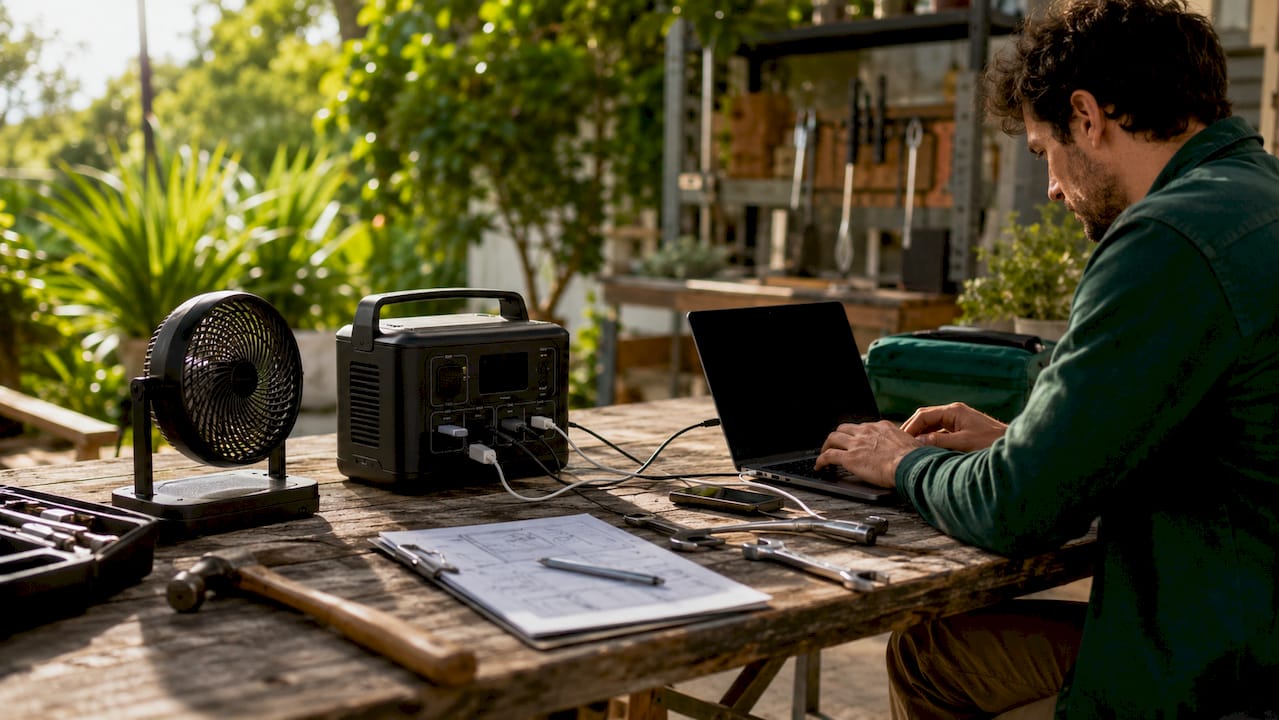
The AC inverter is the defining feature of a portable power station. Devices requiring standard three-prong plugs need a power station, not a USB-only power bank. A CPAP machine, a mini refrigerator, or a laptop charger with a barrel connector all require AC power. A power bank simply cannot serve those needs regardless of its capacity.
| Feature | Power Bank | Portable Power Station |
|---|---|---|
| Output types | USB-A, USB-C | USB, AC outlets, DC, car port |
| Typical capacity | 5–100 Wh | 200–2,000+ Wh |
| Max output wattage | Up to 100W | 200W–3,000W+ |
| Portability | Pocket to bag size | Backpack to rolling cart |
| Recharge options | USB charging | Wall, car, solar |
| Typical price range | $20–$150 | $200–$3,000+ |
Pro Tip: Check the continuous watt rating on any power station you consider, not just the battery capacity. A unit with 1,000 Wh but only a 300W inverter will shut down if you plug in a device that draws 400W at startup.
Which devices work best with a power bank vs a portable power station?
Power banks keep phones, flashlights, and earbuds alive during short outages and daily travel. They are the right tool for USB-powered essentials. Portable power stations handle the heavier load: laptops, routers, medical devices, and mini refrigerators for extended periods. Matching the device to the right power source prevents frustration and protects your equipment.
Devices that work well with a power bank
- Smartphones and tablets
- Wireless earbuds and headphones
- Portable Bluetooth speakers
- USB-powered LED lanterns and flashlights
- Small USB fans
- Fitness trackers and smartwatches
Devices that require a portable power station
- Laptops with AC adapters
- CPAP and BiPAP machines
- Mini refrigerators and coolers
- Electric blankets and heating pads
- Routers and modems
- Power tools with standard plugs
- Portable projectors
Scenario-based guidance helps clarify the choice even further:
- Weekend camping trip: A power bank handles phone charging and a headlamp. If you want to run a small cooler or an electric grill, you need a power station sized for camping.
- Home blackout: A power bank keeps communication devices alive for a few hours. A power station runs your router, a lamp, and a CPAP machine through the night.
- Off-grid work: A power bank charges your phone between calls. A power station powers your laptop, monitor, and hotspot for a full workday.
- Emergency preparedness: A power bank is a fast, lightweight grab-and-go option. A power station is the anchor device for a prepared household.
Pro Tip: If you are preparing for emergencies, own both. A power bank fits in your go-bag. A power station stays home and handles the critical loads. They solve different problems and work well together.
How do you calculate your power needs before choosing?
Selecting the right portable power solution starts with listing every device you plan to run and finding its wattage. Add up the running watts of all devices you expect to use at the same time. That total tells you the minimum inverter output rating you need from a power station.
Follow these steps to size your power source correctly:
- List your devices. Write down every device you need to power, from your phone to your CPAP machine.
- Find the running wattage. Check the label on each device or its manual. A laptop typically draws 45–65W. A mini refrigerator draws 30–60W.
- Calculate total load. Add the running watts of all devices you will use simultaneously. This is your minimum inverter rating.
- Add inverter headroom. Select an inverter with 20–30% headroom above your total load to handle startup surges safely.
- Estimate runtime. Divide the battery's watt-hour rating by your total load in watts. A 1,000 Wh station running a 200W load gives roughly 5 hours of runtime, accounting for inverter losses.
- Prioritize essential devices. If capacity is limited, prioritize communication, lighting, and medical needs before adding convenience devices.
Inverter surge capacity is a commonly overlooked factor. Motors in refrigerators and air pumps draw two to three times their running wattage for a fraction of a second at startup. A power station with adequate battery energy but an undersized inverter will trip its protection circuit and shut down. Always check both the continuous watt rating and the peak surge rating before buying.
Pro Tip: For off-grid work setups, check whether your power station supports USB Power Delivery (USB PD). A station with both USB PD and AC output covers every device type from phones to full-size laptops without needing a separate power bank.
How do portability, recharge options, and cost compare?
Power banks are affordable, lightweight, and easy to store. A quality 20,000 mAh power bank weighs under a pound and fits in a jacket pocket. A portable power station weighs anywhere from 10 to 70+ pounds depending on capacity. That weight difference is a real consideration for backpackers and travelers.
Power stations offer multiple recharge options including solar panels, car outlets, and wall power. Power banks recharge almost exclusively via USB. For off-grid use, solar recharging is a significant advantage. A power station paired with solar panels can extend off-grid power use indefinitely in good sunlight conditions. That combination, often called a solar generator, is the most capable portable power solution available for extended outdoor or emergency use.
| Factor | Power Bank | Portable Power Station |
|---|---|---|
| Weight | Under 1 lb | 10–70+ lbs |
| Size | Pocket to small bag | Backpack to rolling cart |
| Recharge methods | USB only | Wall, car, solar |
| Price range | $20–$150 | $200–$3,000+ |
| Best for | Daily carry, short outages | Extended use, appliances |
Cost is a genuine differentiator. A reliable power bank costs $30–$80. A mid-capacity power station like the Jackery Explorer 1500 v2 sits in the $1,000–$1,500 range and delivers 1,536 Wh with 2,000W AC output. That price reflects the inverter hardware, battery management system, and build quality required to run real appliances safely. For anyone who needs to power more than a phone, the investment is justified.
Key takeaways
The right portable power solution is determined by output type and capacity: power banks serve USB devices on the go, while portable power stations run AC-powered appliances for extended periods.
| Point | Details |
|---|---|
| Output type is the key difference | Power banks deliver USB power; power stations add AC outlets for appliances. |
| Capacity determines runtime | Match watt-hours to your total device load and expected hours of use. |
| Surge wattage matters | Always check inverter peak surge rating, not just continuous watts, before buying. |
| Recharge flexibility favors stations | Power stations charge via solar, car, and wall; power banks rely on USB only. |
| Own both for emergencies | A power bank handles grab-and-go needs; a power station covers critical home loads. |
What I have learned from years of planning portable power setups
The biggest mistake I see people make is buying on capacity alone. They see a 2,000 Wh power station and assume it will run anything. Then they plug in a refrigerator, the inverter trips, and they are left wondering what went wrong. The watt-hour rating tells you how long a device can run. The inverter rating tells you what devices can run at all. Both numbers matter equally.
I have also watched people spend $400 on a large power bank thinking it replaces a power station. It does not. A proper portable power station is a fundamentally different device. The inverter, the battery management system, and the multi-output design are not features you can replicate with a bigger USB battery.
The most practical setup for anyone serious about outdoor adventures or emergency preparedness is a combination. Keep a quality power bank in your bag for daily carry and short outages. Keep a mid-to-large power station at home or in your vehicle for anything that plugs into a wall. That pairing covers every scenario without overspending on a single device. Wirecutter's 2026 portable power station reviews consistently reinforce this point: matching output type and capacity to actual loads produces better outcomes than chasing the highest capacity number.
One more thing worth saying plainly: the solar generator category has matured significantly. Pairing a power station with solar panels is no longer a niche option. For anyone spending extended time outdoors or preparing for multi-day outages, solar integration changes the math entirely. You stop worrying about how long the battery lasts and start thinking about how much sun you get each day.
— Jackson
Reliable portable power from Toddra
Toddra carries a carefully selected range of portable power stations and solar generators built for real-world use, whether that means a weekend camping trip, a power outage, or a full off-grid setup.
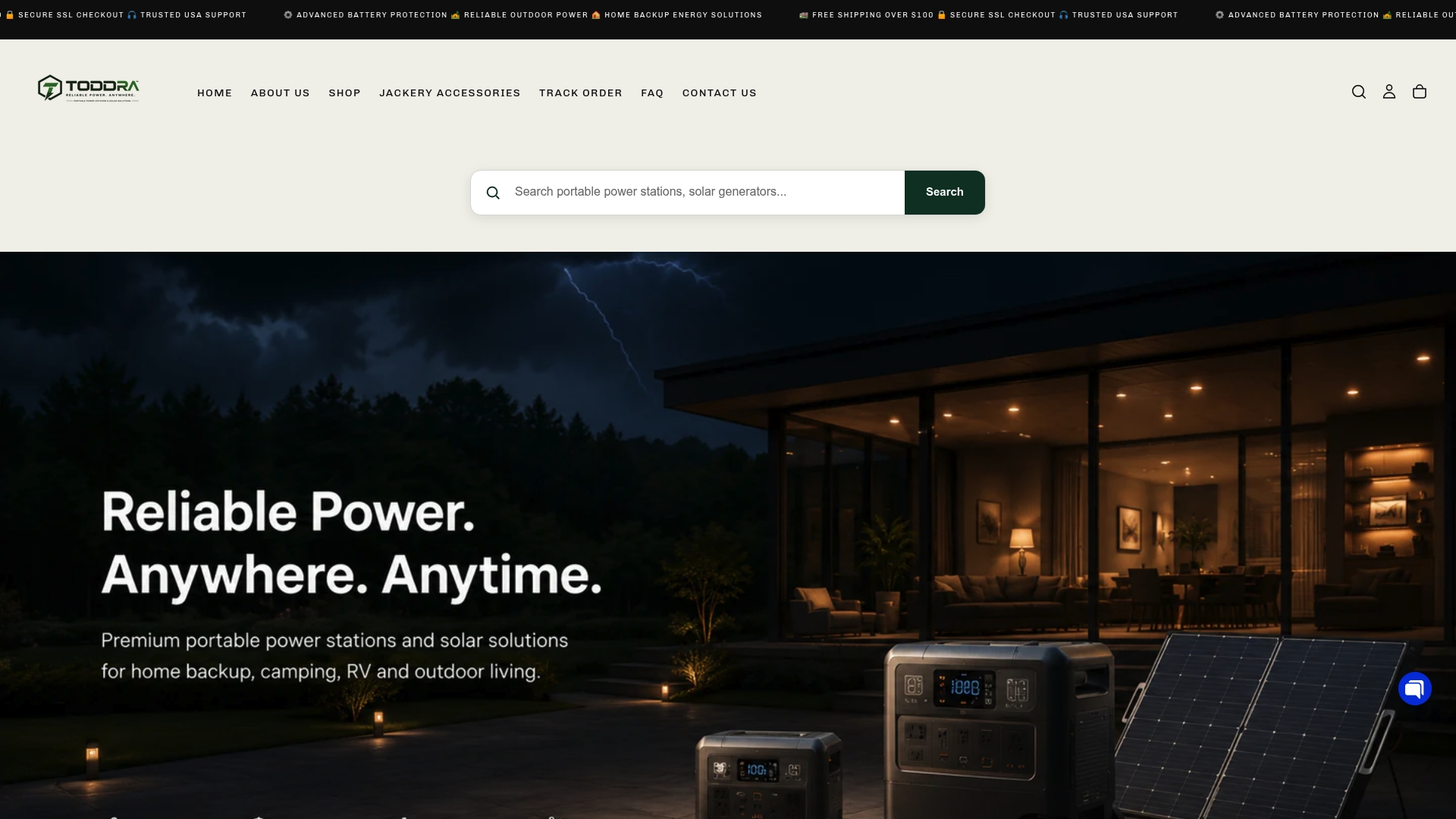
The Jackery Solar Generator 2000 Plus delivers 2,042 Wh of capacity with a 3,000W AC inverter and full solar charging compatibility. It handles the appliances that matter most during an outage or extended outdoor stay. For customers who want to browse a wider range of solar-powered options, Toddra's solar generator collection covers multiple capacity levels and budgets. Every product ships with US-based customer support and secure checkout, so you can buy with confidence.
FAQ
What is the main difference between a power bank and a power station?
A power bank delivers USB output for small devices like phones and earbuds, while a portable power station includes an AC inverter that runs larger appliances requiring standard wall outlets. The output architecture is the defining difference.
Can a power bank run a laptop?
Most laptops require either a USB-C Power Delivery connection or an AC adapter. A power bank with USB-C PD can charge many modern laptops, but older laptops with barrel-connector AC adapters require a portable power station.
How do I know what size power station I need?
Add the running wattage of all devices you plan to use at the same time, then add 20–30% for inverter headroom. Divide the station's watt-hour capacity by your total load to estimate runtime.
Are power banks useful during a blackout?
Yes. Power banks keep phones and flashlights running during short outages and are ideal for maintaining communication. For longer outages requiring routers, medical devices, or refrigeration, a portable power station is the right choice.
What is a solar generator?
A solar generator is a portable power station paired with solar panels, allowing the battery to recharge from sunlight. It is the most capable option for extended off-grid use and multi-day outdoor adventures.